
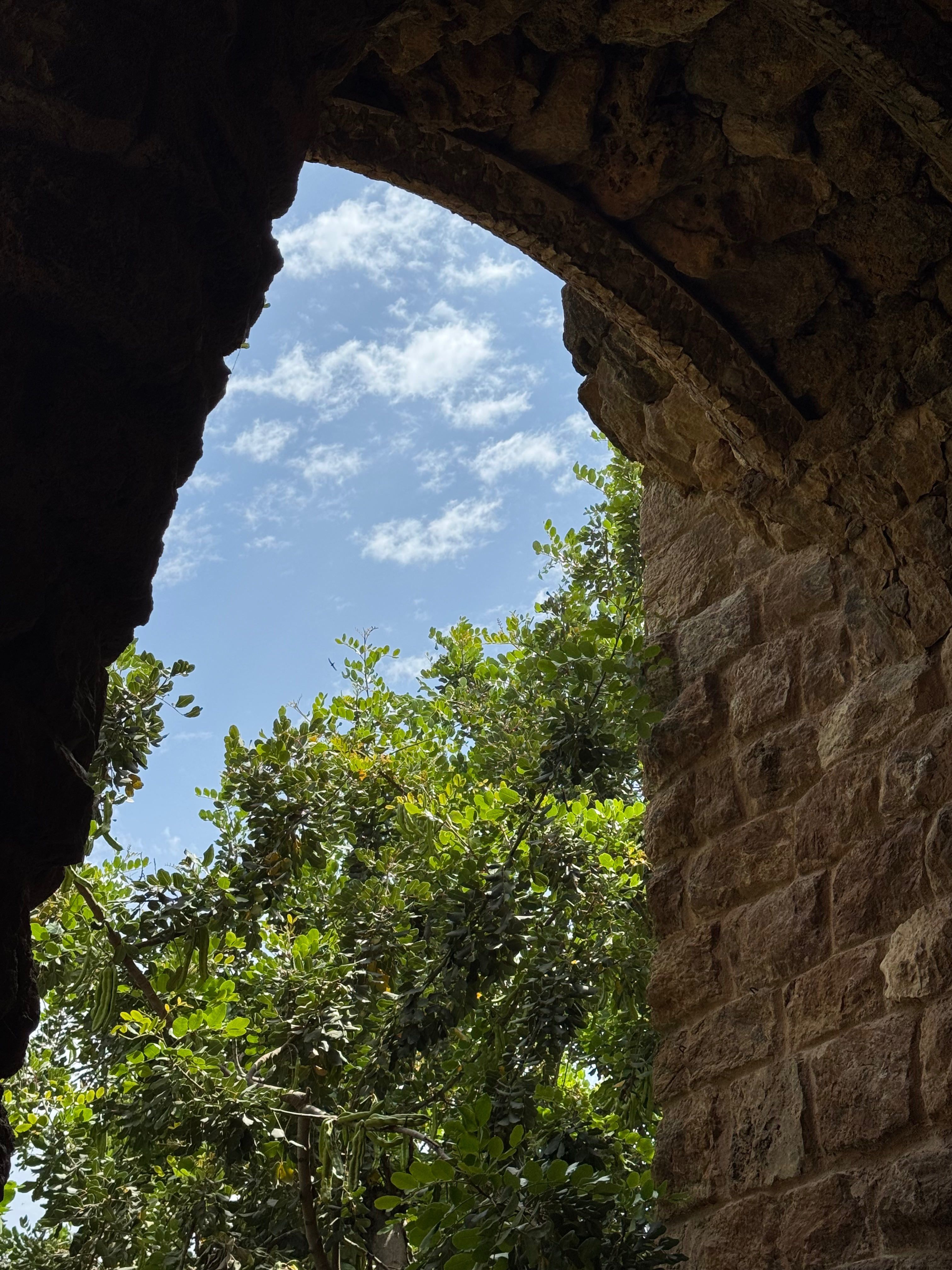
Green – Growth and Renewal
One of nine colors of Seeing. Green Is Always Becoming: the Art of Living Systems
Green in the world
Few colours are as deeply embedded in human experience as green. Long before it became associated with sustainability, environmental awareness, and regeneration, green defined the landscapes in which human societies developed. Forests provided shelter and resources, fields provided food, and changing vegetation marked the rhythm of the seasons. It is therefore unsurprising that green has become closely associated with growth, fertility, health, and renewal across cultures.
Contemporary colour research continues to confirm these associations. Studies in environmental psychology have repeatedly demonstrated that natural environments can reduce stress, improve concentration, and contribute to psychological well-being. At the same time, green has become the dominant visual language of contemporary sustainability movements, appearing in everything from corporate reporting and urban planning to packaging, architecture, and public policy.
Yet there is a risk in reducing green to a symbolic shorthand for environmental responsibility. Doing so overlooks something far more interesting. Green does not merely represent nature. Green represents processes. Unlike colours that suggest stability, completion, or permanence, green almost always points toward transformation. It reminds us that life is defined not by fixed states but by continuous change.
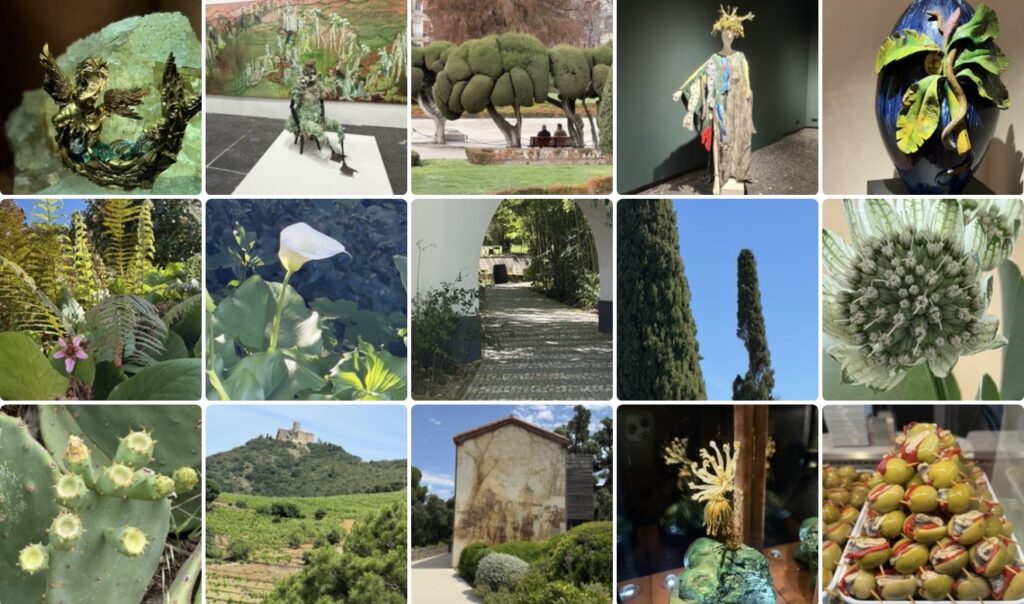
A visual constellation of growth
Looking across the photographic collection, what becomes immediately apparent is the diversity contained within a single colour. The images move effortlessly between flowers, leaves, landscapes, gardens, water, and cultivated spaces. Yet despite this variety, certain visual patterns begin to emerge.
Many of the photographs emphasize movement rather than stillness. Leaves unfold. Stems extend toward the light. Petals expand outward. Even the broader landscapes suggest expansion rather than enclosure. The eye rarely settles on a static object because the composition repeatedly directs attention toward relationships, rhythms, and transitions.
Another striking characteristic of the collection is the coexistence of wild and cultivated environments. Some of the images capture vegetation that appears entirely spontaneous, while others reveal the unmistakable influence of human intervention. Gardens, arranged plantings, and carefully maintained landscapes introduce a dialogue between natural growth and human stewardship. Rather than presenting these as opposing forces, the photographs suggest that both participate in the same living system.
The collection also challenges the assumption that growth follows a predictable pattern. Nature does not develop in straight lines. Growth occurs through branching, layering, repetition, interruption, and adaptation. Similar structures appear in flowers, leaves, and landscapes, creating visual echoes throughout the collage. The more time spent with the images, the more difficult it becomes to identify clear beginnings or endings.
Perhaps this is why the collection feels less like a catalogue of photographs and more like a study of interconnected processes.
Becoming as a way of understanding life
Modern culture often encourages a language of arrival. Education leads to graduation, careers lead to promotion, and goals lead to achievement. Progress is typically described through measurable outcomes and clearly defined milestones. Human development is frequently understood as movement toward a destination.
Nature proposes a different model.
Nothing in the collection appears finished. The photographs capture moments within processes that continue beyond the frame. A flower in bloom represents neither a beginning nor an end. A leaf unfolding is not progressing toward completion but participating in an ongoing cycle of emergence, growth, decline, and renewal.
This observation raises an interesting philosophical question. What if becoming is not simply a stage on the way toward life? What if becoming is life itself?
The question challenges a deeply rooted assumption that fulfillment belongs somewhere in the future. Much of contemporary life is organized around anticipation. Meaning is often postponed until the next accomplishment, the next transition, or the next destination. Yet the natural world offers very little evidence to support this way of thinking.
Forests do not strive toward completion. Rivers do not seek arrival. Seasons do not move toward a final state. Their significance lies precisely in their continuous transformation.
This perspective also changes the way sustainability is understood. Sustainability is often framed as preservation, as though the objective were to maintain existing systems exactly as they are. Living systems suggest a different approach. Their resilience depends upon adaptation, diversity, regeneration, and the capacity to respond to changing conditions. Preservation alone cannot sustain life. Renewal is equally essential.
Perhaps this explains why green continues to resonate so strongly in contemporary culture. At a time characterized by technological disruption, climate challenges, and profound social change, green offers a reminder that transformation should not automatically be interpreted as loss. Change can also represent growth.
An invitation
Every photograph in the collection captures a different expression of life, yet no single image provides a complete answer to what growth actually means. Some viewers may be drawn toward the unfolding leaves, while others may find themselves returning to a particular flower or landscape.
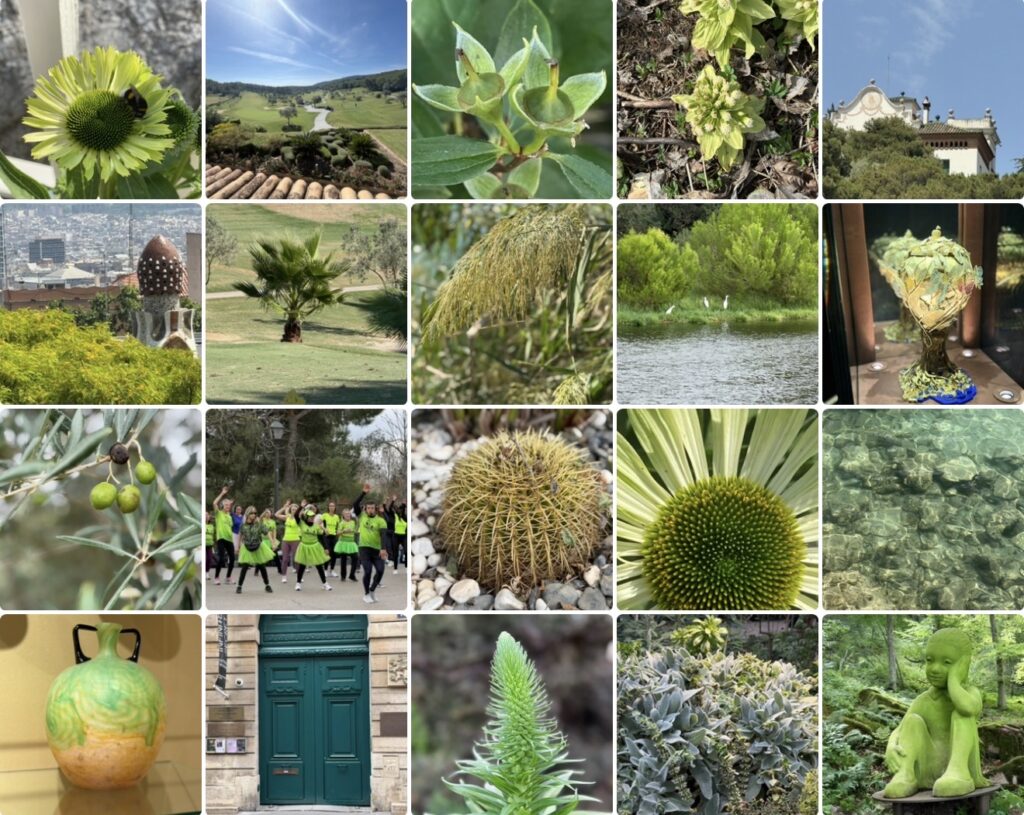
The attraction may reveal less about the photographs themselves than about the different ways in which growth is understood.
The collection ultimately leaves an open question.
What if becoming is not the passage toward life, but life itself?
Looking at these images, it becomes difficult to think of growth as a destination. Perhaps growth is better understood as participation in a living process that never truly reaches completion. If so, then the challenge is not to arrive somewhere else but to remain fully engaged in the continuous and often unpredictable process of becoming.
About The Colour of Seeing
This essay is part of The Colour of Seeing, a series of photographic reflections exploring how colours shape perception, memory, emotions, and meaning. All photographs taken by Novisali.
Readers interested in the broader ideas behind the series are invited to begin with the introductory Story, which explores insights from colour psychology, design, philosophy, art, and contemporary research into how colours influence the way we experience the world.

Novisali crafts visual conversations that challenge perception and invite deeper reflection on the world we live in.