
Making the Invisible Possible – From Renaissance Skies to New Worlds of Hope
What connects two Renaissance ceilings in Florence, a Swedish queen who dared to imagine another life, a seventeenth-century poet and a telescope exploring the distant universe?
Across nearly six centuries, they reveal something enduring about human curiosity: our desire to look beyond what we know, make the invisible visible and imagine what might become possible.
Yet imagination alone does not create a better world. Discovery can expand our horizons, but it is how we respond to new possibilities that determines the futures we shape.
As I prepare to share my Novisali art in Florence, these connections between history, science and art have led me to reflect on the relationship between imagination and hope. How can learning to see differently help us envision — and create — futures worth sharing?
Two Renaissance Ceilings – One Shared Sky
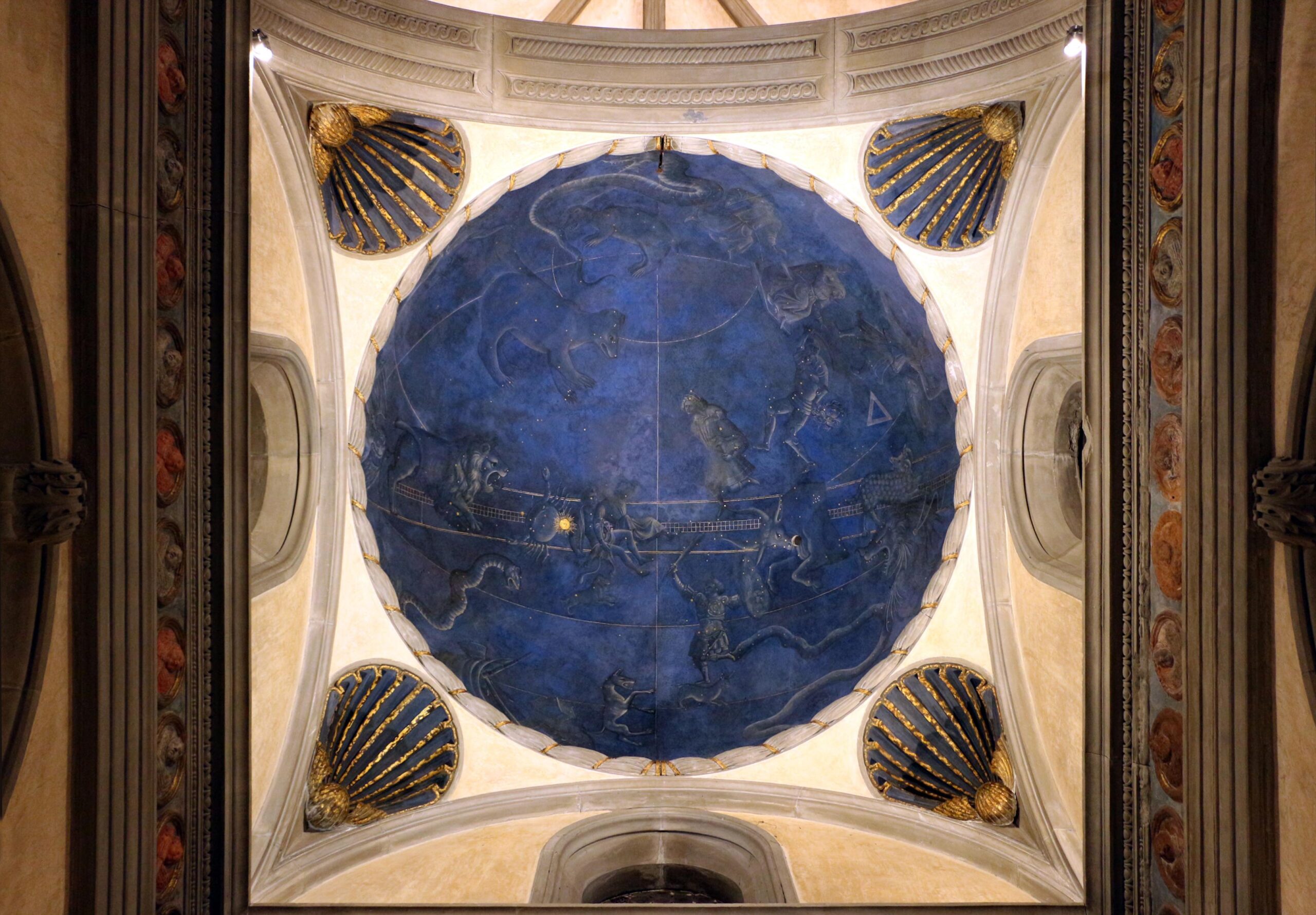
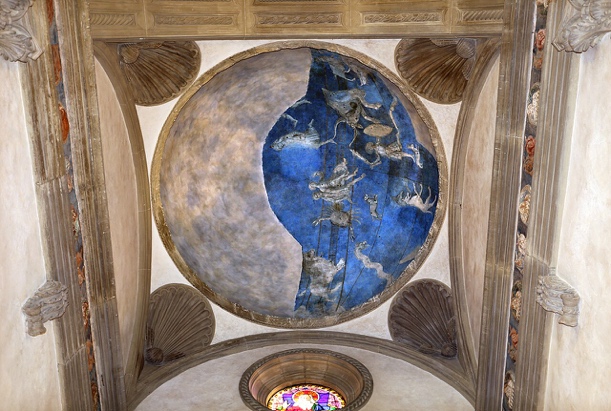
In Florence, two extraordinary Renaissance ceilings preserve representations of the heavens associated with a particular moment in history. In Brunelleschi’s Old Sacristy of San Lorenzo, closely connected to the Medici family, and the Pazzi Chapel at Santa Croce, remarkably similar celestial maps have been linked to 4 July 1442, capturing an arrangement of the heavens nearly six centuries ago.
Their precise meaning remains debated. Were they commemorating an event, expressing religious symbolism or reflecting the Renaissance fascination with astronomy and the mathematical order of the universe? Whatever their original purpose, they reveal a desire to understand humanity’s place within something far greater.
There is a striking historical irony. The Medici and Pazzi families would later become political enemies, culminating in the Pazzi conspiracy of 1478. Yet above their rivalries, the ceilings preserved images of the same heavens. Two families, two buildings, one shared sky. They remind us that beyond human divisions, we inhabit a shared universe — and that looking beyond our immediate perspectives may reveal connections we otherwise overlook.
Queen Christina – The Courage to Imagine Another Life
Another remarkable connection between Sweden, Italy and the power of imagination emerges in 2026, the 400th anniversary of Queen Christina of Sweden’s birth (1626–1689). Her life is being commemorated across Europe, including exhibitions at Palazzo Corsini in Rome, the Italian Cultural Institute in Stockholm and the Museo del Prado in Madrid, celebrating her intellectual curiosity, artistic patronage and enduring cultural legacy.
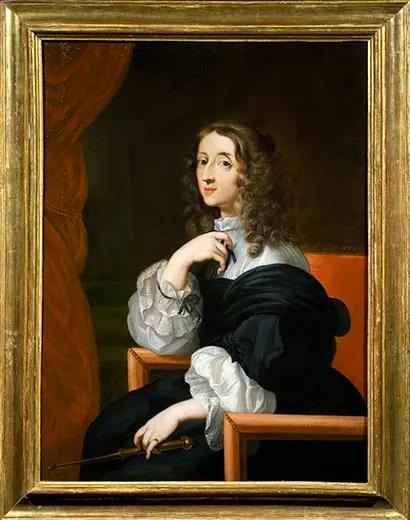
Born into a Protestant monarchy, Christina was raised to rule one of Europe’s emerging great powers. Yet she challenged the expectations surrounding her position, including marriage and the traditional role of a queen. In 1654, aged 27, she abdicated, subsequently converted to Catholicism and established a new life in Rome, surrounding herself with philosophers, scholars, musicians and artists. Her reinvention was not without contradictions. She remained politically ambitious, even attempting unsuccessfully to become Queen of Naples. Nevertheless, she demonstrated an extraordinary willingness to question the future others had imagined for her.
Her artistic legacy extended far beyond Italy. A significant part of her remarkable collection of classical sculptures was later acquired by the Spanish monarchy and eventually entered the Museo del Prado. Her intellectual networks also reached Florence through the poet Benedetto Menzini (1646–1704), who became associated with her literary circle in Rome.
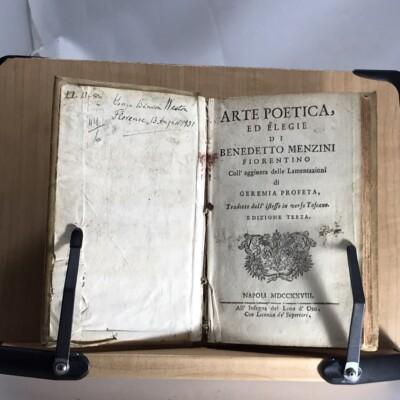
In L’Arte poetica, published in Florence in 1688, Menzini reflected on the relationship between nature, art and human perception. One passage seems especially meaningful today:
Ma forse basterà limpida, e bella
aver la mente? Ah questo sol non basta
senz’arte, che le forme in lei suggella.Sappi che la natura ella sovrasta
qual nobile regina; e l’arte aggiunge
un tal contegno, che beltà non guasta.Anzi l’accresce, e ’l suo valor congiunge
all’alma generosa, e rappresenta
a lei vicin ciò che saria lunge.Benedetto Menzini, L’Arte poetica (1688)
In English, free translation:
But is it enough to have a mind
both clear and beautiful? No, that alone
is not enough without art, which impresses form upon it.Know that Nature reigns supreme,
like a noble queen; and Art adds
a grace that does not diminish beauty.Instead, it enhances beauty, joining its worth
to the generous soul, and bringing near
what would otherwise remain far away.
Menzini’s description of nature as “qual nobile regina” — like a noble queen — offers a poetic coincidence with Christina’s intellectual circle, although it is not necessarily a reference to her. More importantly, his final words, “a lei vicin ciò che saria lunge”, capture something central to the relationship between art and imagination: the ability to bring what is distant closer to human understanding.
For me, these words connect Renaissance Florence, Christina’s intellectual world and my own exploration of hope through art. Art can challenge inherited perspectives, awaken curiosity and make possibilities visible that might otherwise remain beyond our imagination. Perhaps one of art’s greatest contributions is not to provide answers, but to make previously unimaginable questions possible.
Menzini wrote about art bringing distant things closer to our understanding. Nearly three and a half centuries later, science is doing something remarkably similar — revealing distant worlds that earlier generations could only imagine.
From Renaissance Skies to NASA’s Cosmic Horizons
Nearly six centuries after Florence’s celestial ceilings were painted, humanity is exploring the universe with extraordinary new capabilities. NASA’s Nancy Grace Roman Space Telescope, launched on 30 August 2026, is preparing to reveal its first images on 7 December. With infrared vision and an exceptionally wide field of view, Roman will investigate dark matter, dark energy, distant galaxies and planets beyond our solar system.
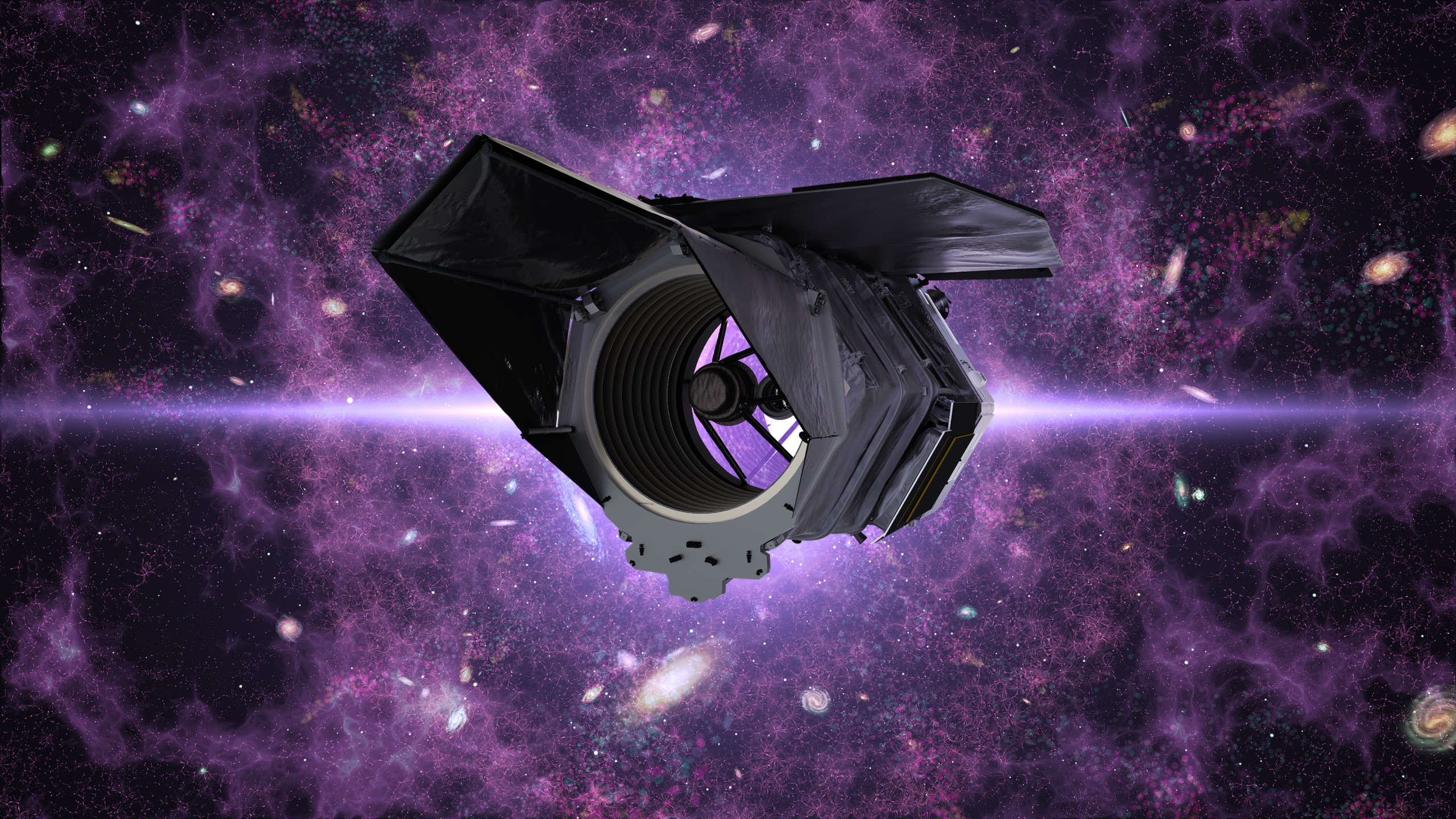
Where Renaissance artists represented the heavens through observation, geometry and imagination, modern astronomers use advanced instruments, enormous datasets and computational methods. The tools have changed dramatically, but the underlying questions remain familiar: What lies beyond what we can observe, and what might we discover when we develop new ways of seeing?
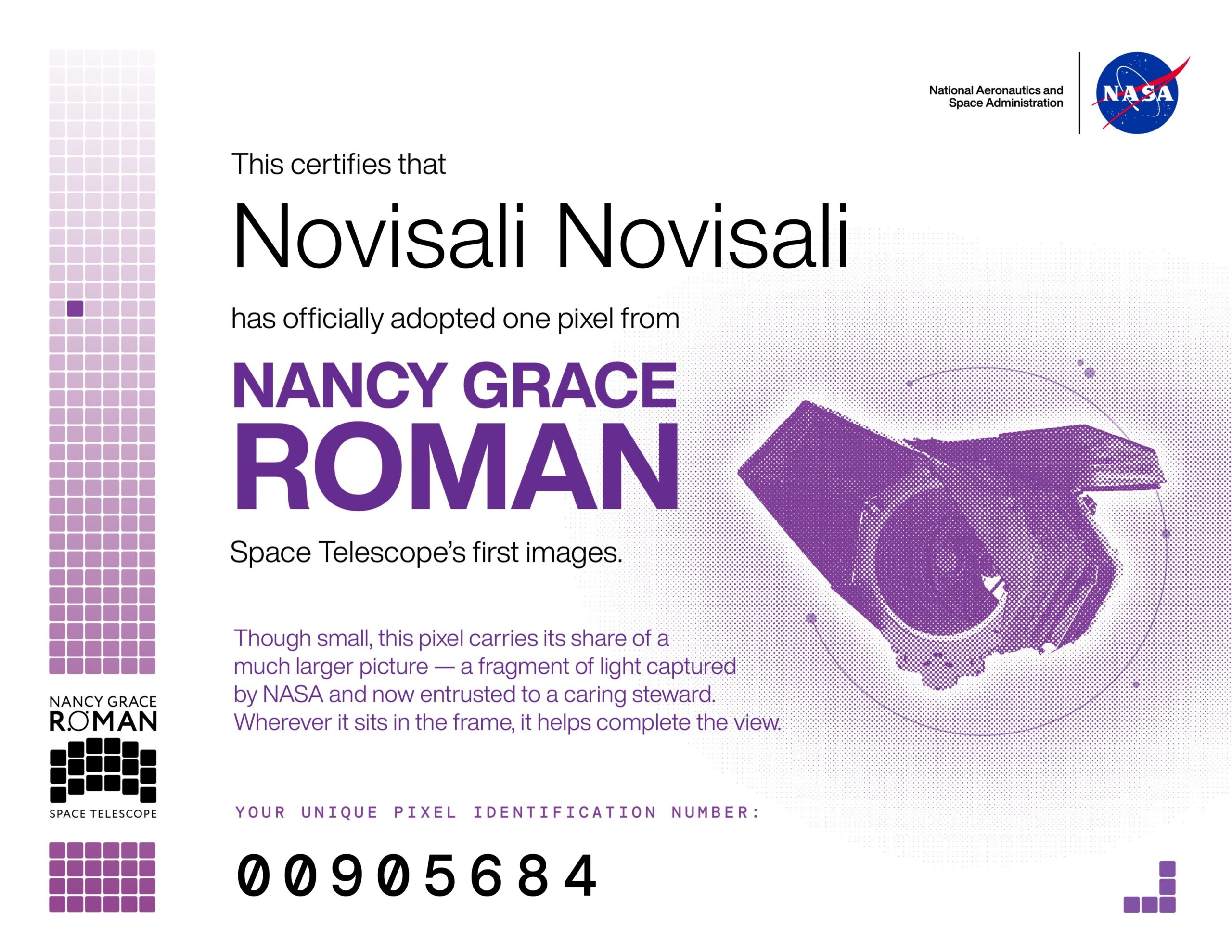
NASA’s Adopt a Pixel initiative adds a particularly beautiful dimension. Participants can adopt a tiny portion of one of Roman’s first images and discover their place within the larger cosmic picture when it is unveiled. One small pixel becomes part of an immense image of a universe far beyond our individual comprehension.
For me, this is also a metaphor for belonging. Each of us sees only a fragment of the world, shaped by our experiences and perspectives. Yet together, those fragments can contribute to a richer understanding of the whole. We do not need to see the entire picture to recognise that our small part matters.
Another Ceiling in Florence – New Worlds of Hope
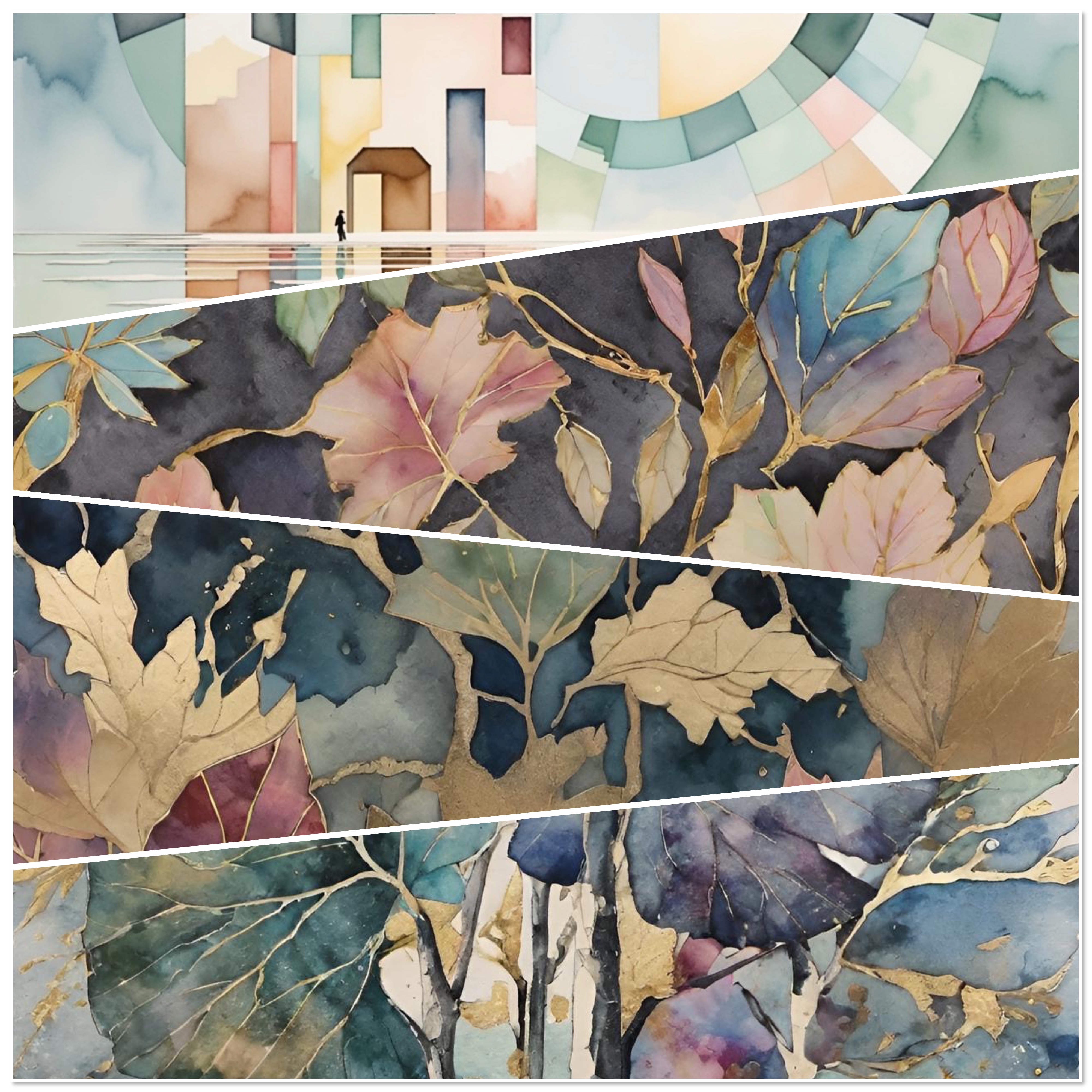
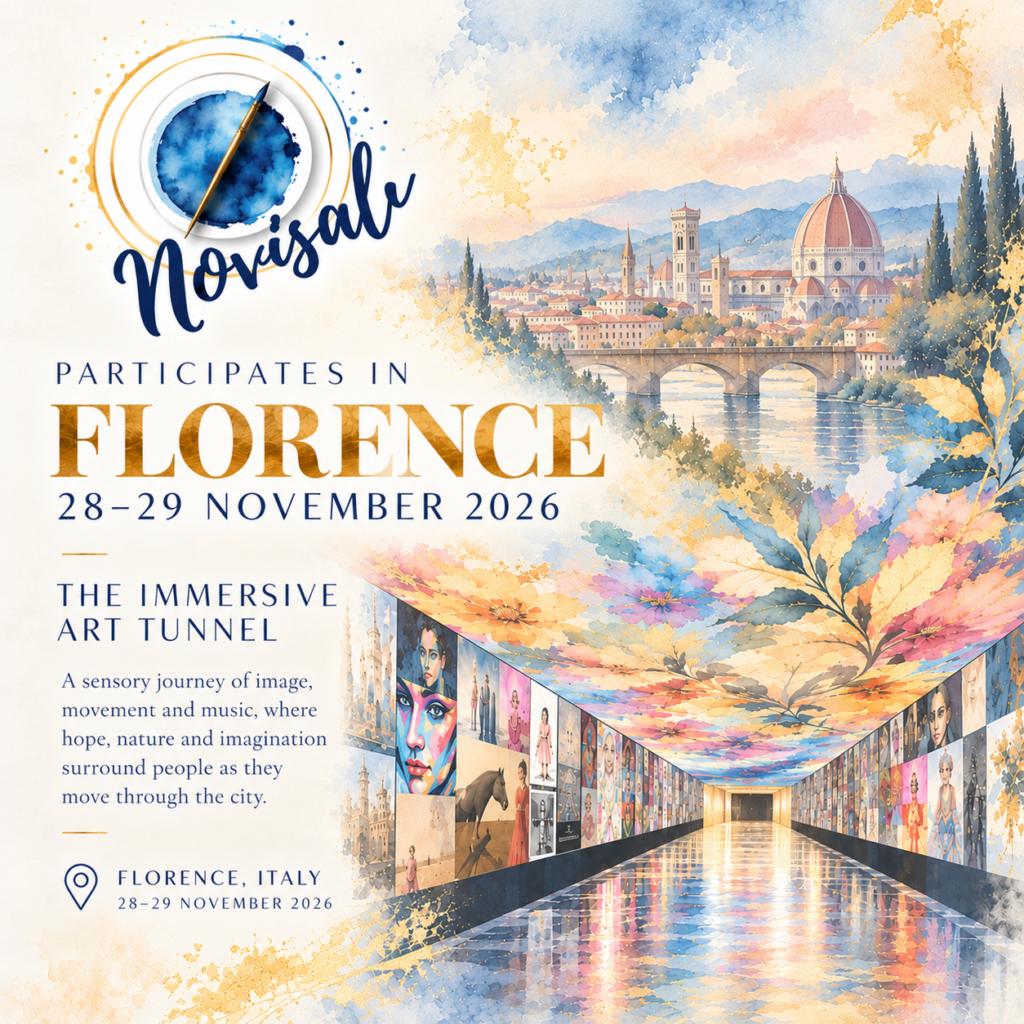
These reflections have become especially meaningful as I prepare to share my art in Florence. On 28–29 November 2026, my Novisali works from Sparks of Hope and Hopepunk will appear on the ceiling of Florence’s Sottopassaggio near Santa Maria Novella station as part of Expo Metro. Just a short walk from Renaissance masterpieces, another ceiling will invite people to look up — this time towards contemporary reflections on hope, belonging and worlds within worlds.
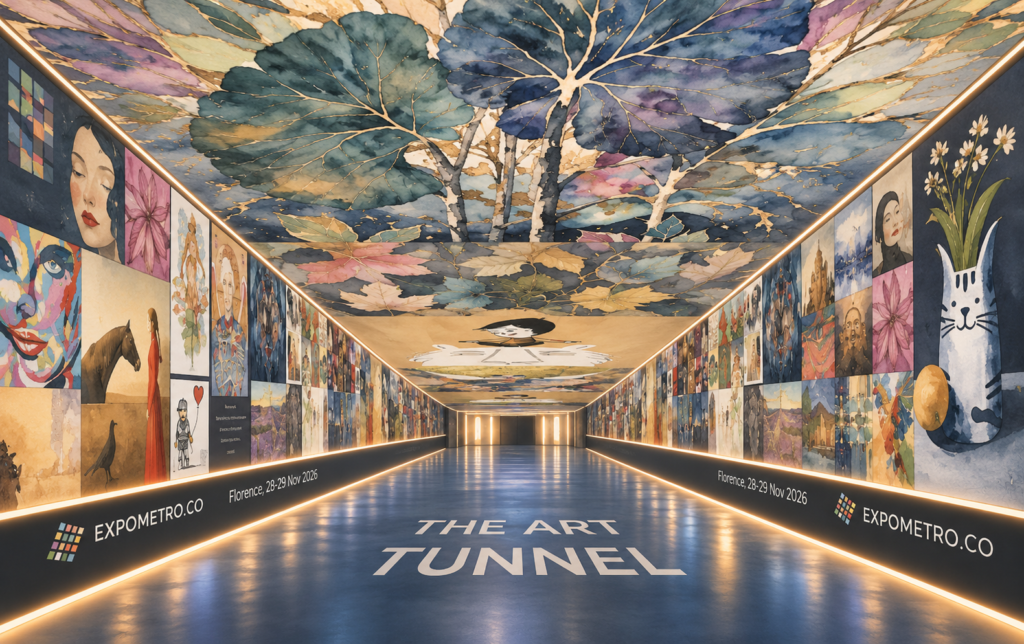
My artistic practice combines watercolour and digital techniques, exploring the spaces between the visible and the unseen, uncertainty and possibility. Sparks of Hope reflects on how small moments of light and connection can emerge even in difficult times, while Hopepunk explores hope not as passive optimism but as something nurtured through imagination, courage, care and collective action.
For me, these works are not simply about representing hope, but about exploring how hope can emerge — through seeing differently, recognising connections and finding the courage to imagine possibilities beyond the familiar.
There is something poetic about this return to Florence. Almost six centuries after artists painted celestial maps above Renaissance observers, contemporary art will again invite people passing beneath a Florentine ceiling to look upwards. The artistic languages are different, but the invitation remains remarkably similar: to look beyond what is immediately visible and recognise that our world contains possibilities we have yet to imagine.
An Invitation to See Differently – Advent Through Art and Photography
The exploration of imagination and hope continues beyond Florence — through small moments of everyday creativity.
On Sunday, 29 November, the First Sunday of Advent, two Novisali creative journeys begin: one through watercolour, the other through photography. Two introductory days lead into daily creative explorations throughout December.
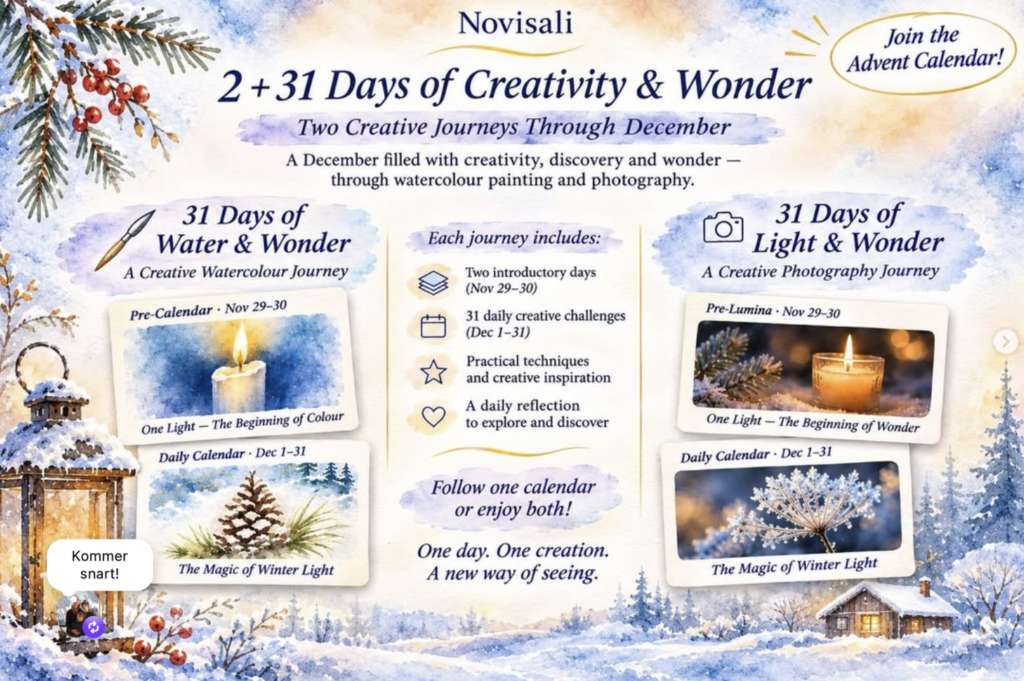
Through colour, light, observation and reflection, both calendars invite us to slow down, experiment and discover the extraordinary within the ordinary. No previous experience is needed — just curiosity and a willingness to explore.
Perhaps imagining new worlds begins with learning to see our own world differently. Join the journey through the Novisali Advent Calendars 2026.
From Seeing the Unknown to Shaping What Comes Next
From Florence’s celestial maps of 1442 to Queen Christina’s reinvention of her life, Menzini’s reflections on art and NASA’s exploration of the cosmos, one thread connects these stories: the human capacity to look beyond what is known and imagine what might become possible.
Science expands our understanding of what exists. Art expands our imagination of what might exist. Leadership helps translate possibilities into choices and collective action. But history also reminds us that imagining new worlds does not necessarily mean creating better ones. Discovery brings new capabilities, while wisdom requires discernment, responsibility and care for those whose futures we help shape.
Perhaps that is where hope becomes most meaningful. Not as a belief that the future will automatically be better, but as the courage to imagine alternatives, recognise possibilities that remain unseen and take responsibility for bringing better ones into being.
Making the invisible possible begins with imagination. Creating a future worth sharing requires what we choose to do with it — together.
Explore Further
Queen Christina – 400th Anniversary
NASA’s Nancy Grace Roman Space Telescope
NASA – Adopt a Pixel
Novisali – Florence Exhibition, November 2026
Novisali Advent Calendars 2026
Florence, Art and Hope – blogpost by Novisali
About Novisali

Novisali, (alias Liselotte Engstam), is besides her roles as professional board member and advisor, a multi-media artist, with a curious, explorative mind and an ambition to learn and extend art experiences to current and new audiences using both traditional and new digital mediums. More information and exhibitions can be found via Novisali.com

This blog post was is also shared at the blog of www.liselotteengstam.com, with the artist name Novisali.