Radical Hope, Living Light, & the Spirit of Stone
There is a kind of hope that refuses to be ornamental. It is not soft or idle. It dares. It builds. It pulses in the cracks of stone, in the spirals of a snail shell, in the branches of a tree turned into stone.

This is the spirit of Hopepunk—a courage that grows where we least expect it, a gentleness that resists despair. It is not escapism but engagement. Not fantasy, but fierce imagination. And where better to let this spirit emerge than in Barcelona, a city where stone itself seems to dream, thanks to its artistic father Antoni Gaudi?
This is a city that teaches us how nature becomes form, and form becomes meaning. Here, even the architecture seems to breathe. Gaudí’s legacy has left more than buildings; it has left messages in color and curve, in shadows and sunlight. To bring Hopepunk to this place is not just to hang art on walls—it is to participate in a conversation that has been echoing for over a century.
Barcelona, with its tangled alleys and wide boulevards, its wild parrots and tiled mosaics, is a city that does not hide its heart. It offers it—layered and luminous—to those who dare to look. Just like Hopepunk. Just like Gaudí.
What Is Hopepunk?
Hopepunk is more than an aesthetic. It is more than a storytelling movement. It is a call to action.
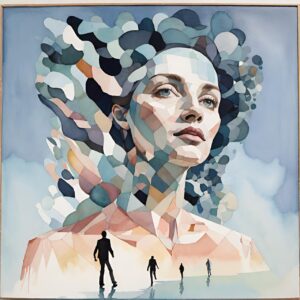
Coined by Alexandra Rowland in 2017 as a counterpoint to the dystopian trend in science fiction, Hopepunk stories are about more than survival. They are about thriving against the odds. About hope. Characters fight for connection, justice, and change—even when success isn’t guaranteed. They insist on purpose, and show us that gentleness can be powerful, and that kindness is a form of resistance.
But Hopepunk isn’t just about art or fiction. It’s a lens through which we can reimagine our world—from the way we govern and lead to the ways we build community. It asks us to reshape the future—not with fear, but with imagination, resilience, and solidarity.
Hope isn’t passive. It’s something we cultivate, defend, and fight for.
A Temple of Becoming: Gaudí and Nature as Guide

No city embodies the Hopepunk spirit like Barcelona, and no artist shaped that spirit more than Antoni Gaudí. His masterpiece, the Sagrada Família, is not simply a church. It is a breathing forest of faith—a place where stone bends like trees and where sunlight becomes prayer.
Gaudí believed the sacred could be found not outside of nature, but within it. His columns weren’t just made to look like trees—they are trees, translated into stone. His vaults echo the spiral of seashells. His staircases rise like vines. His facades mirror mountain ridges, coral beds, and honeycomb. Above all, his work is infused with reverence for the divine within the living world.
“The great book, always open and which we should make an effort to read, is that of Nature.” — Antoni Gaudí

Gaudí built slowly and deliberately, not chasing perfection, but honoring process. The Sagrada Família still remains unfinished—a visible metaphor for spiritual and creative growth. There are no harsh angles. No rigid lines. Only the flowing logic of rivers, roots, clouds, and galaxies.
Inside, light is not merely functional—it is sacred. Blues and greens fill the east side in the morning like water and renewal. Reds and oranges bathe the west at sunset, speaking of fire and transformation. The basilica becomes a living sundial, a prayer made visible across the hours.
To walk into the Sagrada Família is not to enter a structure, but to be received by one. It reminds us: creation is ongoing. Beauty is in process. Divinity lives in the in-between.

And this reverence for nature was not confined to one building. In Parc Güell, Gaudí designed undulating terraces, serpentine benches, and mosaic-covered creatures that echo natural topographies. In Casa Batlló, balconies resemble flower petals and bone, and the facade dances like water. At Casa Milà (La Pedrera), waves of stone sweep skyward, crowned by chimneys shaped like abstracted warriors or windswept stones.
Each of these places teaches us to read nature’s alphabet—to sense its rhythms in curve and color. Gaudí translated the soul of the Earth into architecture, and in doing so, gave us temples of movement and light.
In many ways, Gaudí was a Hopepunk visionary before the word existed. He showed us how art and architecture could be rooted in compassion, shaped by ecology, and open to mystery.
A Future Worth Fighting For
We are living through a time shaped by transition—technological, ecological, and existential. Climate shifts, social unrest, and rapid innovation collide, leaving many of us disoriented. And yet, amidst the chaos, a quiet and determined movement grows.
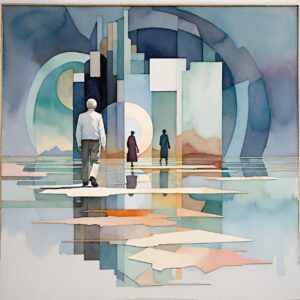
Hopepunk is part of that movement. It reminds us that even in the face of complexity, we can choose a different kind of future. One crafted not just through code and policy, but through creativity and care.
Science gives us tools. Art gives us meaning. Compassion gives us purpose. And together, they offer a blueprint for the future worth fighting for.
This sharing is not a conclusion. It is a beginning. A whispered question:
What would a Hopepunk hero do?
Perhaps they would slow down in a tunnel.
Perhaps they would hold their phone to a wall—and see.
Perhaps they would believe that art can be a doorway.
And maybe, just maybe, they would walk through.
The Tunnel as Portal: Where Hope Comes Alive
There is something poetic about exhibiting these pieces in a metro tunnel. It’s not a destination. It’s not a beginning or an end. It’s a place in-between—where people pass, pause, and carry their stories.
The tunnel becomes a metaphor for our times: a liminal space of movement, transition, and potential. Where even beneath layers of concrete and city noise, light can still enter. In this moment of global flux, we are all, in some way, walking between stations—between what was and what could be. And Hopepunk meets us there.
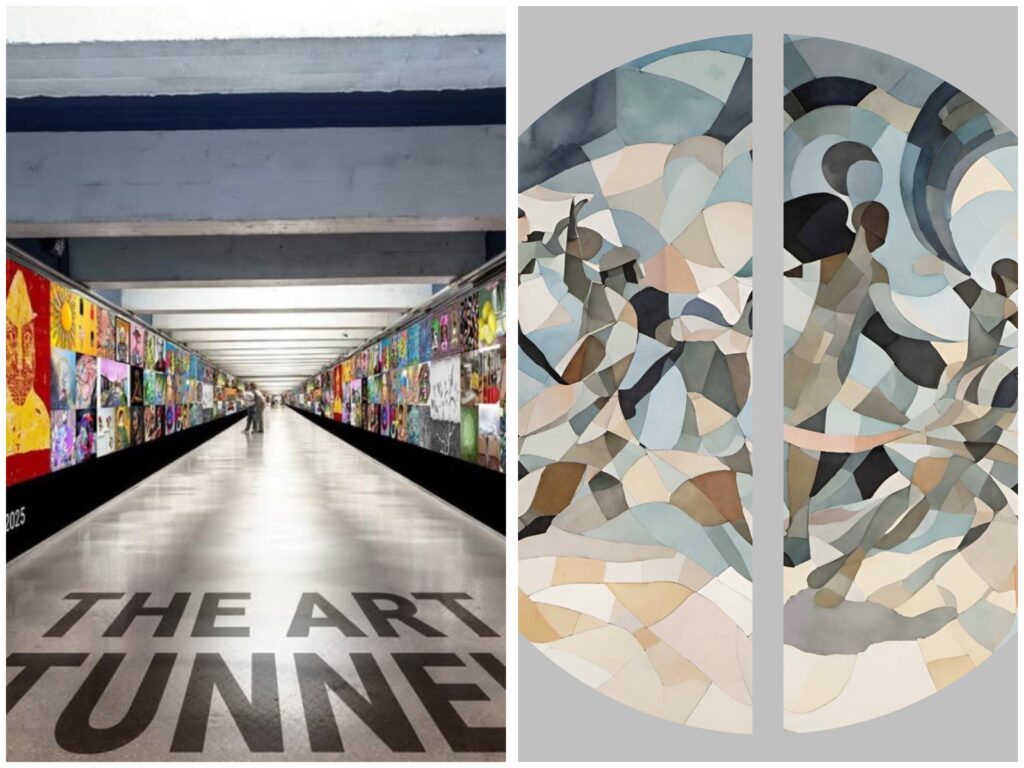
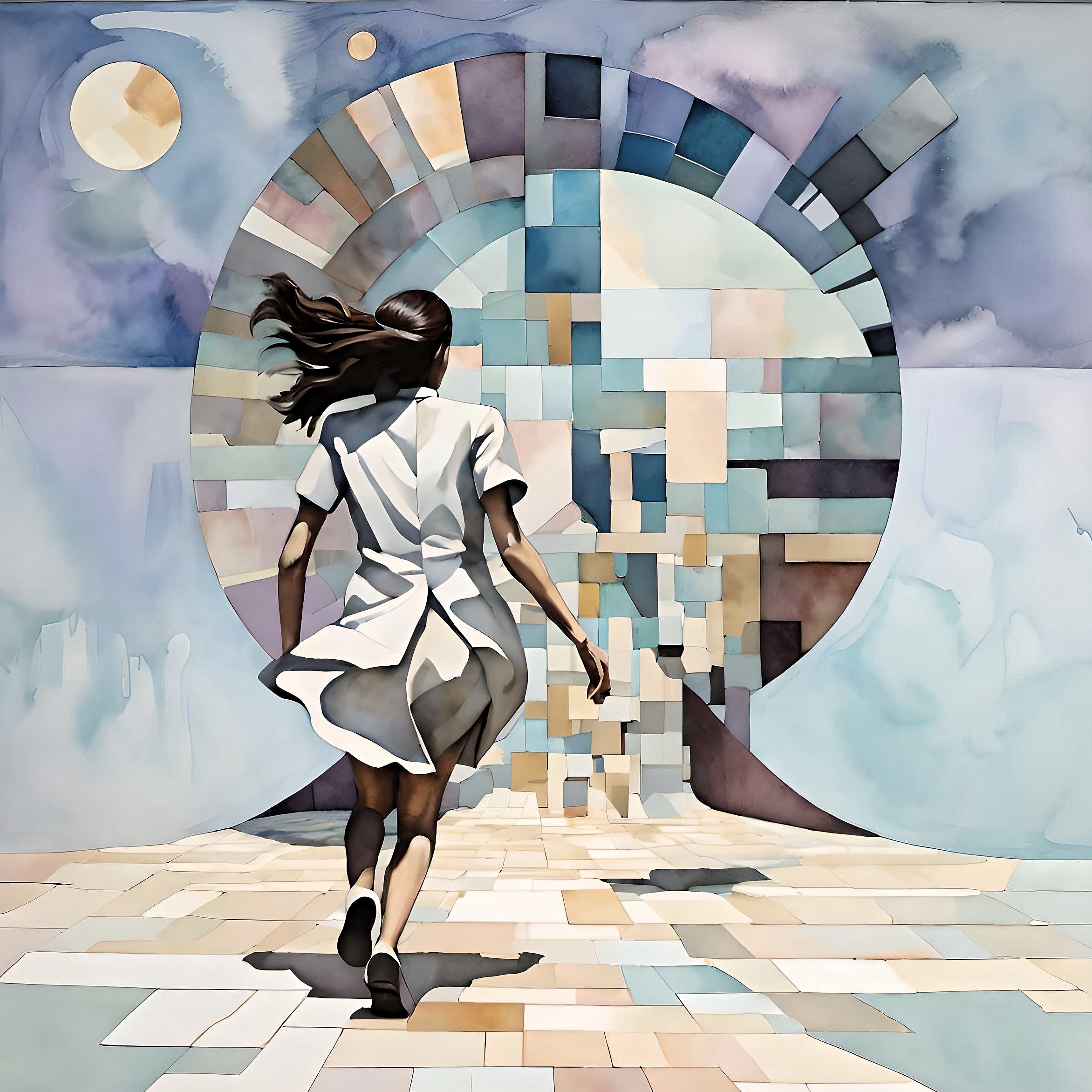
Two Hopepunk works now breathe with the city’s pulse. Hopepunk XVI and Hopepunk XVII are not just images to observe—they are experiences to enter. As the artist behind Novisali, I’ve brought the Hopepunk vision from speculative fiction litterature into public art space—art that doesn’t merely depict hope, but embodies it. Art that invites participation.
Positioned on Billboard 28 in the Barcelona Art Tunnel at Passeig de Gràcia metro station, the pieces mark a moment of beauty and possibility amid transit and transformation. Here, in this underground corridor between L3 and L4, light, movement, and meaning converge in a living invitation to pause.
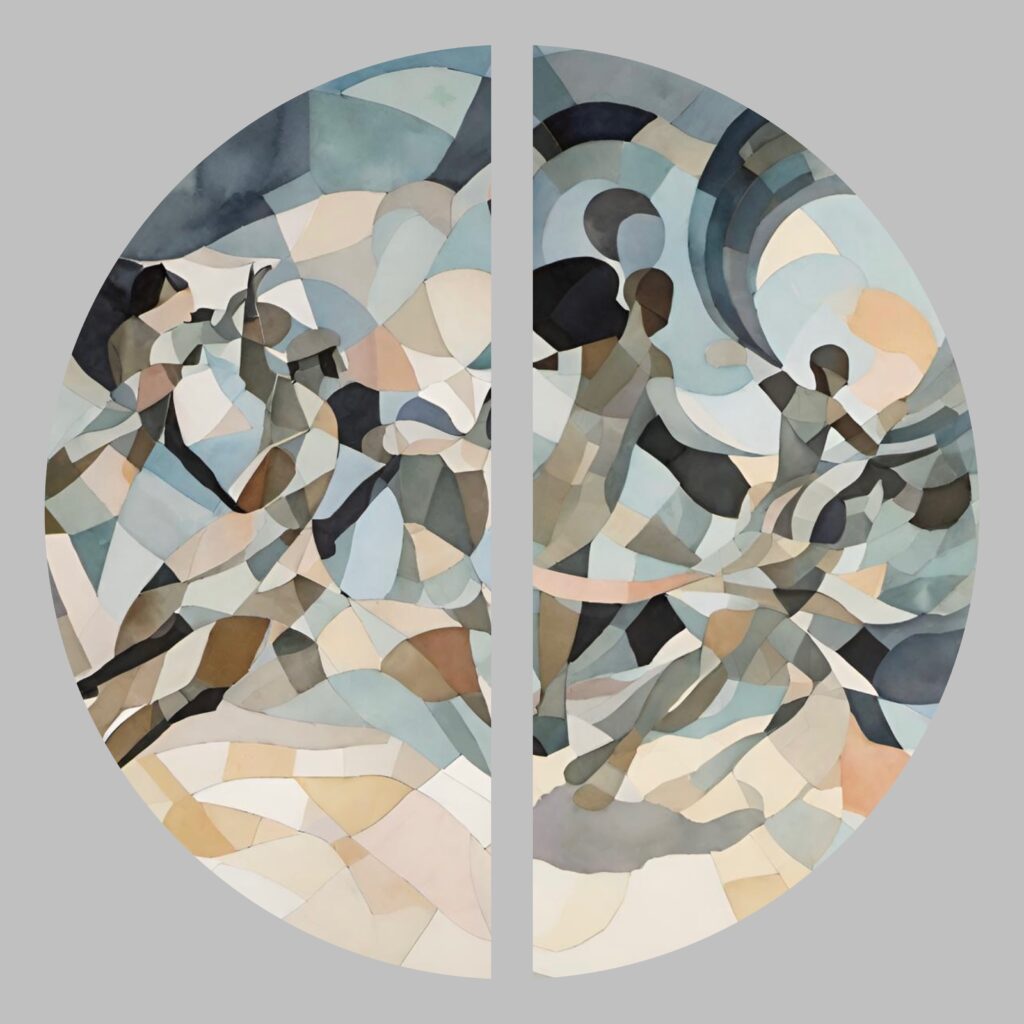
Through Augmented Reality, each piece becomes a living story. By visiting Novisali.com, scanning the QR code, and pointing your phone to the artwork, layers emerge. Color pulses. Movement begins. The artwork comes alive—and with it, your imagination.
The tunnel becomes more than a corridor. It becomes a threshold. A reminder that even in the most ordinary places, the extraordinary can unfold.
Because hope is not something we inherit. It’s something we create.
Visit the Art Exhibition in Barcelona
- Hopepunk XVI and Hopepunk XVII
- Location: Barcelona Art Tunnel, Passeig de Gràcia Station (Corridor L3–L4)
- Billboard 28, Row 2, Columns 3 & 4
- On View: Now until June 29
- AR Experience: Novisali.com
- Read more about the Barcelona Art Tunnel Exhibition
Explore related Virtual Art Exhibition: Hopepunk – Futures of Radical Hope
In addition to joining the Art Tunnel Exhibition, enjoy more artworks for the series “Hopepunk: Futures of Radical Hope” by Novisali
Step into a world where hope is a strategy and creativity sparks transformation. This exhibition celebrates resilience, kindness, and bold imagination, inspired by the Hopepunk movement.
Through visionary art, explore how individuals, companies and communities can defy challenges, reimagine the impossible, and build a future rooted in compassion and purpose.
Explore the virtual exhibition with the support of our Art Guide below.
Reflect Using the AI-Powered Reflection Guide
Use the Novisali Art Reflection Guide AI Companion to explore your chosen artwork. The guide will prompt you to:
- Describe the artwork in your own words.
- Reflect on the emotions, thoughts, and recent experiences it brings to mind.
- Identifying simple, actionable priorities inspired by your reflections.
- Summarizing your insights and shaping a meaningful next step forward.
Please Note:
This AI-powered guide, created with ChatGPT, is designed to inspire personal reflection and action through engagement with Novisali’s artwork. For critical decisions, always consult a trusted advisor or professional. Use of the guide requires your own (free) ChatGPT account.
DATA PRIVACY NOTICE:
Neither Novisali nor Digoshen tracks or stores any user data. By using the Novisali AI Reflection Guide, you accept responsibility for your own data choices. To opt out of OpenAI’s model training, go to “Settings” > “Data Controls” in ChatGPT and disable “Improve the model for everyone,” or manage preferences through OpenAI’s Privacy Portal. Conversations may be retained by OpenAI for up to 30 days for abuse monitoring before permanent deletion.
More inspiration
Read Earlier related blogpost:
Playlist on Spotify: Hopepunk
About Novisali
This blog post was originally shared at the blog of the blog of Digoshen www.digoshen.com, the Digoshen & Boards Impact Forum Chair and founder www.liselotteengstam.com, with the artist name Novisali and on the blog on Novisali.com .
Novisali, (alias Liselotte Engstam), is besides her roles as professional board member, advisor and coach, a multi-media artist, with a curious, explorative mind and an ambition to learn and extend art experiences to current and new audiences using both traditional and new digital mediums. More information and exhibitions can be found via Novisali.com