The Language of Shapes
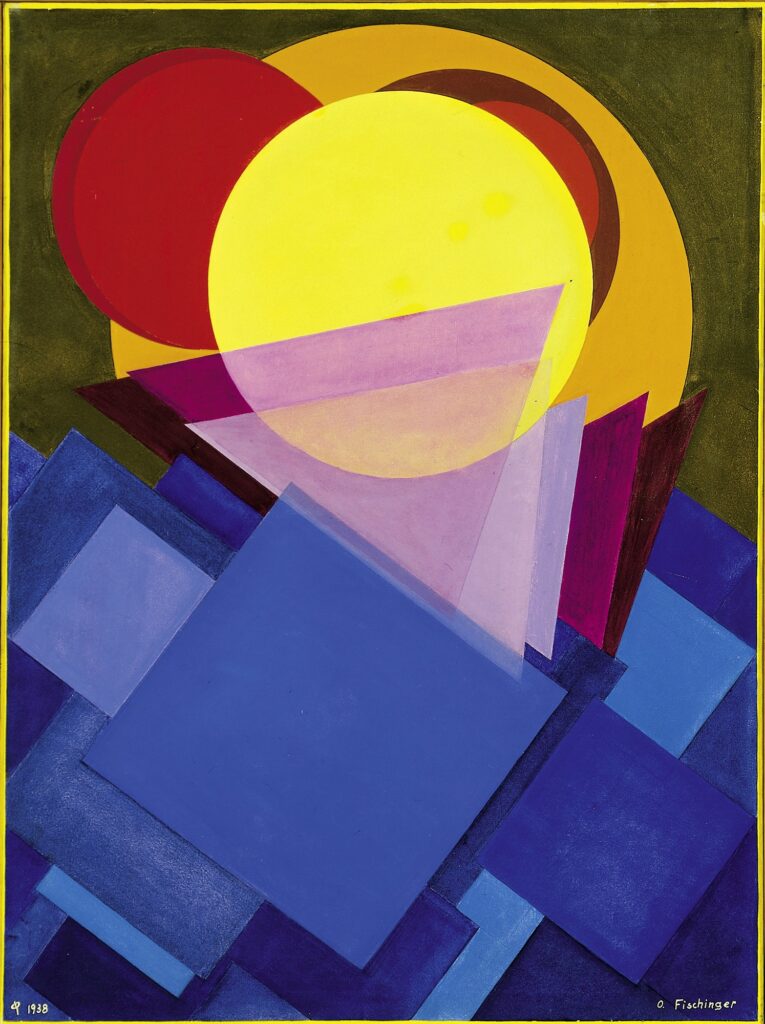
Triangles, circles, and squares: three forms so simple a child can draw them, yet so profound that they have guided artists, architects, scientists, and seekers for millennia. They are not just geometry but a grammar of the world. In paintings, they set mood and rhythm. In photography, they guide the gaze and hold balance. In science and nature, they reveal hidden laws of strength, cycles, and growth. And in philosophy and spiritual traditions, they appear again and again as archetypes — aspiration, unity, grounding.
When we pay attention to these shapes, we begin to see them everywhere — in the rise of a roofline, in the orbit of a planet, in the frame of a photograph, in the sacred centers of faith. They remind us that form is never only surface, but meaning, memory, and metaphor.
The Triangle
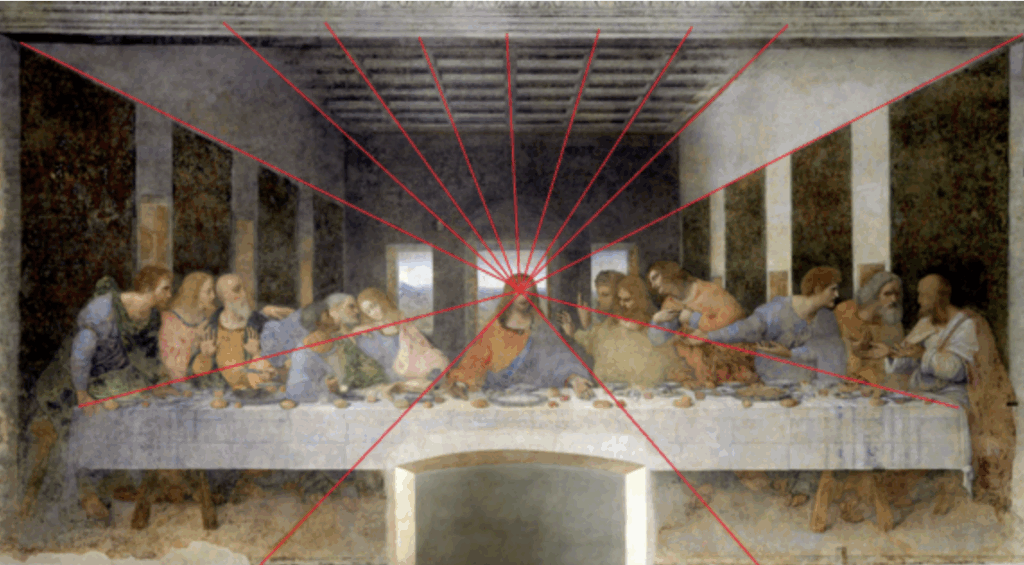
The triangle is the shape of reaching. It points, it leans, it gathers energy to rise. In Leonardo da Vinci’s The Last Supper, Christ sits at the center of a perfect triangle, a geometry that steadies the whole composition and, at the same time, directs the eye upward toward transcendence. The triangle here becomes not only a compositional tool but a symbol of balance, divinity, and the tension between earth and heaven.
Artists and photographers have long trusted the triangle for its ability to create movement and equilibrium. In architecture, towers, gables, and pyramids rise in triangular silhouettes, embodying both stability and aspiration. The triangle is dynamic: an upright form suggests strength and harmony, while an inverted one hints at imbalance, fragility, even danger.
Science confirms what the eye intuits: the triangle is the strongest of shapes. Bridges stand on triangular trusses, each side leaning into the other, refusing collapse. At the microscopic level, molecules often arrange themselves in triangular or tetrahedral patterns, revealing that even nature depends on the strength of this archetype.
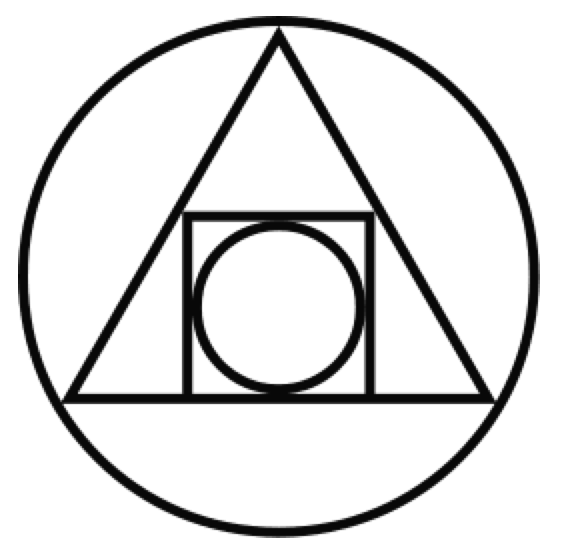
Symbolically, the triangle has carried multiple meanings. In alchemy, the upward triangle was fire, spirit, striving; the downward triangle was water, receptivity, surrender. In Christianity, it became the Trinity — three distinct, one eternal. In every context, the triangle holds tension: balanced yet dynamic, grounded yet always pointing beyond itself.
Reflective Question: What is your triangle right now — what are you reaching toward, and where do you feel the tension of balance in your life?
The Circle
Where the triangle points, the circle embraces. It is the line with no beginning and no end, the form of wholeness and eternal return.
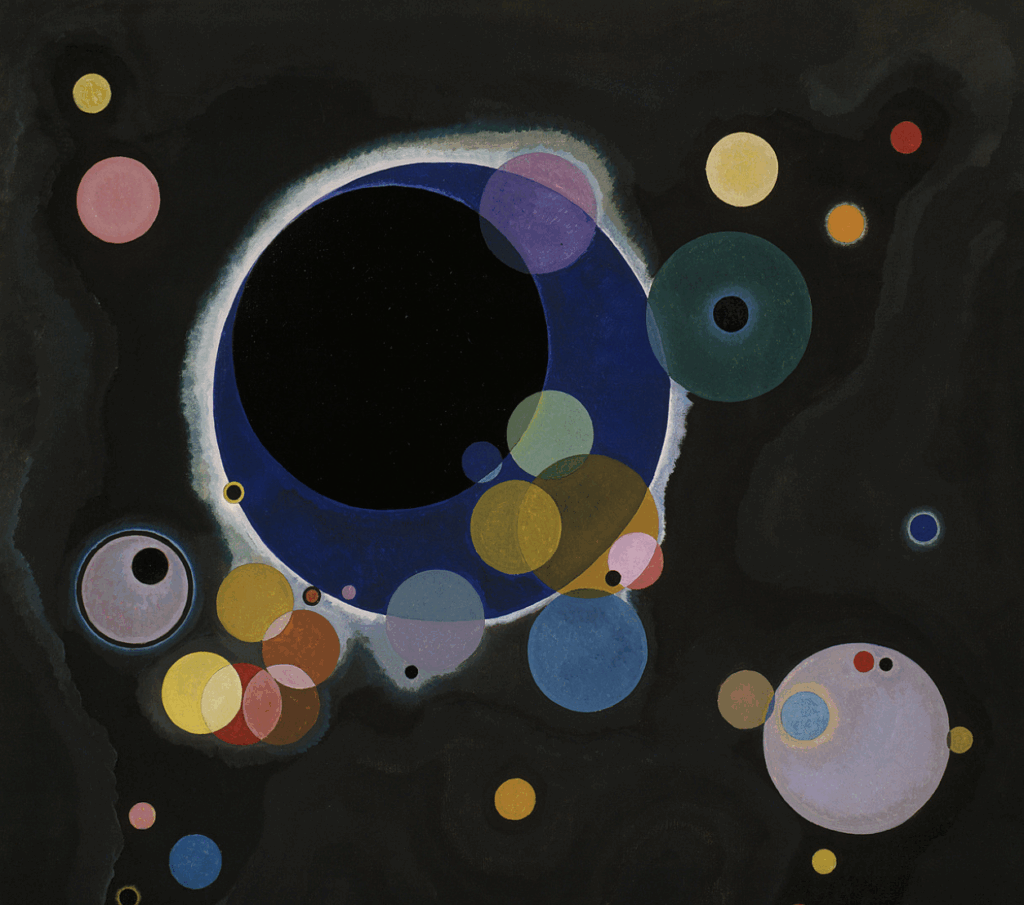
Kandinsky called it the most spiritual of shapes, and in his Several Circles, they float like planets suspended in cosmic rhythm, vibrating with unseen harmony. Across cultures, circles have been used to map both the universe and the soul. In Hindu and Buddhist traditions, mandalas unfold as intricate circles, representations of the cosmos and the path toward inner completeness.
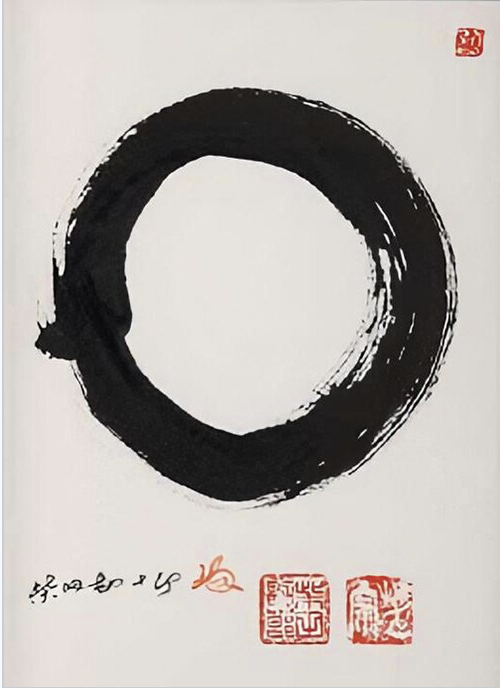
In Zen practice, the ensō — drawn in a single breath — captures enlightenment, emptiness, and presence, all at once.
Circles guide the eye differently than triangles: they hold us, draw us in, and set us moving endlessly along their path. A round mirror reflects not only the subject but the endlessness of seeing. The curve of an arch softens edges and invites entry. A stone cast into water writes its memory in widening rings, a visible poem of cause and effect.
Nature, too, favors the circle. The orbits of planets, once traced by Kepler, reveal cycles of cosmic order. The rings of a tree mark time, each band a record of survival. Ripples move across a pond, carrying outward the energy of a single drop. Even our eyes — the portals of perception — are circles gazing out and in.
Philosophically and spiritually, the circle speaks of eternity and return. The ouroboros, the serpent devouring its own tail, illustrates the cycle of life and death unending. The Zen ensō embraces both everything and nothing, perfection and imperfection. The circle reminds us that life itself is cyclical — that what departs one day returns, changed but continuous.
Reflective Question: Where in your life do you sense circles — rhythms that repeat, cycles that return, or wholeness that holds you together?
The Square
If the circle belongs to heaven, the square belongs to earth. It is the form of grounding, order, and stability.
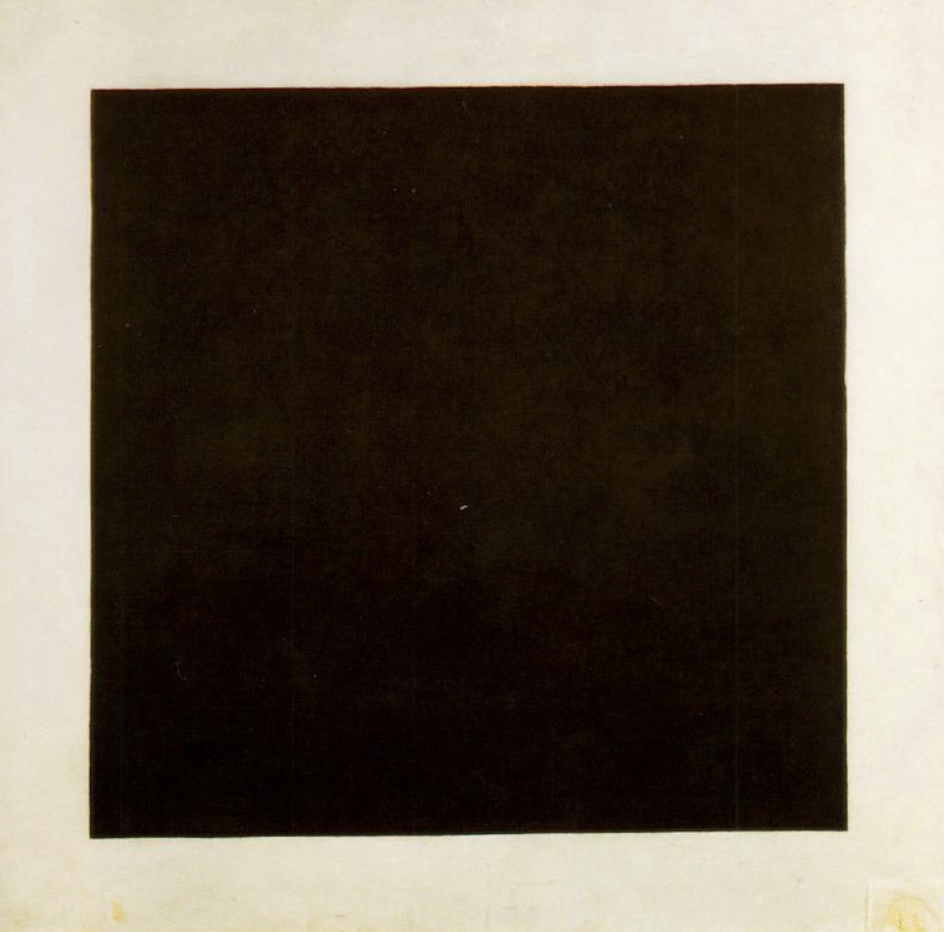
In 1915, Kazimir Malevich unveiled his Black Square, a stark painting he called the “zero point of art.” Preserved today at the Tate, it still feels radical: a rupture with representation, a doorway into pure form. Mondrian later sought harmony in grids of squares and rectangles, balancing blocks of color to reflect universal order.
The square has shaped how we see. Square-format cameras like the Hasselblad or Rolleiflex demanded symmetry, while Instagram’s original square frame trained a generation to think in balance. The square insists on boundaries, on edges, on balance.
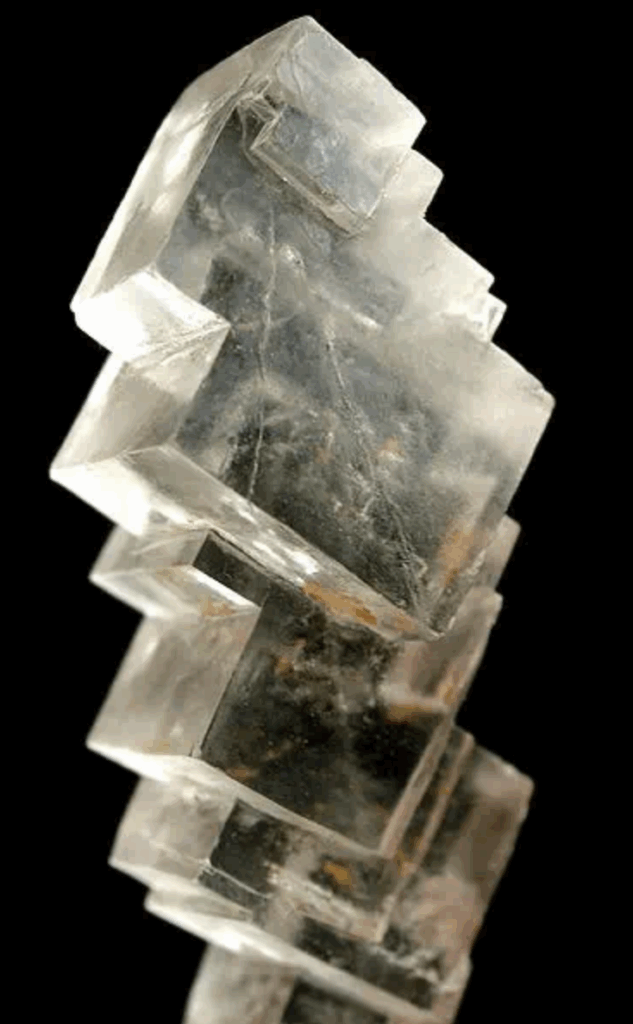
In nature, the square is less common but no less striking. Salt crystals grow as perfect cubes, miniature architectures of matter. Human culture has embraced the square fully: cities and houses are framed in rectangles, books rest as squares in the hand, and chessboards mark the logic of the mind’s battle.
Spiritually, the square carries grounding power. In Chinese cosmology, heaven was round, but earth was square — the infinite paired with the material. Native American medicine wheels divided life into four directions and four elements, rooting the circle of existence in the logic of four. At the heart of Islam stands the Kaaba in Mecca, a perfect cube circled endlessly by pilgrims, embodying the meeting of heaven’s infinity and earth’s solidity.
Reflective Question: What is your square — where do you feel grounded, stable, or held by the boundaries and structures in your life?
Shapes through My Lens
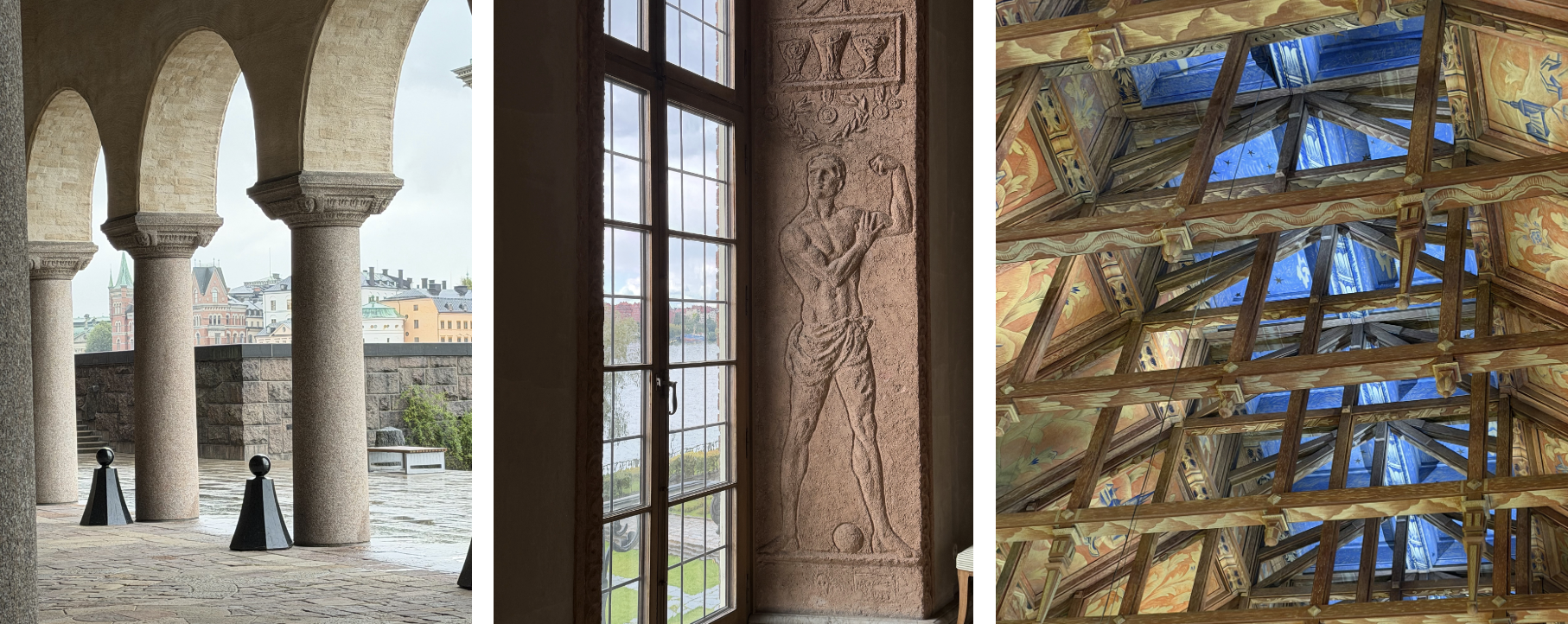
These archetypal forms are not only found in paintings, temples, or scientific models — they are also present in the very spaces we walk through. During one of our weekly Photography and Composition Challenges, I followed the thread of squares, triangles, and circles through the Stockholm City Hall, the venue where the Nobel Banquet is held each December. Moving through its architecture, I began to see how these shapes are not abstractions but living companions, guiding both structure and spirit.
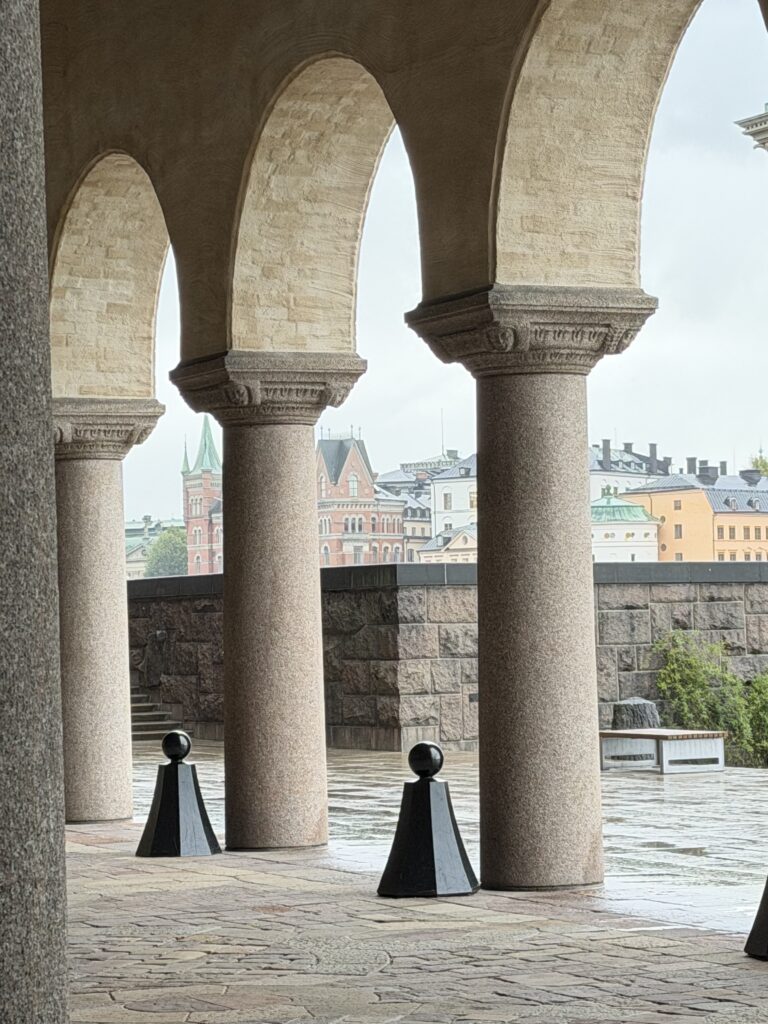
The arcade outside Stockholm City Hall, designed by architect Ragnar Östberg, is carried by massive granite pillars and rounded arches inspired by Italian architecture. Circles appear in the arches and spheres, triangles in the bases of the markers, and squares in the stone blocks of the wall. Together they create a balance between strength and ornament, echoing Östberg’s vision of blending Italian grace with Swedish solidity.
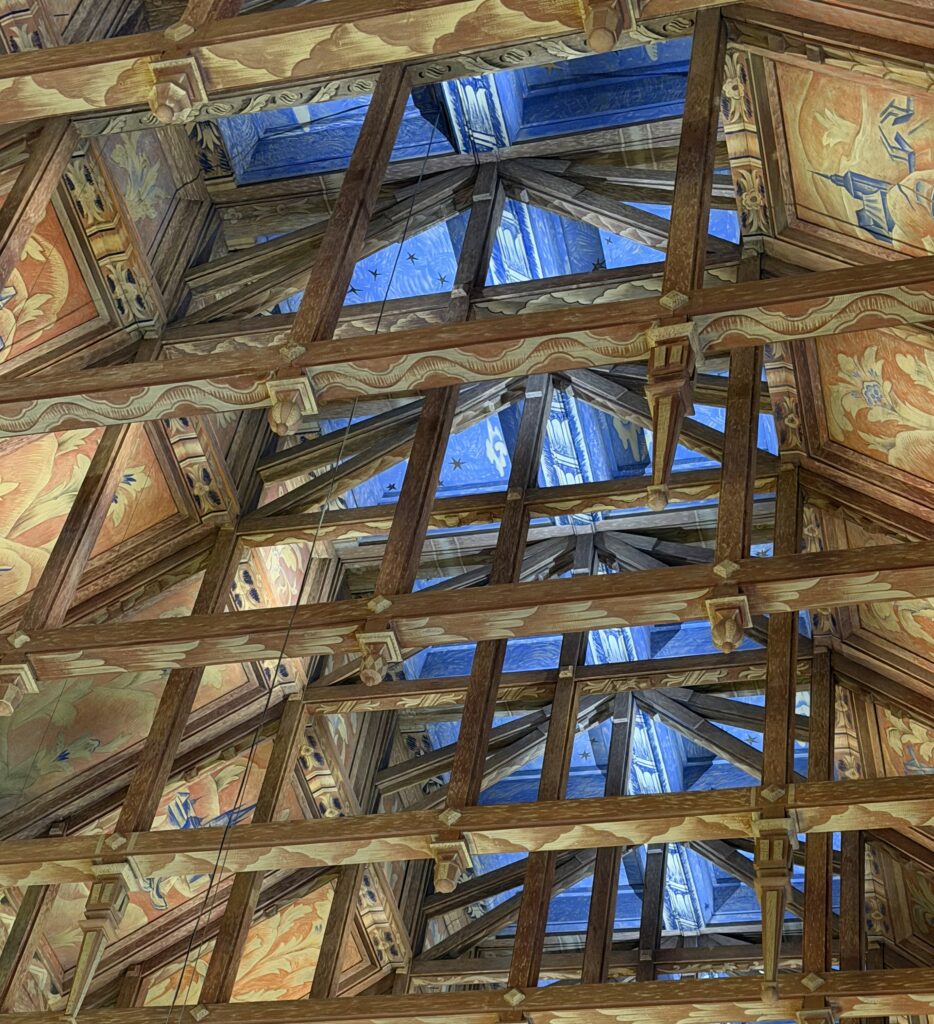
Inside the Council Chamber, where Stockholm’s City Council meets, the ceiling becomes a tapestry of forms. Wooden beams cross into triangles and squares, while painted panels of stars and leaf ornaments bring circular rhythm to the space. Designed by Östberg and decorated by Axel Erdmann and Olle Hjortzberg, the hall embodies the National Romantic spirit — a meeting of technique, symbolism, and artistry.
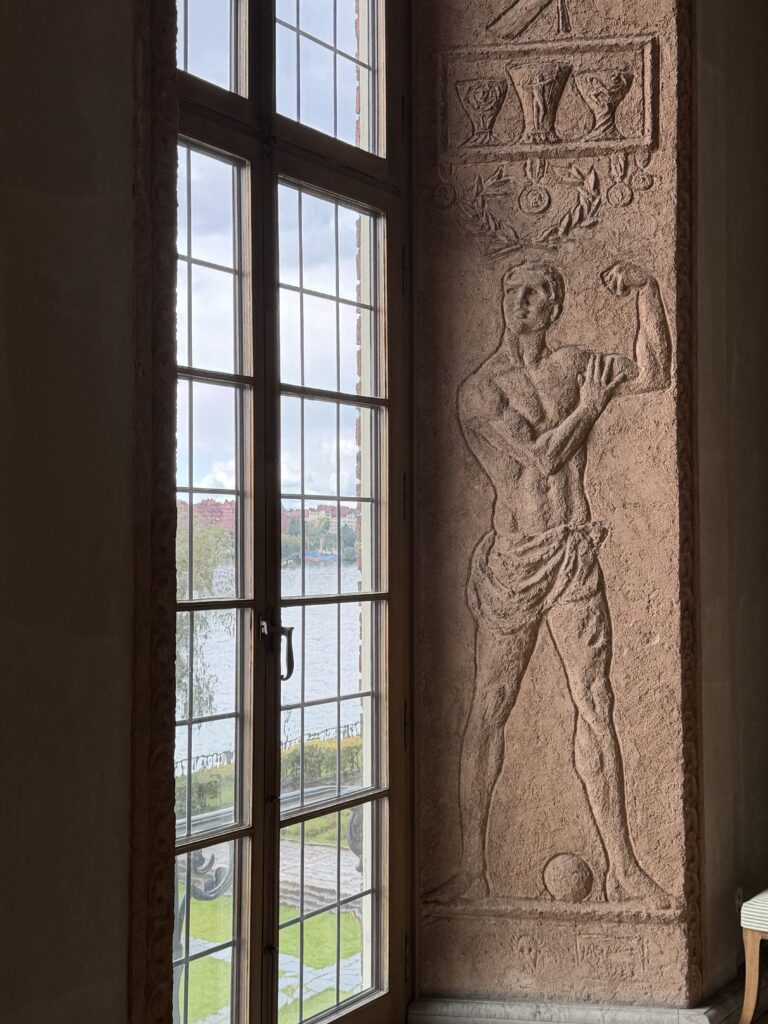
The Prince’s Gallery, overlooking Riddarfjärden, shows how geometry and the human figure converse. Sculptor Carl Eldh’s relief of a powerful male form stands beside a gridded window, its strict squares contrasting with the organic body. Circles in the nearby spheres and the figure’s diagonal stance draw the eye into a dialogue of stability and motion, of art and architecture intertwined.
Closing
Triangle, circle, square. Three shapes, endlessly repeated. The triangle rising, the circle flowing, the square grounding. They appear on canvas, in photographs, in molecules, in the orbits of stars, and in the sacred centers of faith. They are more than geometry: they are metaphors for living.
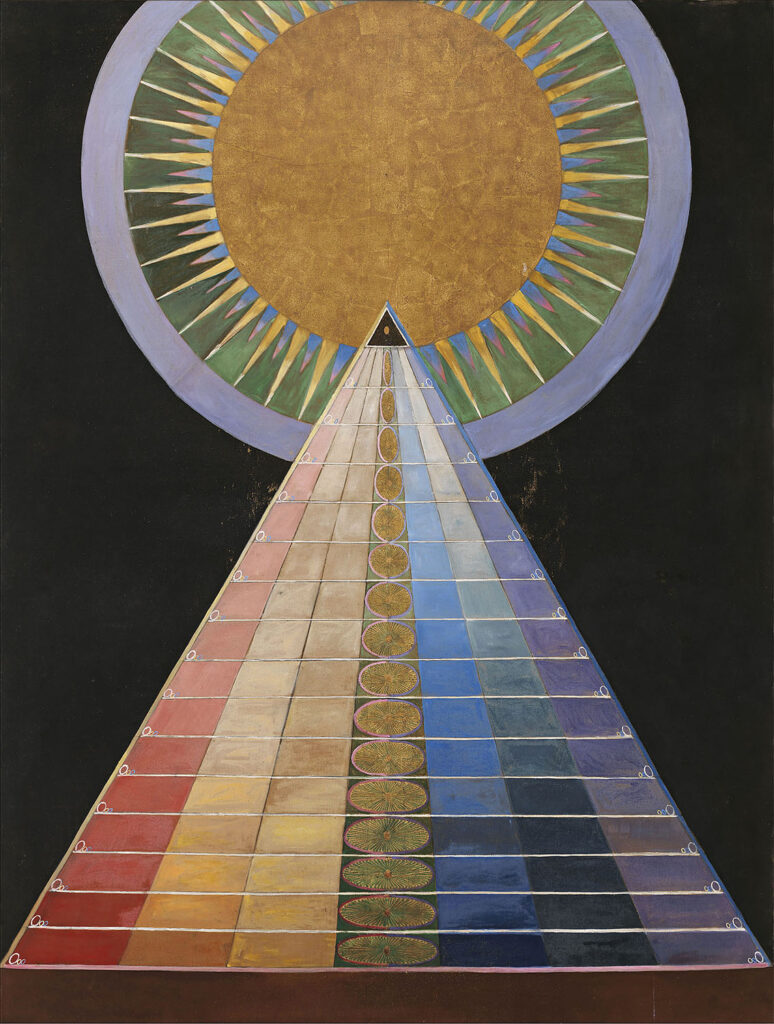
To see them is to remember that life, too, has its shapes. We reach, we return, we root. And in their quiet presence, these forms remind us that aspiration, unity, and grounding are not only patterns in art but rhythms of existence.
Final reflection: Which of these shapes calls to you most strongly now — are you in a season of reaching like the triangle, flowing like the circle, or grounding like the square?
References
The Secret and Sacred Geometry of Leonardo’s The Last Supper
The Alchemist Symbol — OUP Education Blog
“1992” — Guggenheim Collection
Ensō — Wikipedia
“Black Square” — Kazimir Malevich — Tate
Salt Crystals, Cubic Geometry — ZME Science
Stockholm City Hall — Wikipedia
Nobel Banquet — Wikipedia
The Nobel Prize — Official Site
Hilma af Klint: Altarpieces — Art Gallery of New South Wales
From Reflection to Encounter
This reflection on shapes does not remain only in words. On October 10-13 2025, these silent shifts of perspective will find form in public space at Art Fair ARTMUC Munich, where Novisali’s guardians — Fox, Bear, Eagle, and Hedgehog — will be shown with Galeria Gaudi.
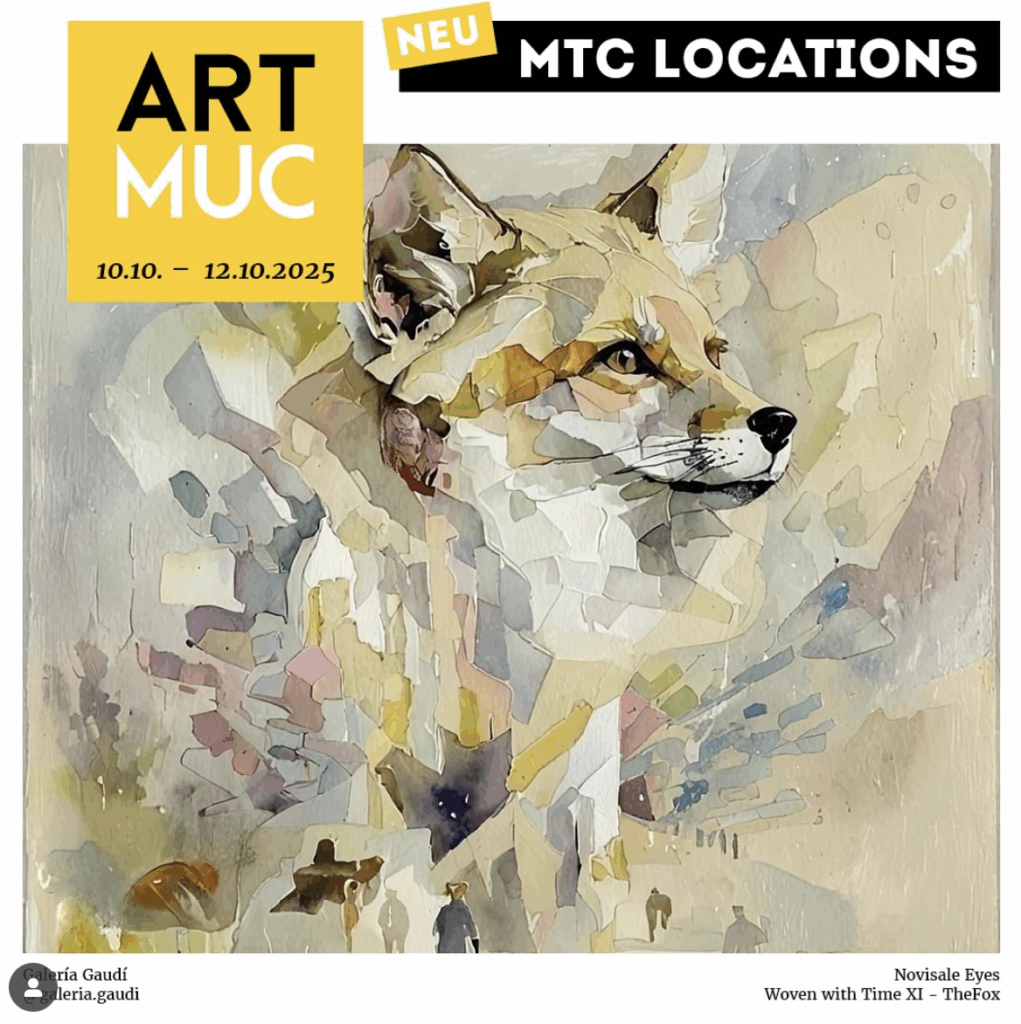
Each guardian carries its own shape of vision — a triangle’s reach, a circle’s embrace, a square’s grounding — each a way of seeing and protecting. They invite visitors to move closer, to circle, to pause. In the exhibition hall, the play of forms deepens: light, distance, and the movement of others turn still images into living encounters. Shapes emerge not only within the works, but also in the spaces between them, in the sightlines that cross the fair’s hundreds of voices in art.
What was once inward reflection becomes shared discovery. To follow the line of a triangle, the curve of a circle, the frame of a square, is to step, to lean, to look anew — together, in Munich. Read more about the exhibition here.
About Novisali
Novisali, (alias Liselotte Engstam), is besides her roles as professional board member and advisor, a multi-media artist, with a curious, explorative mind and an ambition to learn and extend art experiences to current and new audiences using both traditional and new digital mediums. More information and exhibitions can be found via Novisali.com
This blog post is also shared at the blog of www.liselotteengstam.com, with the artist name Novisali.