
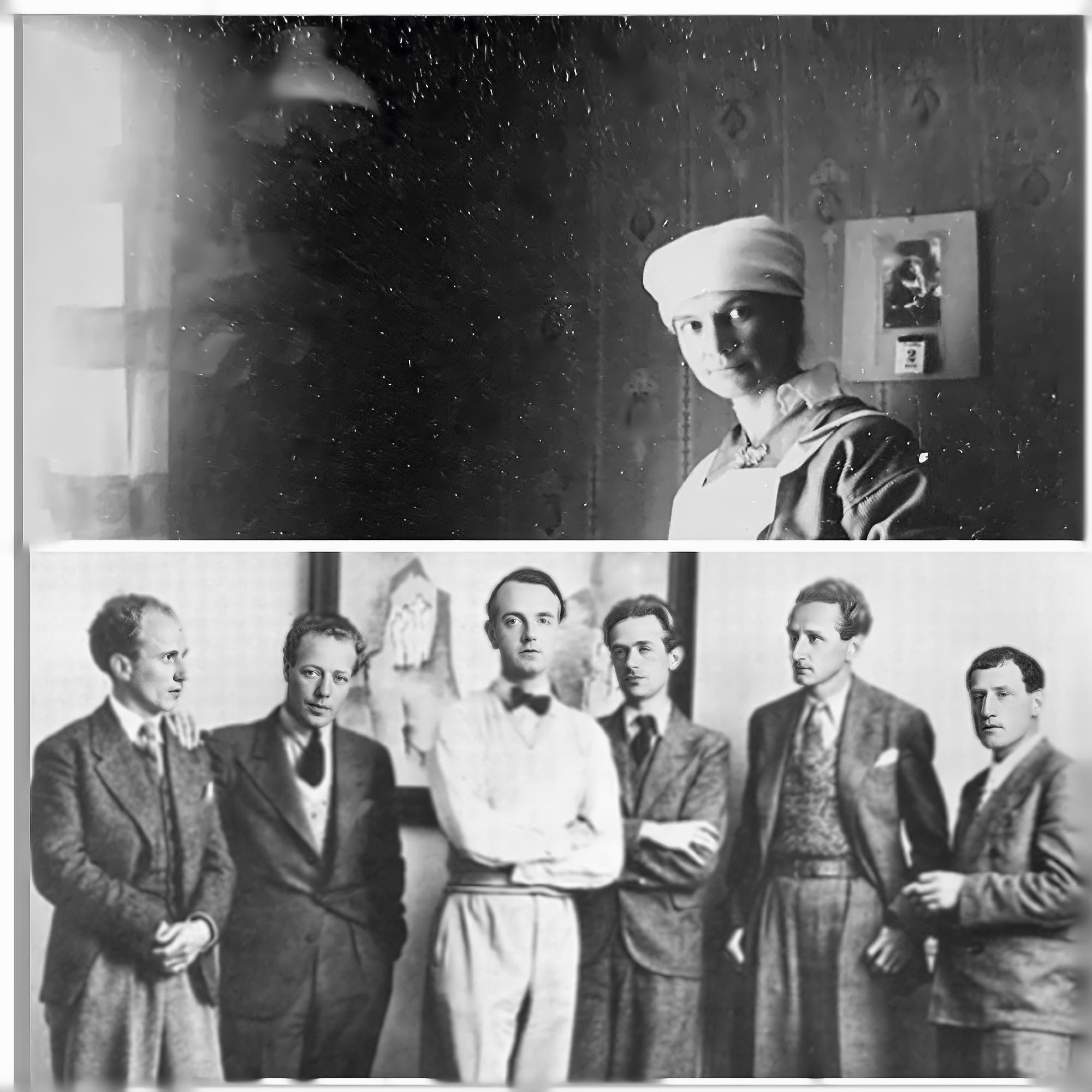
A fictional correspondence between photographer Engla Hägertz and the Halmstad Group
(Läs denna blogpost på svenska HÄR)
What happens in what was never said? What might have emerged, had their worlds—of camera and brush, of everyday life and dreams—truly met?
This project imagines a conversation that was never documented but might well have taken place. Through fictional letters, we follow an imagined correspondence between Engla Hägertz, photographer in Oskarström, and members of the Halmstad Group—six young artists with roots in the same Halland soil but with visions reaching far beyond the horizon.
Two visual realms, one shared light
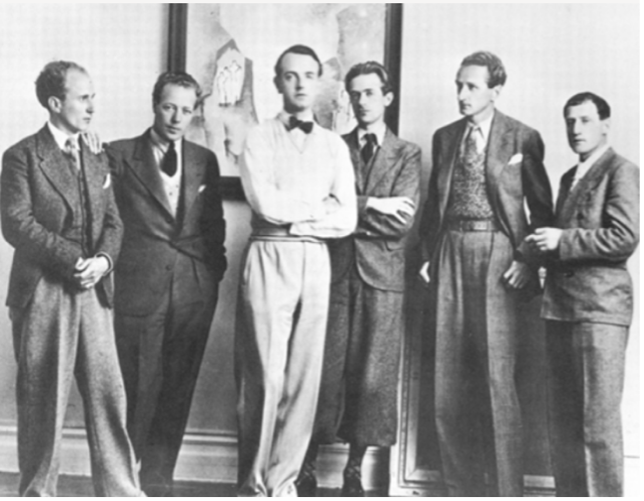
The Halmstad Group—consisting of Erik Olson, Axel Olson, Waldemar Lorentzon, Esaias Thorén, Sven Jonson, and Stellan Mörner—became known for their dreamlike, surrealist, and often geometrically structured paintings. Drawing inspiration from Parisian modernism and the symbolic language of the subconscious, they created art that both provoked and puzzled.
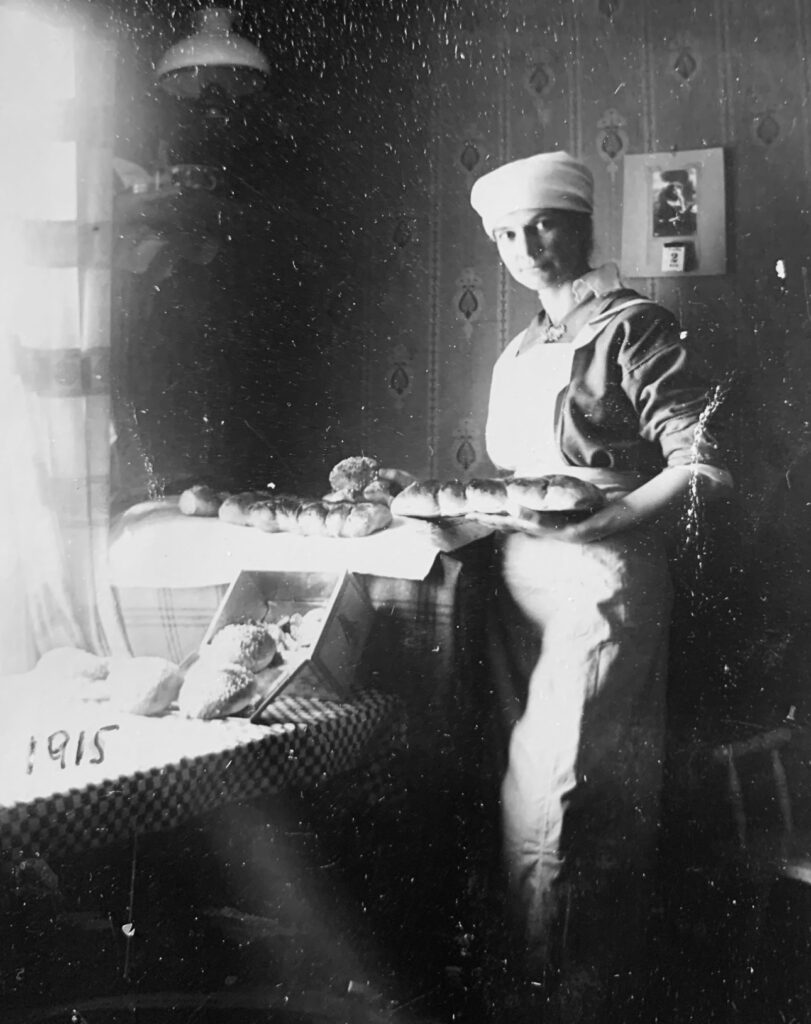
Engla Hägertz worked simultaneously, though in a different sphere. As a female photographer in an industrial town, she captured portraits, landscapes, and everyday moments with equal parts precision and intuition. Her photographs carry both documentary value and poetic presence—especially in her later works, where shadows, reflections, and in-between spaces are allowed to speak.
If they had met
Perhaps they glimpsed one another’s images—in storefronts, studios, or fleeting thoughts. Perhaps one of the artists saw her photographs in Oskarström and felt a quiet kinship. Perhaps Engla heard about their exhibitions in Halmstad or Gothenburg—and wondered what lay behind their dreamlike forms.
In these letters, they finally meet. In thought, in image, in the spaces between two modes of expression. The words exchanged are gentle, sometimes cryptic, sometimes precise—but always rooted in a shared search for what lies beneath the surface.
It is a poetic experiment. An artistic what-if. An invitation to listen into the silence that sometimes arises—just where the image ends, and something new begins.
Engla in Other Conversations
This is not the only imagined correspondence centered on Engla Hägertz. In a parallel artistic project—“When Quiet Visionaries Speak”—a similar poetic correspondence unfolds between Engla and the artist Hilma af Klint. There, the dialogue moves within the spiritual and intuitive, between symbols, visions, and stillness.
Here—in dialogue with the Halmstad Group—the focus is instead on Halland’s soil, the shadows of the body, and the forms of art.
— Novisali
Letters between Engla Hägertz and members of Halmstadgruppen
Axel Olson → Engla Hägertz
Halmstad, October 1916
Dear Miss Hägertz,
My fingers are stained with graphite—shadows left from a long day of silent experimentation.
Erik and I saw your portraits from Oskarström. The woman in the cook’s cap, in front of the medallion wallpaper. That gaze—as if she’d been painted by the innermost longing of light.
We call ourselves The Spark. An attempt to paint what we can only sense.
Would you consider lending us an image? One that doesn’t just show—but thinks.
In shifting shadows,
Axel
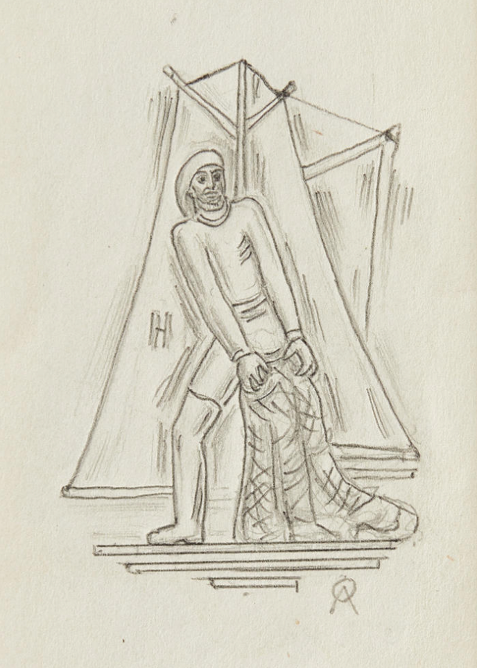
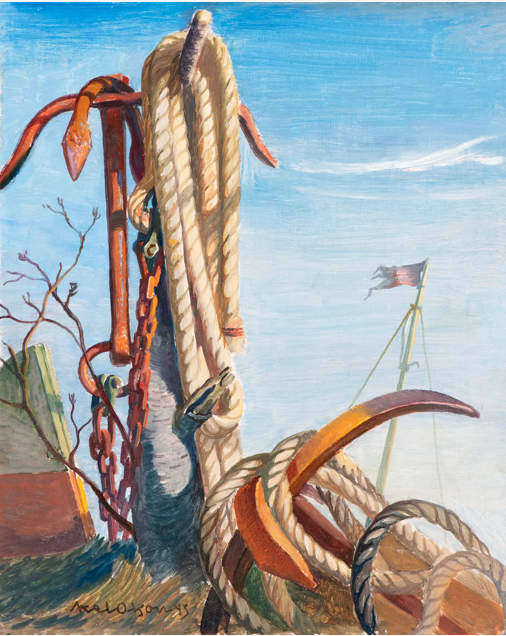
P.S. I’m enclosing a sketch: a fisherman hanging his nets, and an image of a work with an anchor and rope. Small things that linger in the hand.
Engla Hägertz → Axel Olson
Oskarström, November 1916
Mr. Olson,
Your letter stirred something quiet in me. My images are silent—but sometimes they whisper to those who listen with the soul.
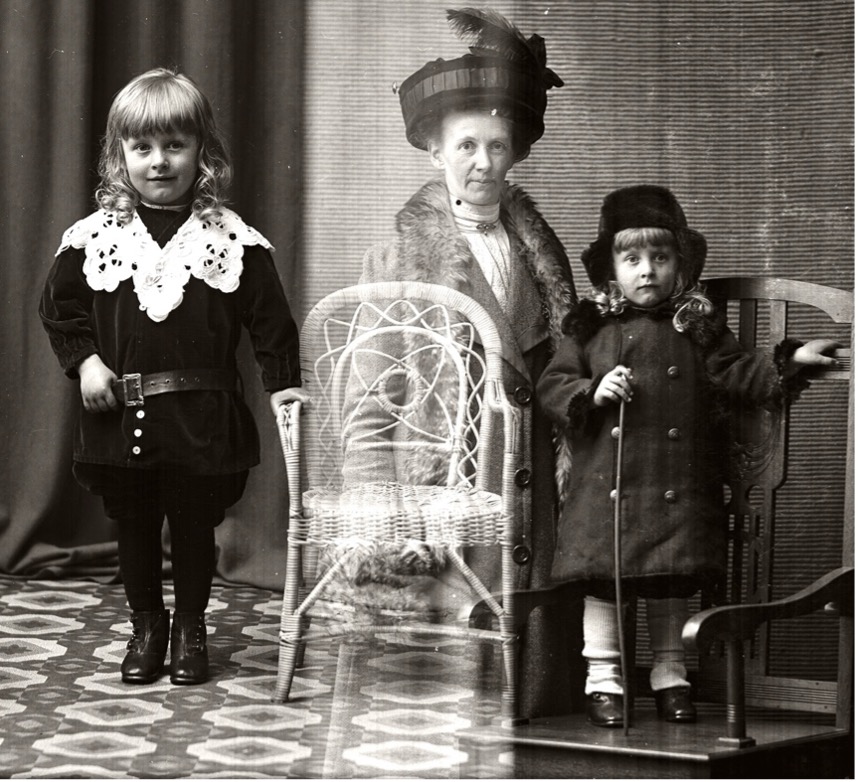
I’m sending a photograph of a child’s chair, double-exposed with two faces. It’s from Oskarström, but could be a memory from anywhere.
Let your spark burn not high—but deep.
With gentle stillness,
Engla
Waldemar Lorentzon → Engla Hägertz
Snöstorp, April 1918
Mrs. Hägertz,
The chair you sent has haunted me. I dreamt it toppled under a sky full of stars.
Lately, I paint only forms: pears, circles, ladders. But the way you make a room breathe won’t leave me.
Have you ever photographed through a mirror? I tried today—but the mirror only showed myself.
/ Walle
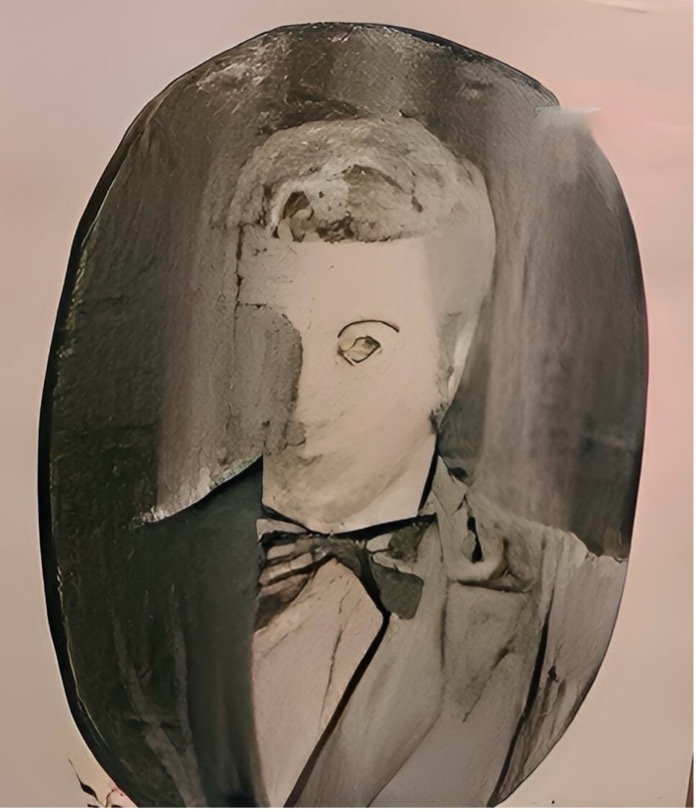
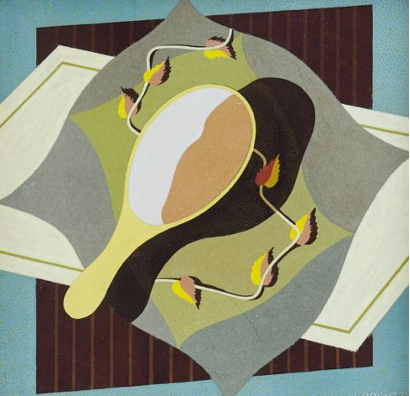
P.S. A drawing of myself enclosed, and a photo of a piece: mirror, autumn leaves, dreams.
Engla Hägertz → Waldemar Lorentzon
Oskarström, June 1918
Dear Waldemar,
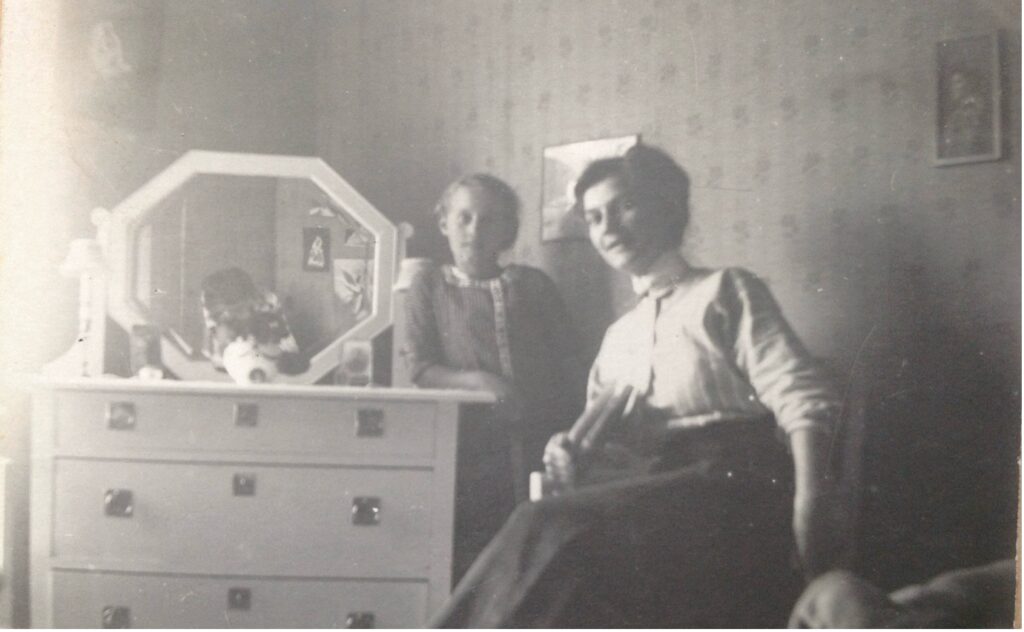
Mirrors often lie. But sometimes they show exactly what we’re fleeing from.
I have a glass plate where my face is faintly visible—overexposed, nearly erased. But I kept it.
If you paint your ladders, let them rest against something not yet seen.
Kindly,
Engla
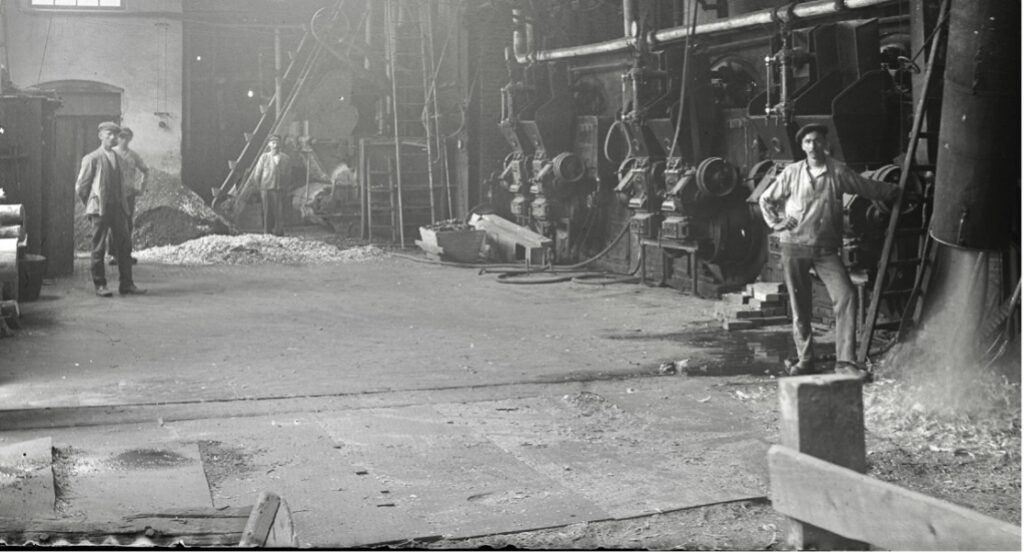
P.S. Enclosed is the photo where I appear in the mirror, and another from Oskarström’s jute factory, with a few workers.
Sven Jonson → Engla Hägertz
Halmstad, November 1923
Miss Engla,
I write from the buzzing pause of the printing press. Esaias and I are forming Modern Reklam—a world between art and utility.
We saw your factory photo. No one smiles, yet presence radiates.
Is there an image you haven’t sold? One too quiet for the scream of a poster—but strong enough to see?
With respect,
Sven
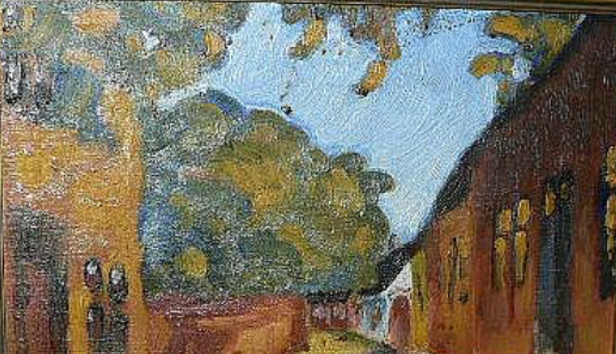
P.S. Enclosed: an image from Vallgatan, Halmstad, recently painted in oil.
Engla Hägertz → Sven Jonson
Oskarström, January 1924
Mr. Jonson,
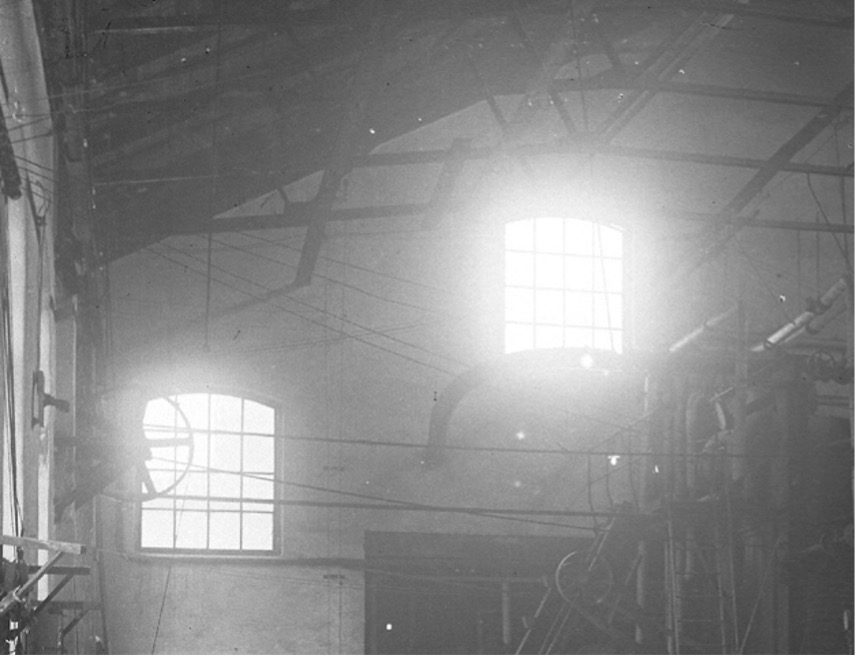
I have a negative—factory, two windows, hesitant light. No one wanted it. It was too silent.
But you may borrow it.
Posters are fixed eyes. They must see more clearly than we do.
/ Engla
Esaias Thorén → Engla Hägertz
Halmstad, March 1925
Miss Hägertz,
We’ll soon exhibit—at the Stadshotellet. Will you come?
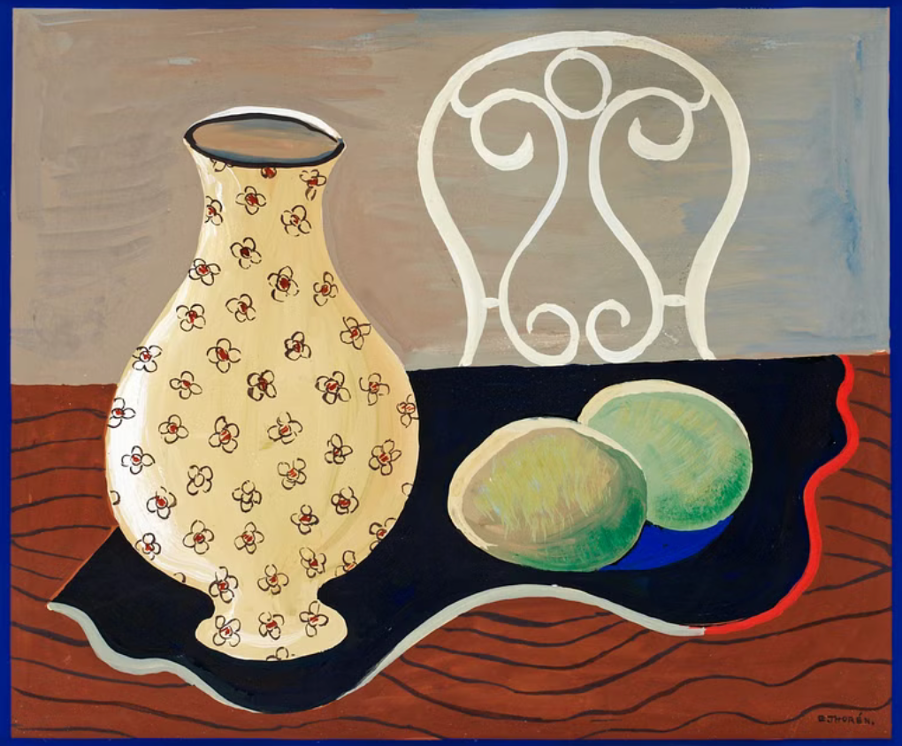
I painted a table, a vase, fruit, and a chair leaning like in a dream. Sven calls it surrealism—I say everyday life in disguise.
Creation sways: red becomes green, geometry yearns for forest. Do you have a photo that tries to hide its subject?
Your friend,
Esaias
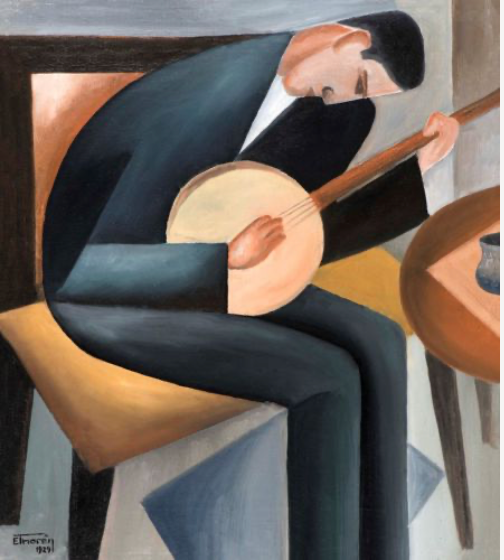
P.S. Enclosed: images of the still life and a banjo player I painted in oil last year.
Engla Hägertz → Esaias Thorén
Oskarström, April 1925
Esaias,
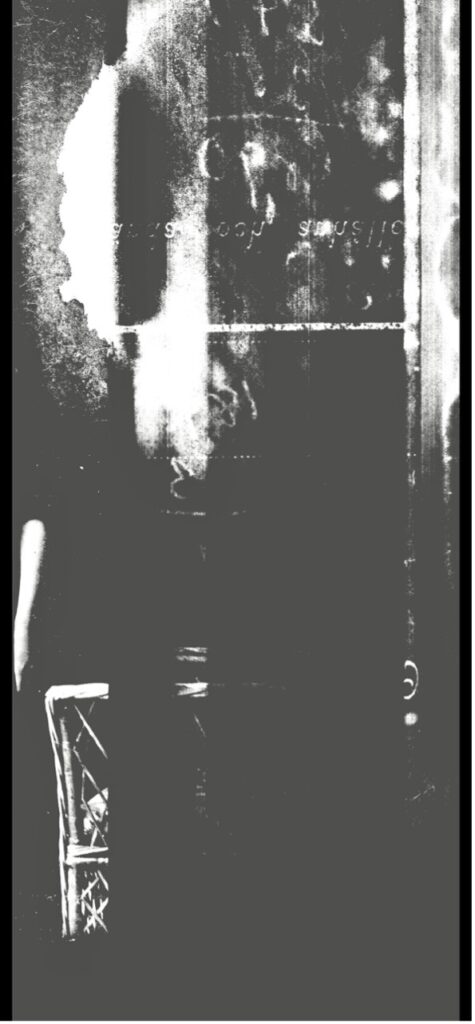
I have a picture. Double-exposed, tilted, difficult. It shows something—or nothing. You’ll see what comes forth.
Sometimes, what we don’t see is more true than what is visible.
Regards,
Engla
Engla Hägertz → Sven Jonson
Oskarström, February 1928
Dear Sven,
You spoke of Paris. But I believe you’re already on your way home in thought.
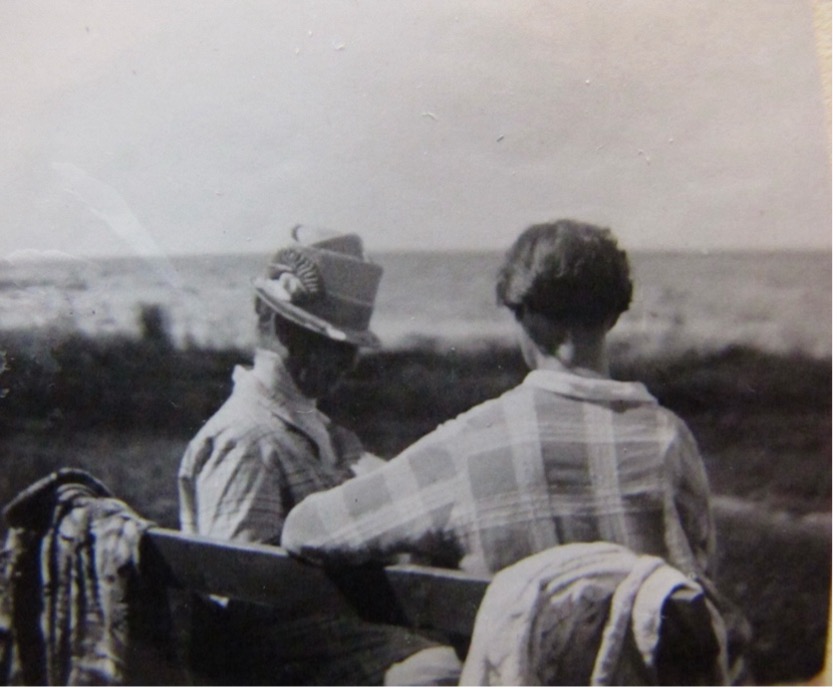
I developed a photo from Tylösand—a sea, a moment. I don’t know if it’s a beginning or an end.
If your paintings turn dreamlike, promise me they still reflect the world we actually tread.
What does silence look like in paint?
/ Engla
Sven Jonson → Engla Hägertz
Halmstad, March 1928
Miss Engla,
I never traveled. Paris already lives in our minds.
We talk of a shared direction—Esaias, Erik, Axel, Stellan, Waldemar, and I. A group—but perhaps more an inner landscape.
Your double-exposed photo said more than many manifestos.
Silence on canvas? Perhaps that’s what we’re trying to paint.
With friendship,
Sven
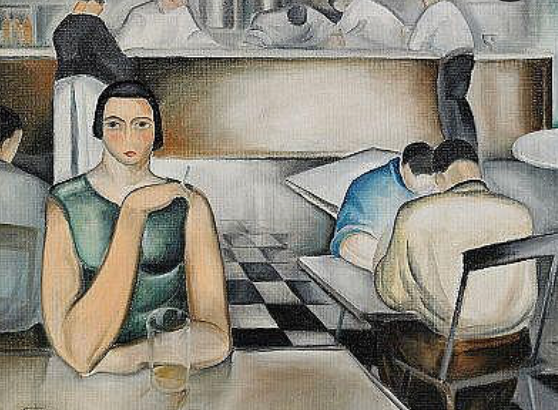
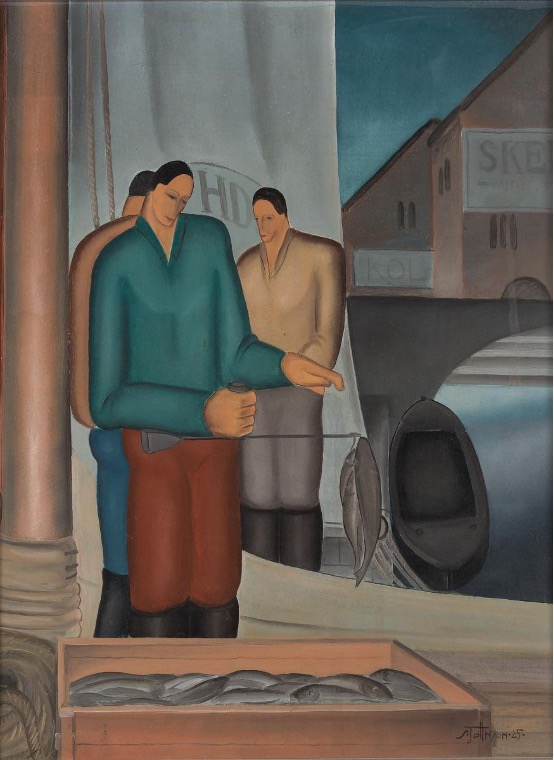
P.S. Here’s a painting from a Paris café I made two years ago. Perhaps it’s you, on your Paris journey? And some fishermen in similar colours,
Engla Hägertz → Erik Olson
Oskarström, May 1929
Mr. Olson,
I heard your paintings in Copenhagen were described as “full of inner machinery.” It sounded like a dream constructed with precision.
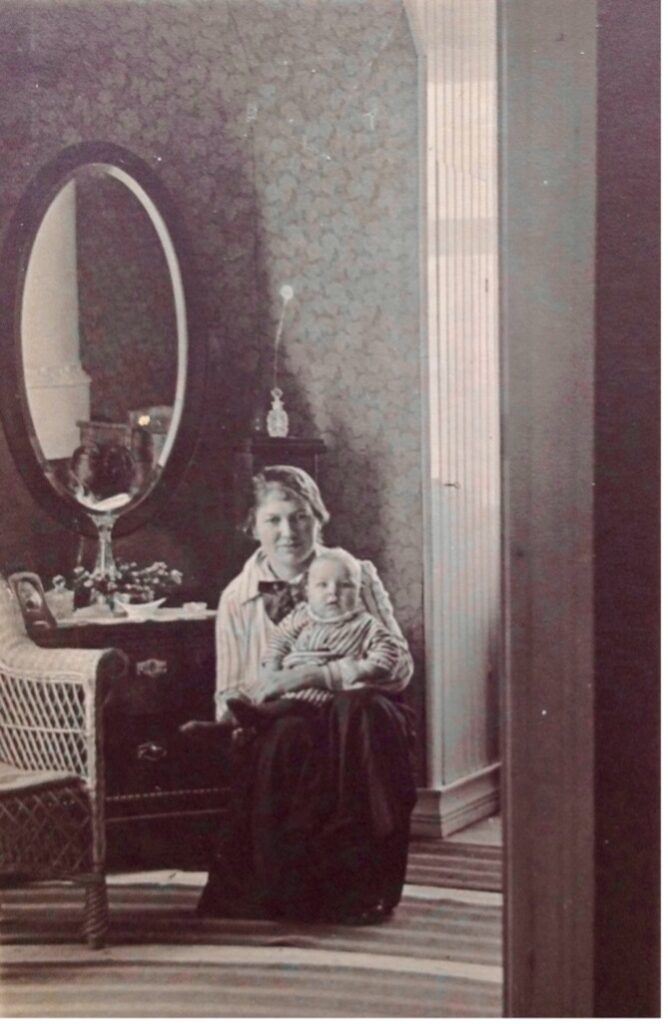
I have a photograph where a mirror shows a wall, but if you look closely, it’s only a tiled stove. Sometimes it happens: the image begins to imagine—and means it.
Perhaps you are there now—at the edge where reality and inner imagery blend.
With curiosity,
Engla
P.S. Enclosed is the photo with the mirror and stove. It also shows my brother Ferdinand’s wife Thora and their firstborn son Lars.
Erik Olson → Engla Hägertz
Halmstad, June 1929
Engla,
We’ve just named ourselves: the Halmstad Group. A modest name, but six visions rest in it, tightly interwoven.
Your photograph of the stove’s reflection gave us something quiet—a surface where thoughts can land. We want to surround ourselves with such images.
Our first joint exhibition will be alongside the Halmstad Exhibition. Come, Engla. Show us what we otherwise overlook.
With respect,
Erik
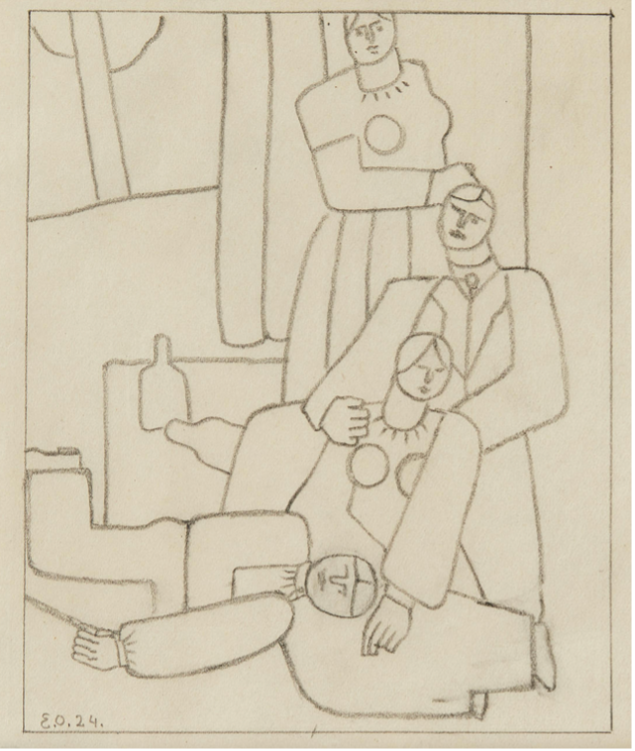
P.S. Enclosed: a cubist sketch, the painting Spring Song, and a photo of the whole group gathered.
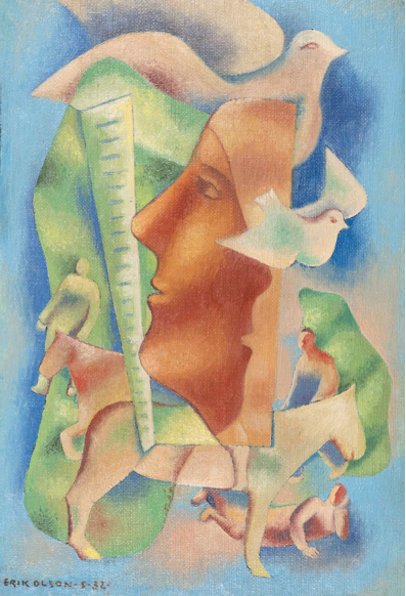
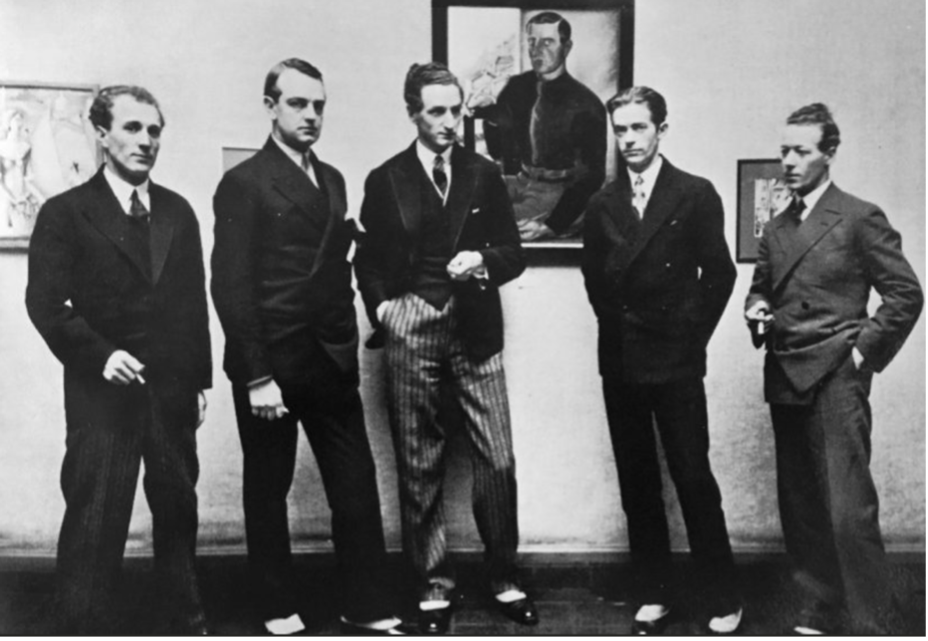
Engla Hägertz → Halmstad Group
Oskarström, July 1929
Gentlemen,
What you have created is brave—a space for what is not yet named.
Three of my pictures deal with absorption. Two of children—inward, present. The third of an adult—damaged in development, but perhaps more truthful for it.
They carry something lingering. A quiet reminder: we don’t only sink in play, but in life itself.
You have my eye—and my silence.
Engla
P.S. Enclosed are the three images. Use them, or burn them.
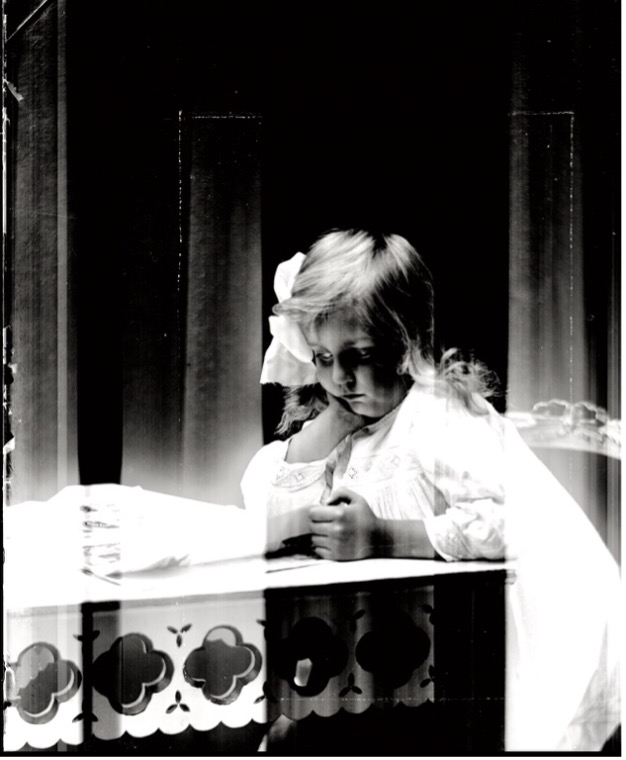
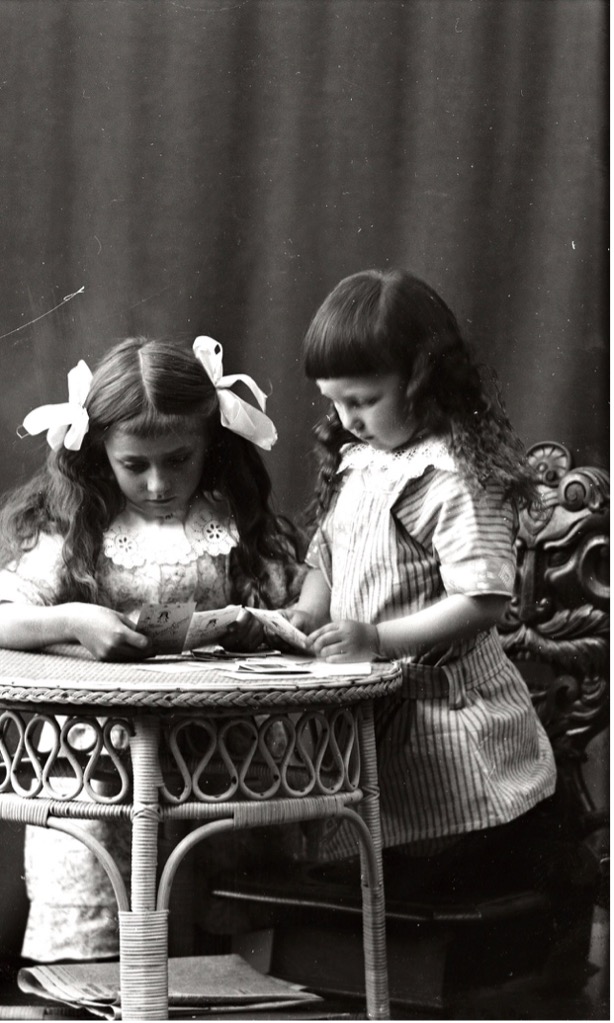
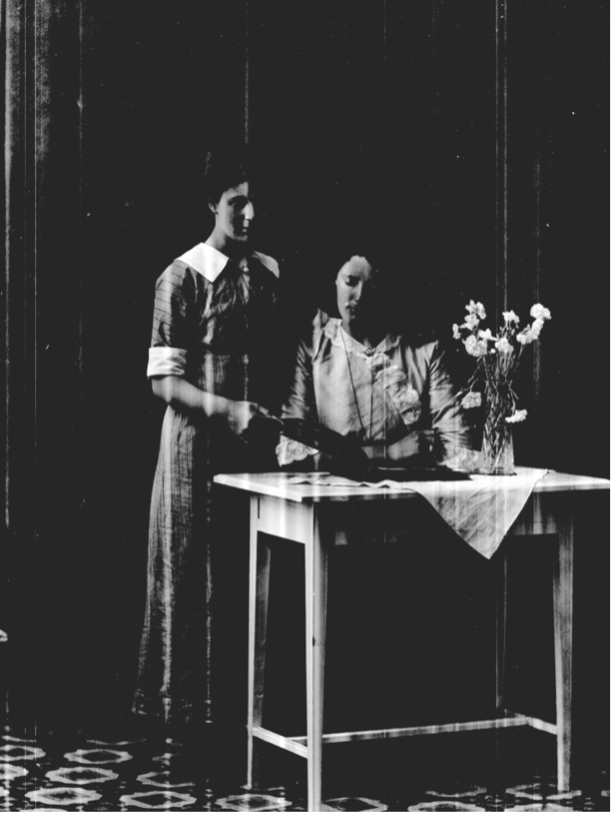
Sven Jonson → Engla Hägertz
Söndrum, July 1936
Dear Miss Hägertz,
You once asked how silence looks on a canvas. I wonder—how does it appear in a photograph?
Here in Söndrum the trees lean toward the water as if listening. Stellan reads aloud, Erik draws symbols in the sand. I sketch constellations again in the margins.
Your photograph Room with a Window haunts me. It feels as though someone stands just outside—breathing.
From the edge of the sea,
Sven
P.S. Enclosed: the painting Nocturnal Walk, a jug, a fruit bowl, and an old photo of us from the Gothenburg Exhibition, 1930.
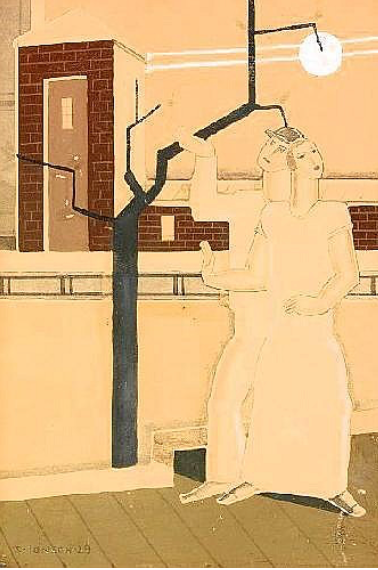
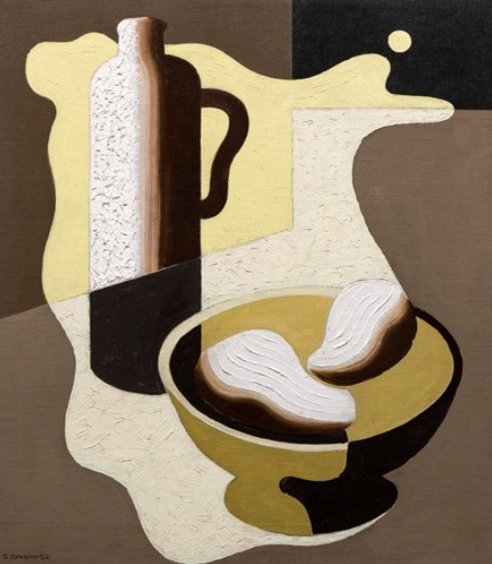
Engla Hägertz → Sven Jonson
Helsingborg, August 1936
Dear Sven,
Thank you for your greeting from Söndrum. I can almost smell the pine and salt.
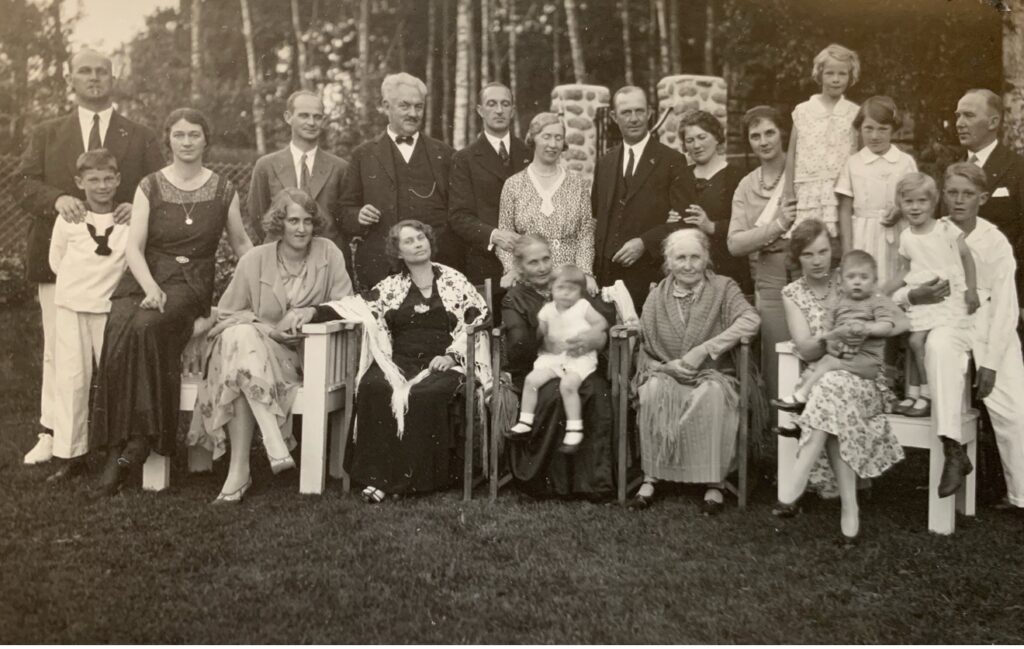
I belong to many groups—photographers, friends, my family. Most important are probably we siblings. My brother Harald just bought land in Tylösand, overlooking the cliffs. We’ll call the house Klipperhus.
Silence in photography? It lives where something is missing—a chair without a table, a shadow without source, a cloud seen only in the mirror.
Stars in the margins, always,
Engla
P.S. Enclosed: the photo Outlook and a picture of my family.
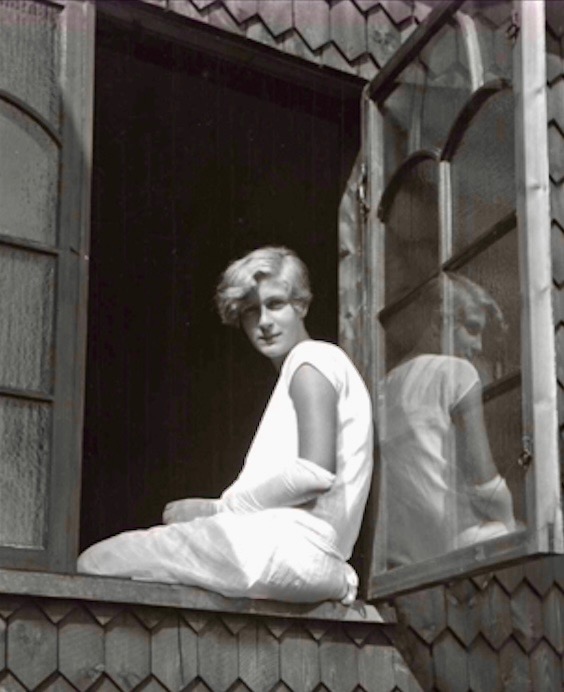
Stellan Mörner → Engla Hägertz
Söndrum, Summer 1937
Dear Engla,
I’m trying to paint a corridor from Esplunda—with mirrors and a cracked grandfather clock. But the canvas folds in on itself, like a butterfly wing.
Your picture of the child’s bicycle turning away… it speaks louder than anything direct.
Here is Söndrum: a circus, a séance. Last night I dreamt I was a chess piece—trapped but smiling.
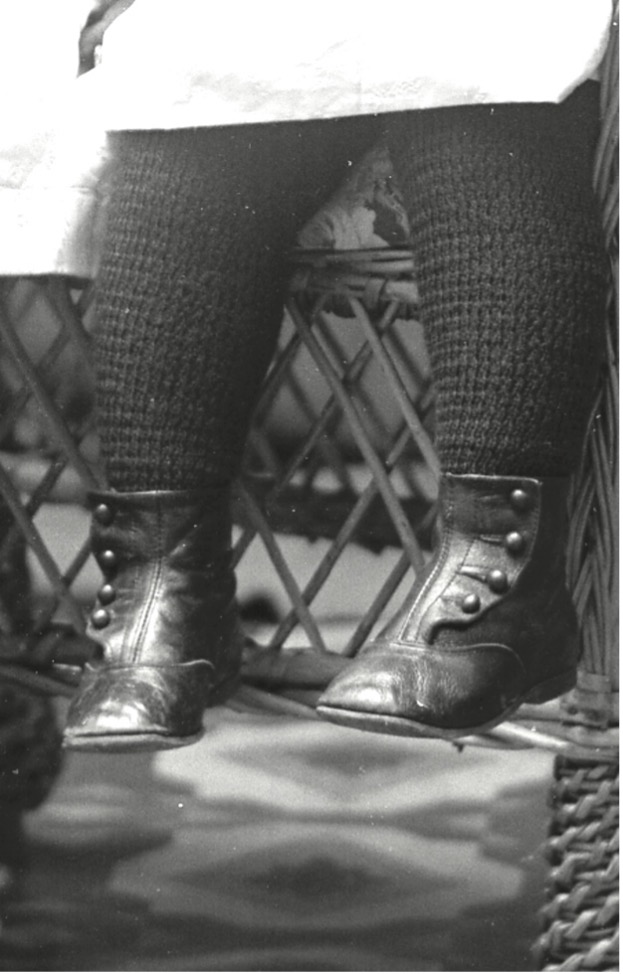
Please send me something you love but no longer understand—perhaps your childhood shoes?
In theatrical confusion,
Stellan
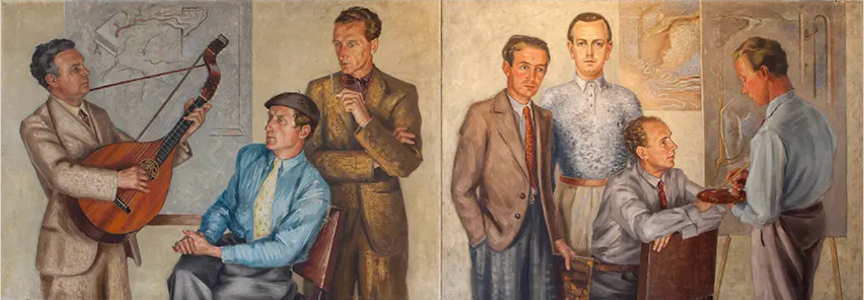
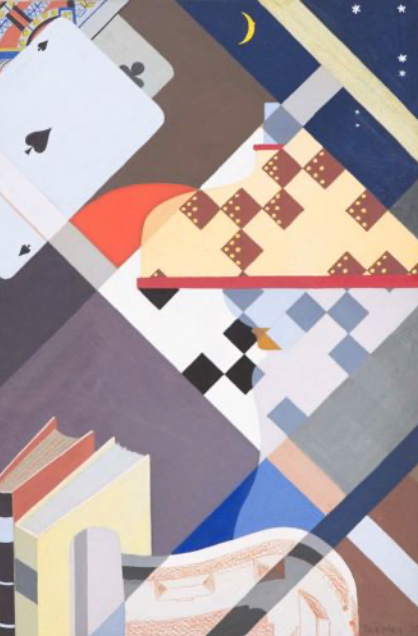
P.S. Enclosed: a painting of our group, and a gouache with books and playing cards.
Engla Hägertz → Stellan Mörner
Arild, September 1937
Stellan—watchmaker of the invisible,
I enclose a photo of my childhood shoes. I no longer know whose they were—only that they carry someone’s memory.
Here in Arild, the fog lingers. It’s as if time sinks into the rocks.
I sometimes think all photography is spirit work. Light calls forth ghosts.
Let the corridor collapse. Perhaps an open door is enough.
Yours in reversed time,
Engla
P.S. Enclosed: the shoes and a photo of me playing tennis in Arild.
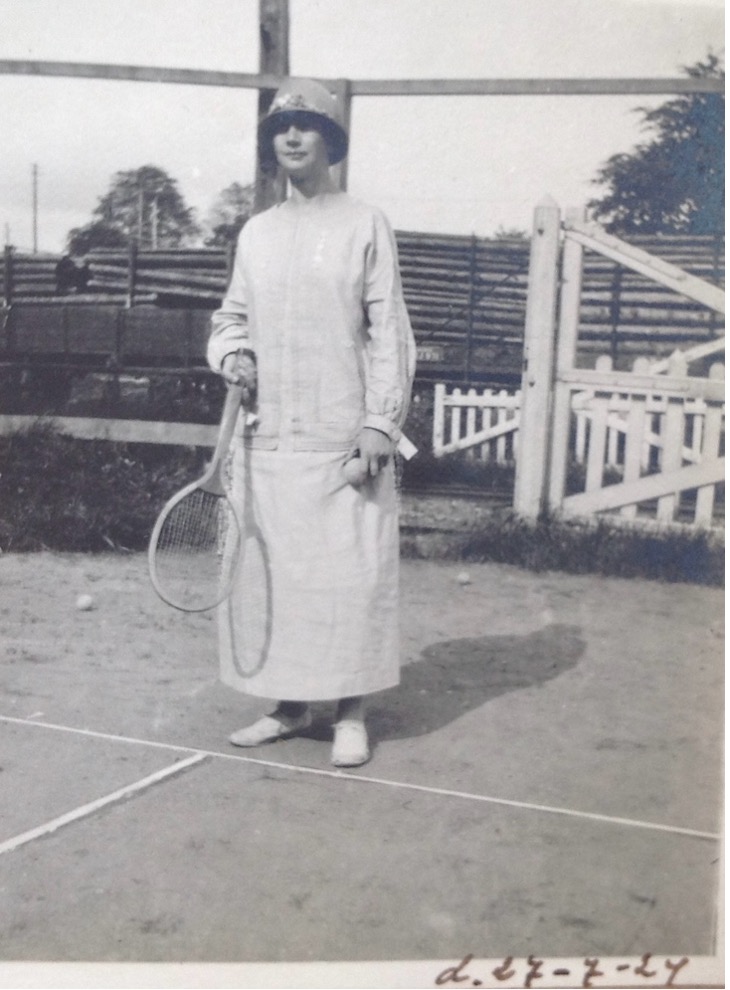
Engla Hägertz → Erik Olson
Stockholm, November 1938
Dear Erik,
Your letters read like riddles spoken by wind through old curtains. I mean that as a compliment.
If I come to Söndrum this spring—I won’t photograph you as you are, but as you appear in solitude.
In fractured light,
Engla
P.S. Enclosed: a photo of me and my sister Hedvig by a window where the light filters through.
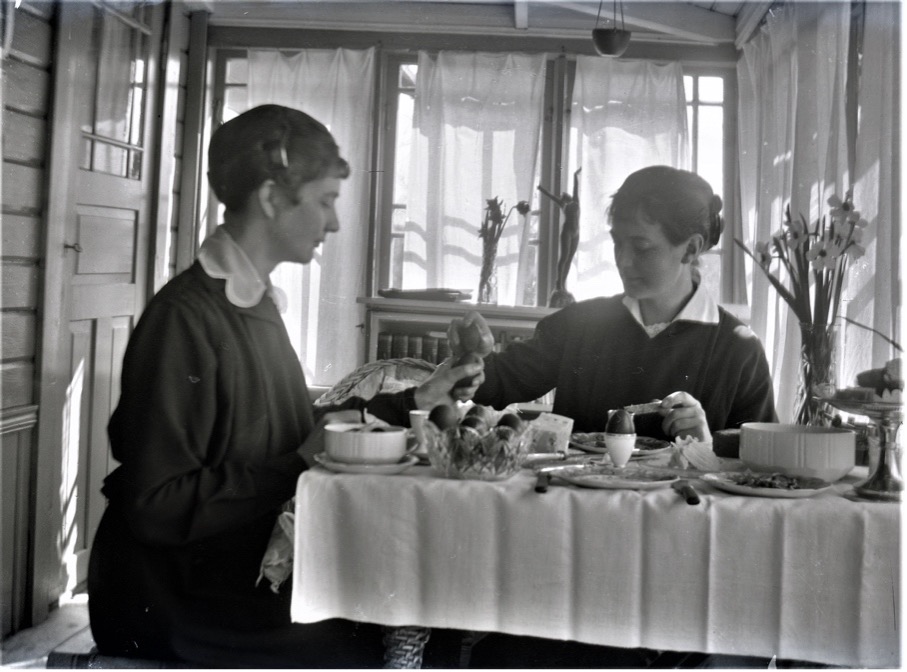
Axel Olson → Engla Hägertz
Söndrum, June 1939
Engla—observer of reflections,
The others swam this morning. I stayed on shore and drew anchors in the sand. Always these anchors.
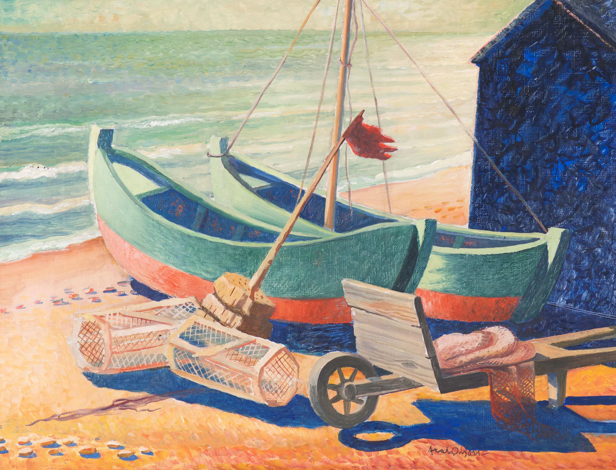
Your photograph—the one with the window—reminded me of a painting I did after my cataract surgery. Three boats, three perspectives: what we see, remember, imagine.
Söndrum? The wind sculpts the dunes like ribs. The pines hum.
Still anchored,
Axel
P.S. Enclosed: a self-sketch, view over the Nissan, and a beach photo with a rowboat.
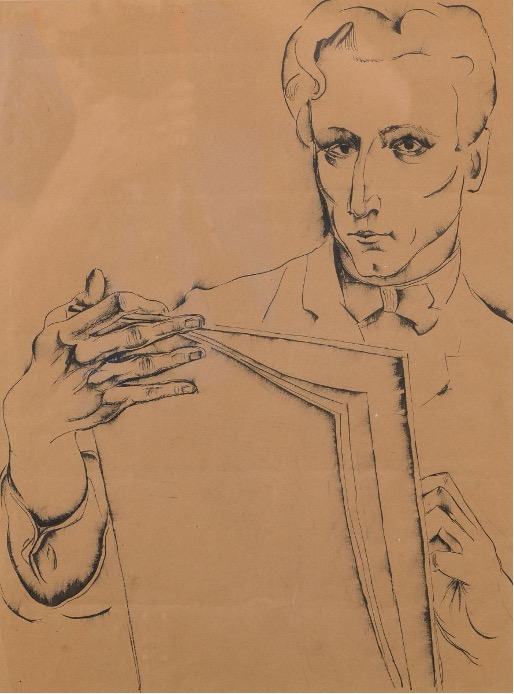
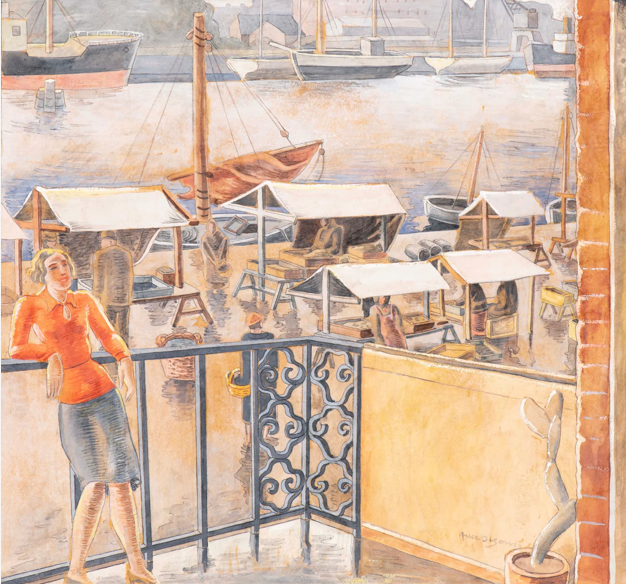
Engla Hägertz → Axel Olson
Rydöbruk, July 1939
Dear Axel,
You have your anchors—I have my windows. The ones that are open, closed, and those that no longer lead anywhere.
Here in Rydöbruk, summer rests. The sluice gates move without water.
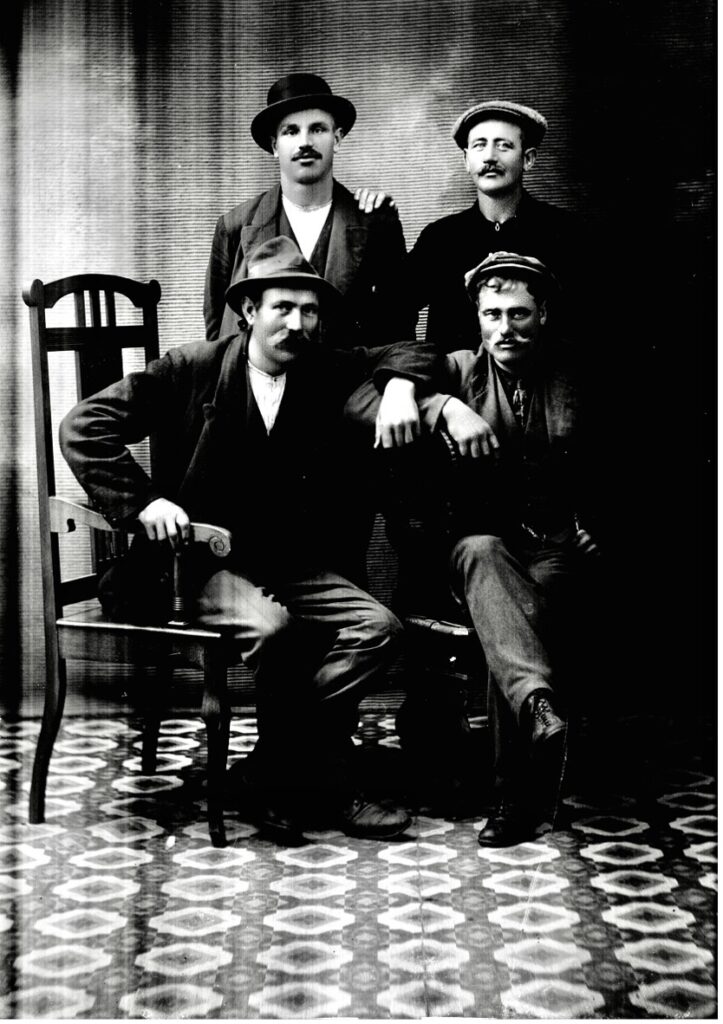
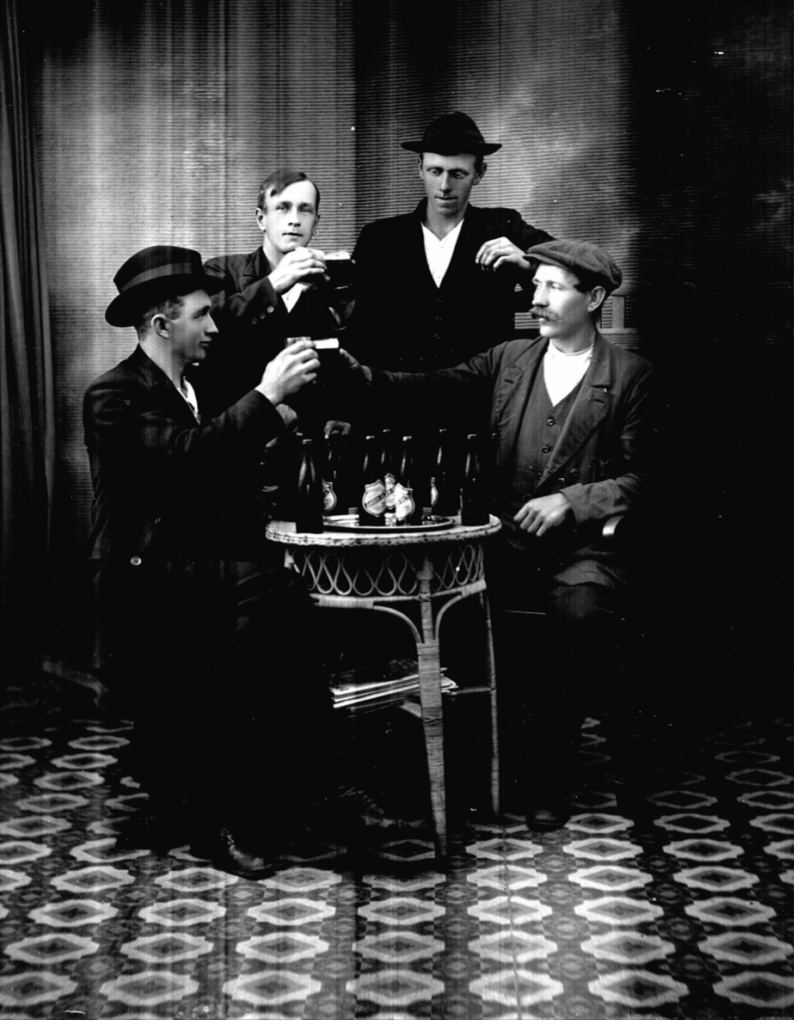
I enclose two photos of workers—as they are, with what they value. It became more real that way.
In driftwood and grain,
Engla
P.S. Photos of the workers and their world enclosed.
Waldemar Lorentzon → Engla Hägertz
Snöstorp, May 1940
Miss Hägertz,
Your photos of the workers—they reached me. In times like these, we need to show realities as they are.
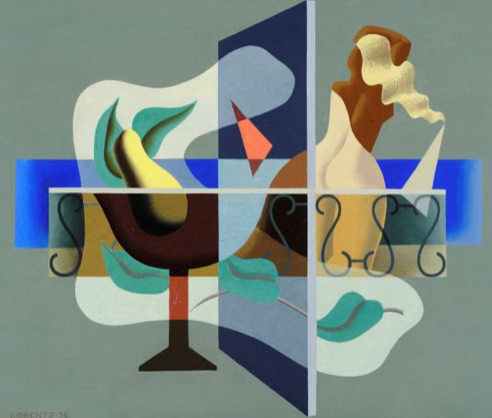
I’ve painted a large canvas: Dark Mother. She holds nothing. Only her hands.
We discuss—abstraction or earth. But your photograph grounded me.
You carry sky in your lens.
Always loyal,
Waldemar
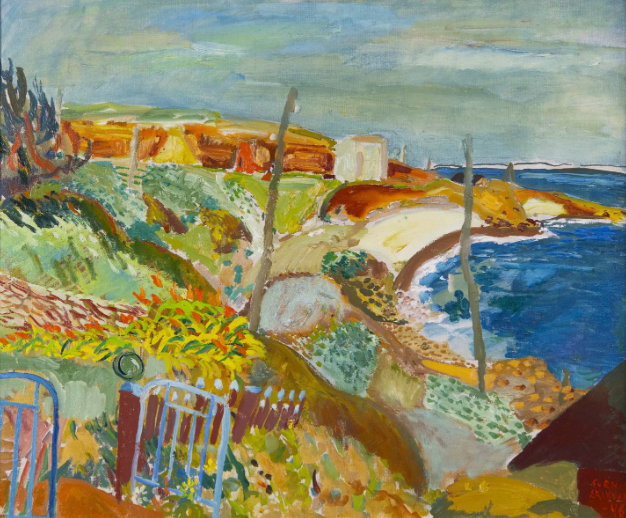
P.S. Enclosed: a photo from Mallorca 1932 and a painting of Söndrum by our colleague Sven X:et Erixon.
Engla Hägertz → Waldemar Lorentzon
Limmared, June 1940
Waldemar—painter of palms and prayers,
I believe I’ve seen your Dark Mother before—in a photo of my mother’s hands, resting over an empty bowl.
Limmared is quiet glass and old footprints. Your letter arrived with beach grass—now it rests in my window, beside a photo of frost.
Keep photographing hands. Even empty. Especially empty.
In silver and shadow,
Engla
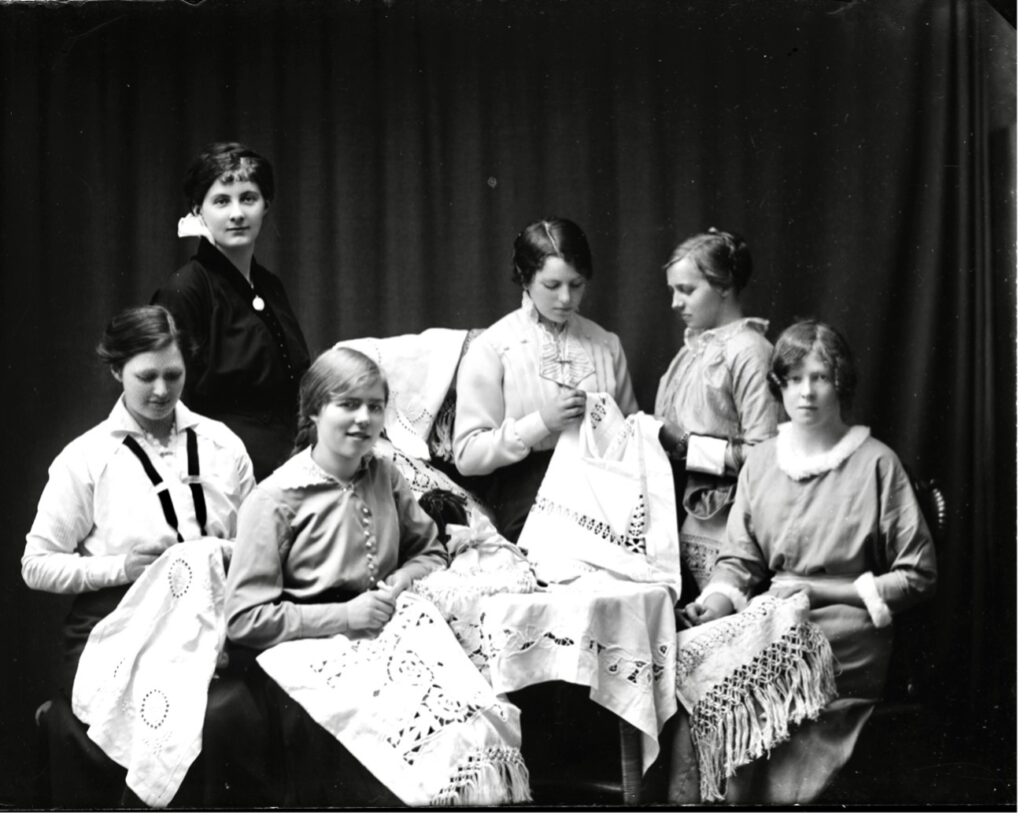
P.S. Enclosed: a photo of working hands. Handcraft remains strong in Oskarström.
Esaias Thorén → Engla Hägertz
Söndrum, July 1942
Dear Engla,
Your photograph of the hidden subject has stayed with me—I think I see a chair. I dreamt last night it was a metronome.
We still gather here—among spruces and mist. Sometimes we are six. Sometimes fewer. I carved a head from driftwood and gave it one eye, and someone said it looked like a spy.
Could you come and photograph us—not as artists, but as birds resting between storms?
In rhythm,
Esaias
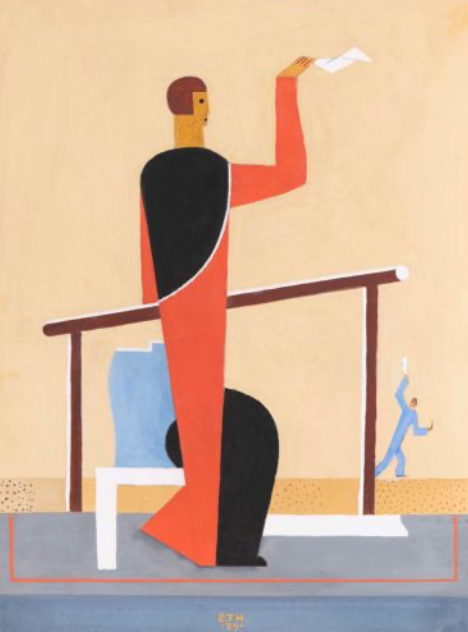
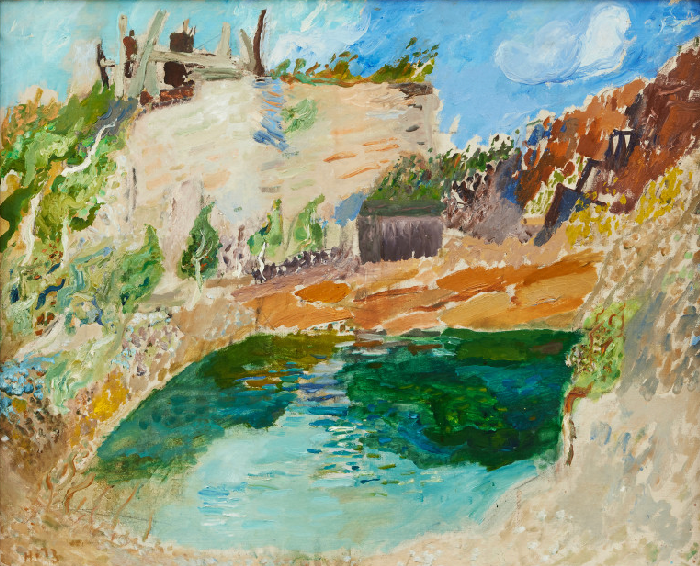
P.S. Enclosed: a gouache titled The Farewell, and an oil painting by a fellow artist from the Söndrum quarry, Felix Hatz.
Engla Hägertz → Esaias Thorén
Tylösand, August 1942
Dear Esaias,
Nothing would please me more than capturing your colony as birds—seated, ruffled, singing songs only the wind understands.
The chair you asked about was found in a doctor’s office, quiet and alone. I waited long for the light to tremble enough to tell its story.
Tell your driftwood head: I forgive it. I too have seen with only one eye, once. It taught me to listen.
See you soon, under the Söndrum sky.
Holding my breath,
Engla
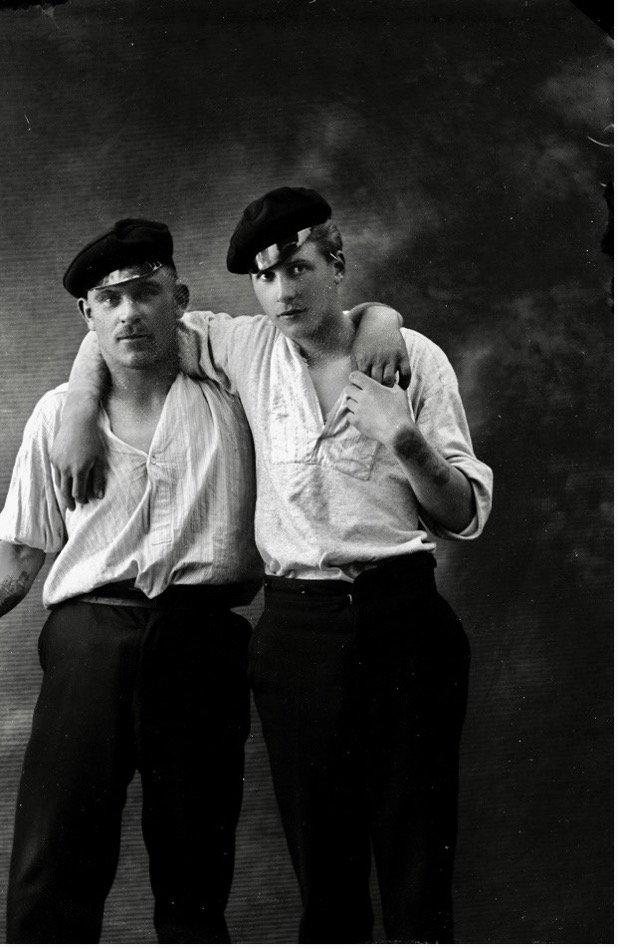
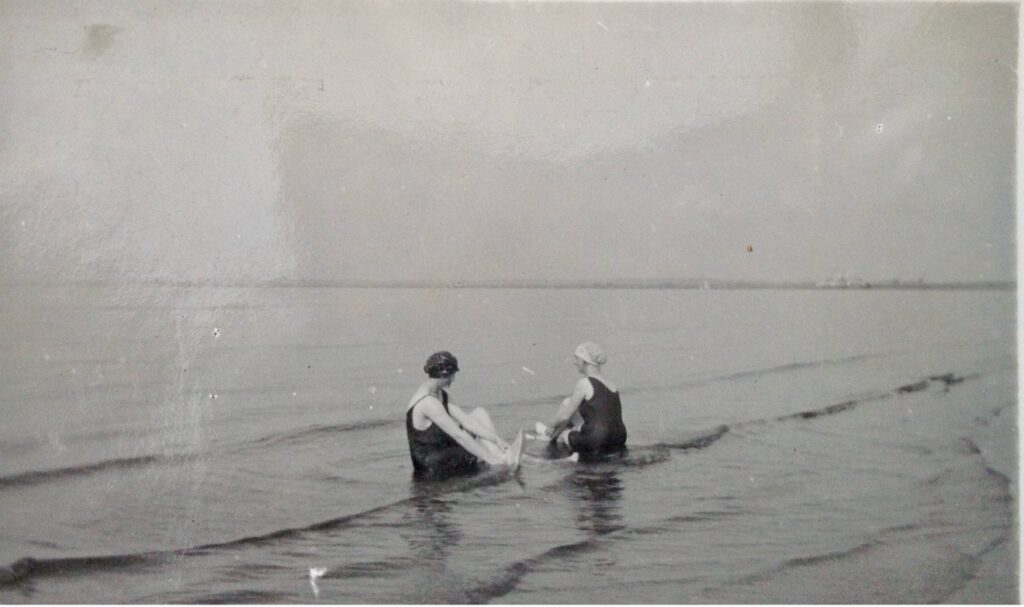
P.S. Enclosed: a photo of two male friends—working, playing, enduring. And an image from Tylösand.
Waldemar Lorentzon → Engla Hägertz
Snöstorp, May 1944
Dear Engla,
During these war days, silence in Snöstorp has become more eloquent than ever. Today I painted a church without windows. No light, no insight.
I remembered your photos of workers and their worried faces. It was as if you already knew how the world would recede.
We miss your images. They’re needed now more than ever.
Kindly,
Waldemar
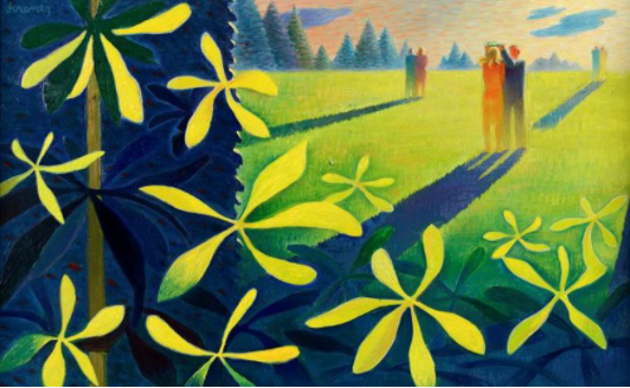
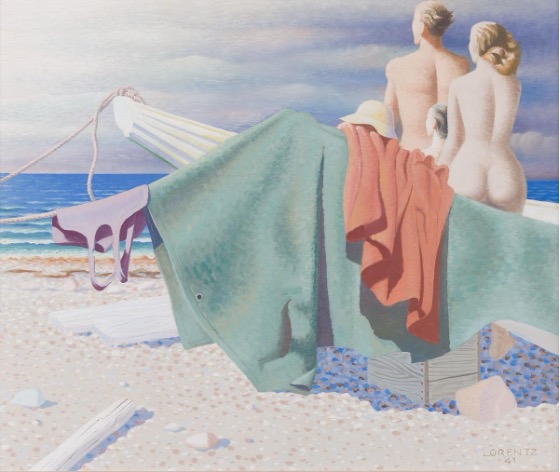
P.S. Enclosed: a painting of a green meadow—we must remind ourselves of light wherever we can find it. Also an older image of rest by the sea. I know how much the sea means to you.
Engla Hägertz → Waldemar Lorentzon
Oskarström, November 1944
Waldemar—painter of darkness and root threads,
It is a dark time in many ways.
One of my dear correspondents has just passed away, Hilma af Klint, whom you likely know.
I wonder: do you think Hilma would have joined you in Söndrum, had she known of you then?
With a sorrowful tone,
Engla
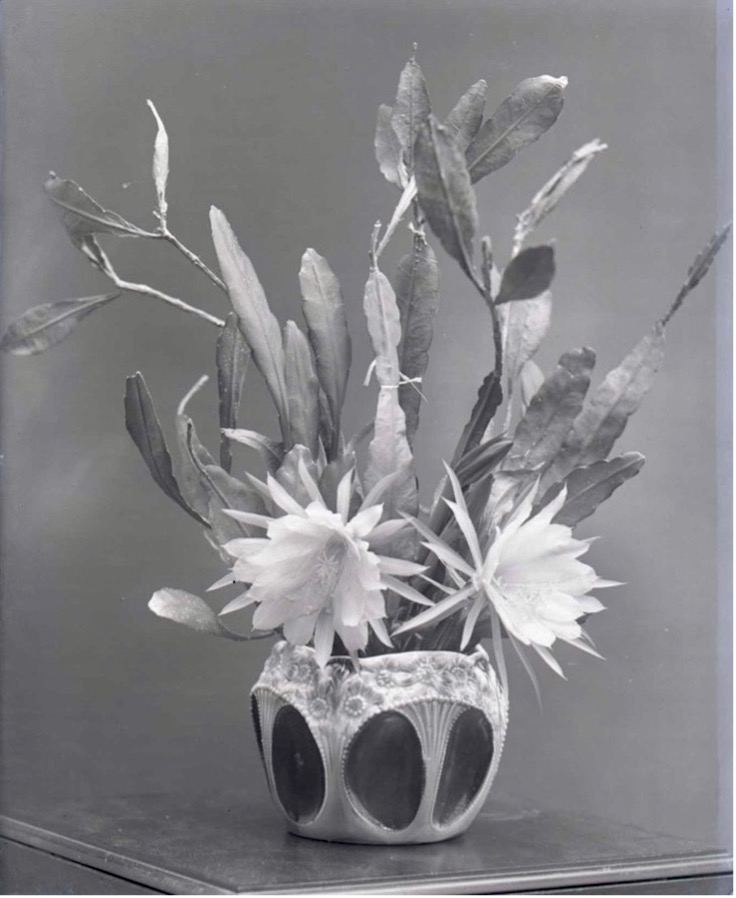
P.S. Enclosed: a photo of a flower—to represent the transience of life.
Erik Olson → Engla Hägertz
Paris, 1953
Dear Engla,
I write from Paris. Here, painting lives another life, yet your photo of dusty bottles on a table in Rydö still comes to mind. It has nothing to prove. It just is.
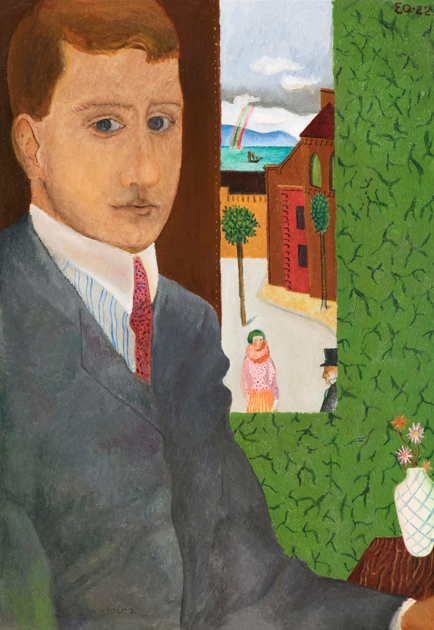
I recently painted a self-portrait where my face is partially hidden. Perhaps it is your silence I’m emulating.
We talk of exhibiting together again. I hope we’ll get to show something of yours too.
Your friend,
Erik
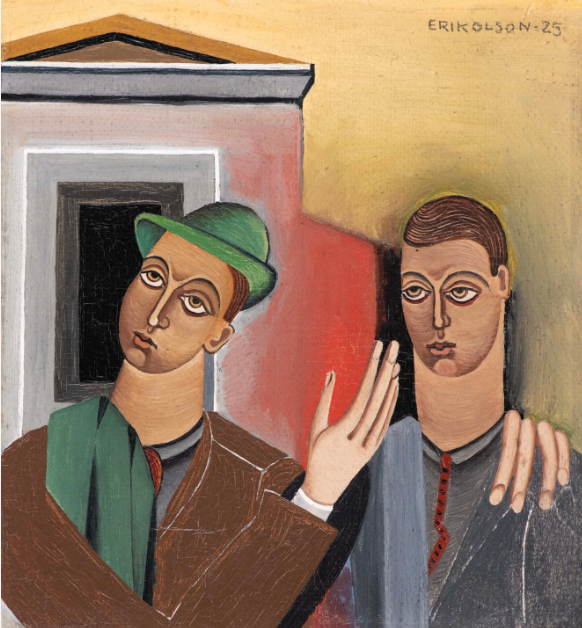
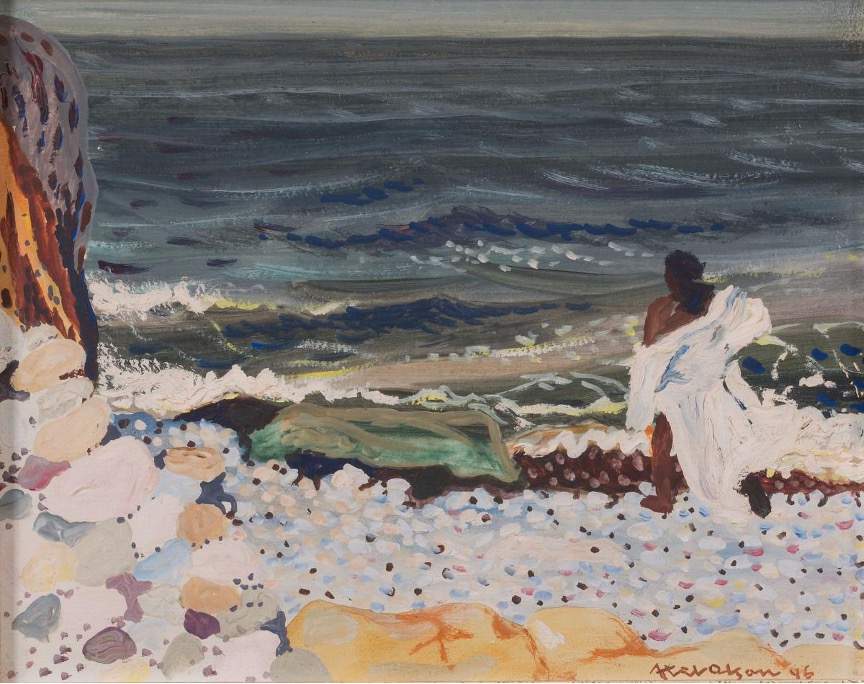
P.S. Enclosed: a painting called Through the Window, and a photo of two friends. Also an older image of the Mother-of-Pearl Coast in Söndrum—do you still go there often?
28. Engla Hägertz → Halmstad Group
Oskarström, May 1964
Dear friends,
I saw your latest exhibition. The colors had matured, but something still danced inside them.
I sent a photo to the gallery—of a mirror where the camera appears in the reflection. They didn’t show it. That’s alright. Some images are meant only for the one who sees them first.
I’ve now decided to close the photo studio. I took the last portrait in March, of Gospova Buvac, daughter of one of the many Czechs who came here to work at the jute factory.
You are still my mirror in color.
Warmly,
Engla
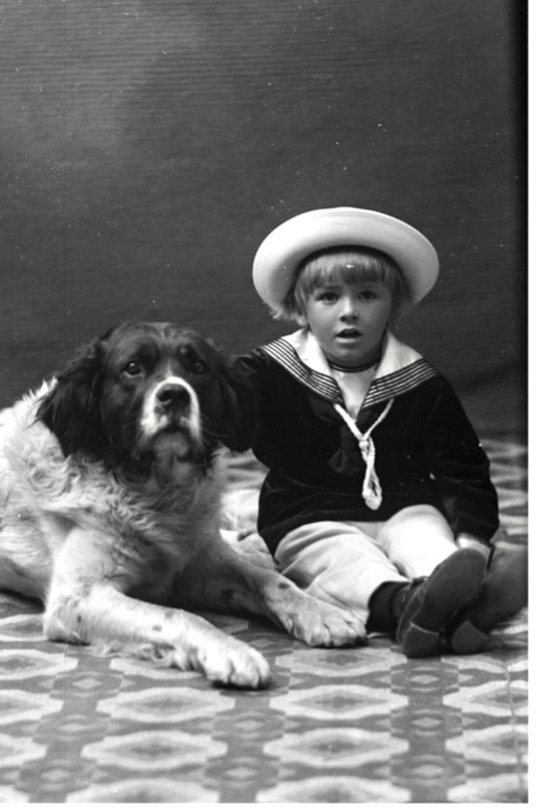
P.S. Enclosed: a photo of a boy and his best friend, his dog. Leaving the studio feels a bit like saying goodbye to a close friend.
29. Sven Jonson → Engla Hägertz
Halmstad, February 1974
Engla,
We received your last envelope. The photo with the boy and dog. It was tender, beautiful—and troubled.
I won’t display it. I’ll keep it. It feels like a greeting between moments.
We don’t speak often anymore. But when we do, it’s silent. And in that silence, you remain.
/ Sven
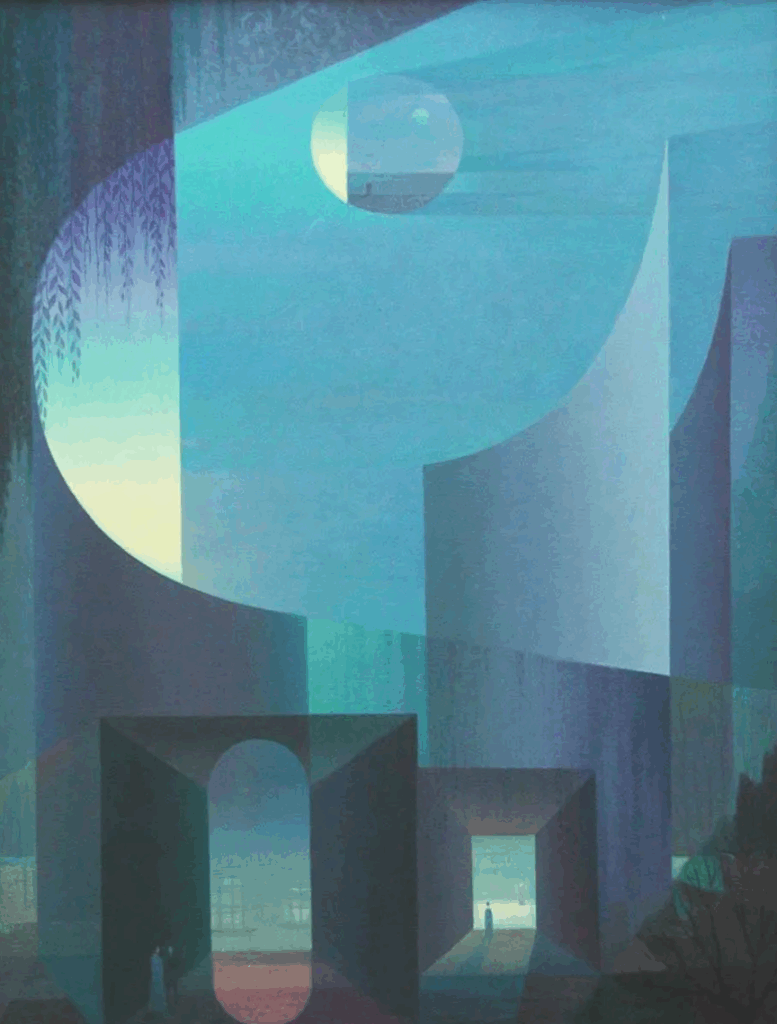
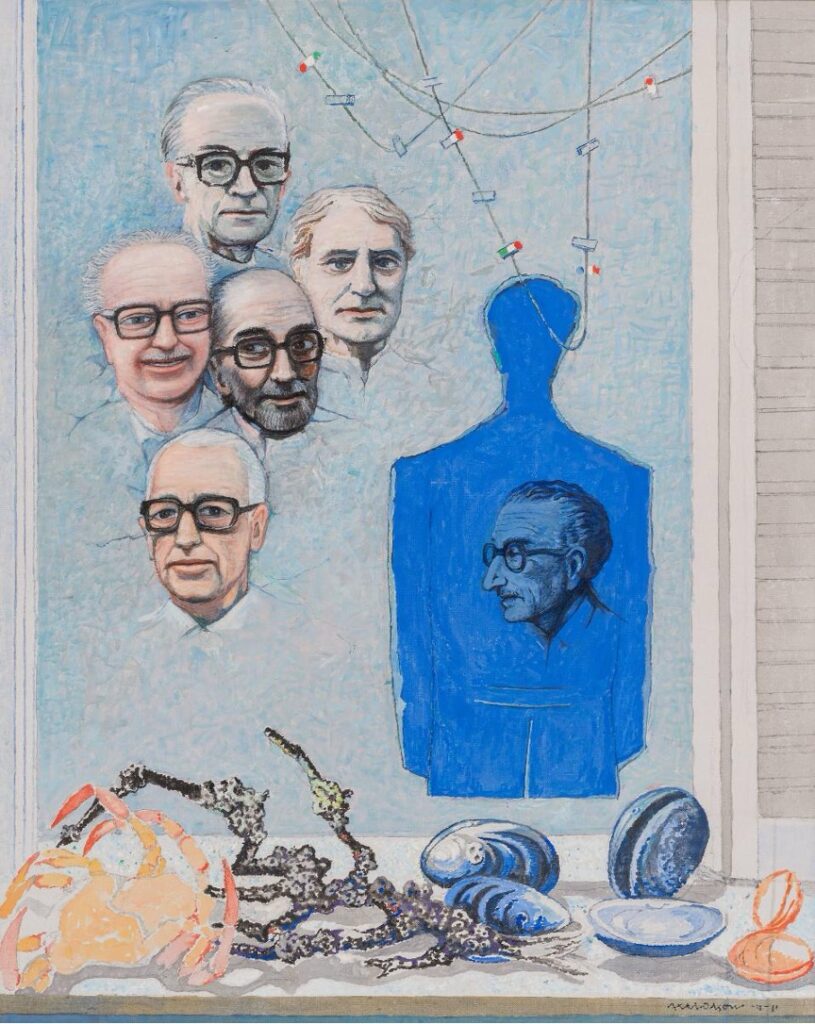
P.S. Enclosed: a painting I call Prelude, and a photo of us from our summer gatherings, which Axel is organizing.
Afterword: In the Space Where Art Breathes
These letters were never sent.
And yet, they speak.
They speak not only of what could have been—but of what still is possible when creative spirits are allowed to echo across time, form, and silence.
Engla Hägertz worked not for fame, but for presence. Behind her camera, she caught the flicker of a gesture, the hush of a room, the tension of an unanswered question. Her lens did not seek spectacle—it sought truth in the pause.
The Halmstad Group, restless in their geometry and dreams, painted symbols into a landscape still learning how to see them. They reached beyond the visible, threading surrealism into the soil of southern Sweden. Each canvas a threshold; each composition a kind of longing.
This fictional correspondence is not an attempt to rewrite history. It is a way of listening differently. Of asking:
What if our creative timelines are not linear—but braided, layered, co-dreamed?
What if images remember each other?
In these imagined letters, photography and painting touch fingertips. Solitude is shared. Silence becomes a medium.
You, reader, are part of that dialogue now.
So take your time.
Stand in front of a quiet photograph.
Let a shadowed brushstroke linger longer than it should.
You might hear something.
You might begin to answer.
— Novisali
Learn more
Warm thanks for the contribution by Oskarströms Hembygdsförening, and the Hägertz family for contribution with photographies, and to Mjellby Konstgård and auction houses sharing pictures of Halmstadgruppens artworks.
More about Engla Hägetz (google translated website) EnglaHagertz.se
Details about Engla from genealogy
Read the related Letter Exchange with Hilma af Klint
Find 450 digital photos of Halmstadgruppens production
About Mejllby Konstgård, part of Halmstad Museum and dedicated to Halmstadgruppen
About Novisali

Novisali, (alias Liselotte Engstam), is besides her roles as professional board member and advisor, a multi-media artist, with a curious, explorative mind and an ambition to learn and extend art experiences to current and new audiences using both traditional and new digital mediums. More information and exhibitions can be found via Novisali.com
This blog post is also shared at the blog of www.liselotteengstam.com, with the artist name Novisali.