
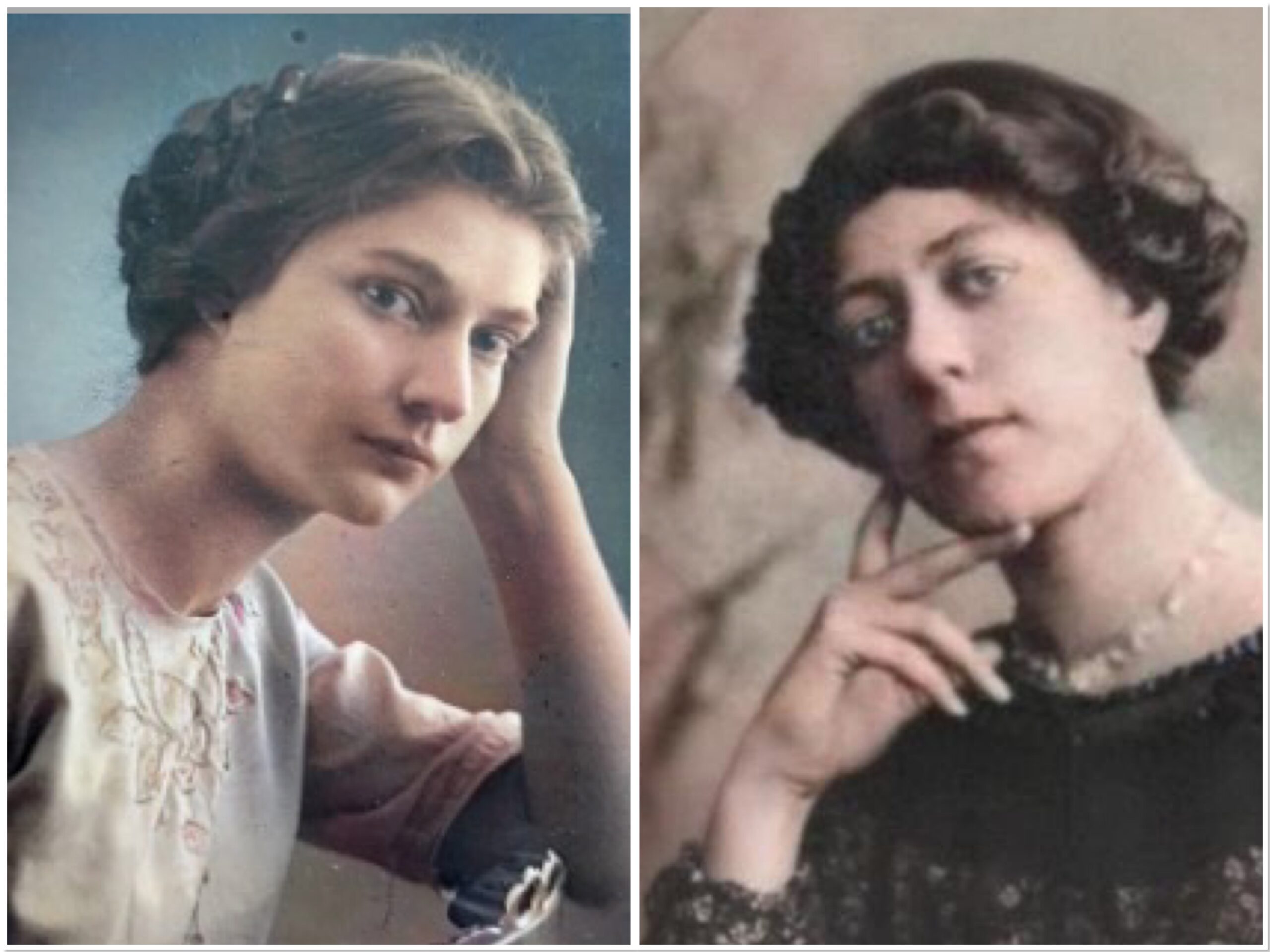
An Imaginary Exchange of Letters between Engla Hägertz and Tyra Kleen
(Läs blogposts på svenska HÄR)
In an ongoing artistic exploration, I have imagined fictional correspondences between Engla Hägertz and other artistic voices from her time. Earlier, such imagined dialogues emerged between Engla Hägertz and Hilma af Klint, and between Engla and the Halmstad Group.
In this text, the focus turns toward a new possible meeting — between Engla Hägertz and Tyra Kleen.
As an artist, I have long been fascinated by how images can carry memory, emotion, and meaning across time. In this exploration, I have repeatedly felt a quiet kinship with Engla Hägertz, my father’s aunt, and Tyra Kleen — two creative women who, in different ways, worked close to the threshold between the visible and the inner world.
One worked from a photographic studio in Halland, letting light shape portraits, flowers, industrial settings and everyday rooms. The other moved between continents and expressed herself through drawing, writing, photography, symbolism, and studies of movement and ritual. Their lives most likely never crossed, yet their ways of seeing the world suggest a possible resonance.
This project is not a historical claim, but a poetic possibility. An imagined correspondence, with a reflective exploration of what might have been shared if two independent women — one working with camera and light, the other with line, symbol, and movement — had found one another along their parallel paths in early twentieth-century Sweden and beyond.
It is also an invitation to reflect on the subtle threads that can connect artistic experience across generations, forms of expression, and different ways of seeing. In these imagined letters, I hear not only echoes of their worlds, but also questions that continue to live in my own creative practice — and perhaps in yours as well.
— Novisali
Parallel Lives, Resonant Visions
Engla Hägertz and Tyra Kleen belonged to different artistic worlds, yet their lives overlapped in ways that invite reflection. One worked from a photographic studio in Halland, shaping portraits, flowers, and fleeting moments through light. The other crossed geographical and artistic boundaries, drawing, writing, and studying the symbolic, spiritual, and ritual dimensions of life.
Engla Hägertz
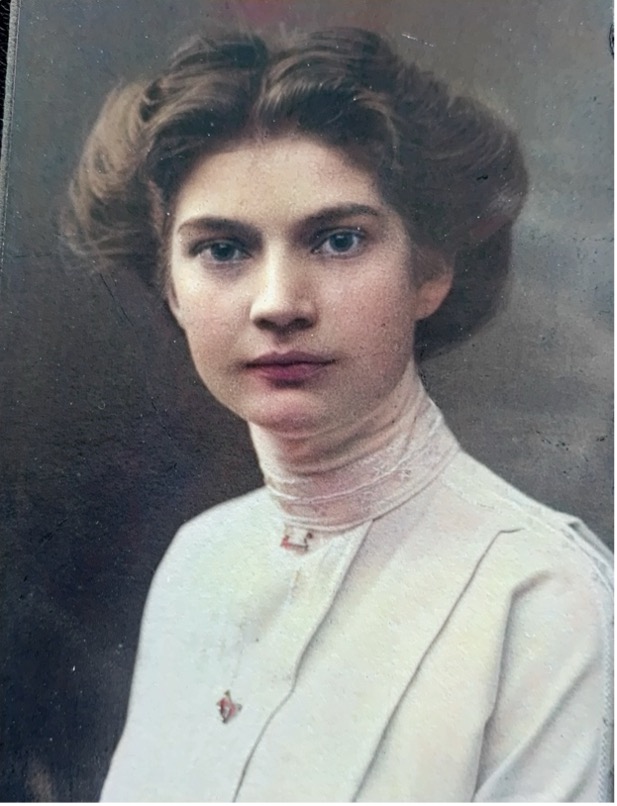
Engla Hägertz was a photographer and studio owner in Oskarström, Halland. Together with her sister Gudrun, she opened a photographic studio in 1914 and created portraits of local townspeople, families, and everyday life. Alongside this work, she also turned her attention toward flowers, landscapes, and quieter image studies, some of which later became postcards.
Her images often carry a sense of attentive stillness — a gentleness toward what might otherwise pass unnoticed. Light falls softly across faces, hands, and rooms, and the spaces in between are allowed to speak as much as what is visible. In her hands, photography became more than documentation; it became a way of holding presence and allowing the everyday to open toward something more contemplative.
Tyra Kleen
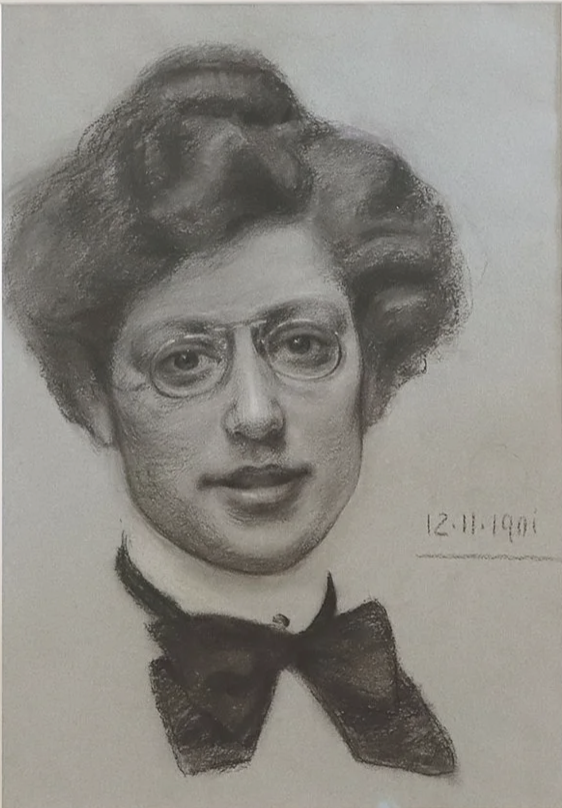
Tyra Kleen was an artist, writer, and traveller whose work moved between symbolism, illustration, spiritual inquiry, and cross-cultural study. She worked in international settings and travelled, among other places, to Paris, Java, Bali, US, Amsterdam and Egypt, where she studied dance, ritual, and bodily expression and exhibited her artwork.
Through books such as En Psykesaga, through her drawings, and through her travel writings, she sought to capture what lies beneath the surface — movement, soulfulness, atmosphere, and transformation. Her lines are often spare yet charged, and the empty space around them becomes part of the expression.
A Possible Nearness
There is no evidence that Engla and Tyra ever met, yet their lives suggest a quiet imaginative nearness. Both lived independently for periods of their lives and shaped their artistic paths on their own terms at a time when such possibilities for women were still limited. Both also seem to have looked beyond the visible toward something more subtle: mood, presence, and the inner life of form.
One worked in stillness with light slowly falling across the motifs of everyday life. The other followed movement, symbols, and cultural expressions across continents. And yet their sensibilities may be imagined to meet in a shared attentiveness — a listening for what has not yet fully taken form.
If They Had Written to One Another
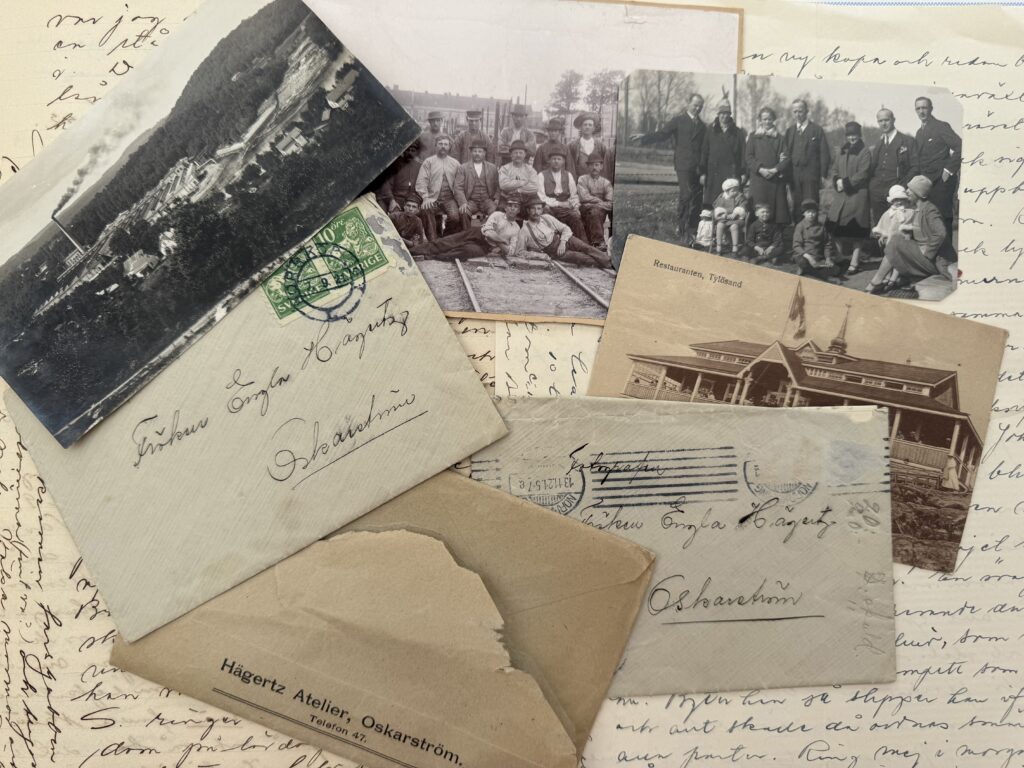
If Engla had written to Tyra, it might have begun with quiet admiration — a letter from Oskarström to a more established artist whose work gave form to what could not easily be expressed. She might have asked how one remains faithful to one’s way of seeing when the surrounding world does not yet have language for it. She might have enclosed a photograph: a sister by the studio door, flowers by a window, a figure half-turned in garden light.
Tyra, in turn, might have replied not with certainty, but with recognition. She might have sent a drawing instead of an explanation — a dancer’s gesture, a branch with unfinished leaves, a symbolic figure at a threshold. Her reply might have affirmed that art does not need to explain all that it knows. Sometimes it is enough to remain attentive, and to trust what quietly wishes to be seen.
Their imagined letters would likely not have been loud or declarative. They would have moved slowly. They would have listened as much as they spoke.
They might have touched on grief, solitude, the discipline of making, travel, memory, and the strange responsibility that comes with working in images. They might have explored how photography can hold what is almost gone, while drawing can suggest what has not yet fully arrived.
And even though one worked with light caught in a lens and the other with lines shaped by hand, their sensibilities could still have met in a shared understanding:
Look closely. Create faithfully. Let stillness speak. Trust what moves beneath the visible.
When Light Travels Quietly
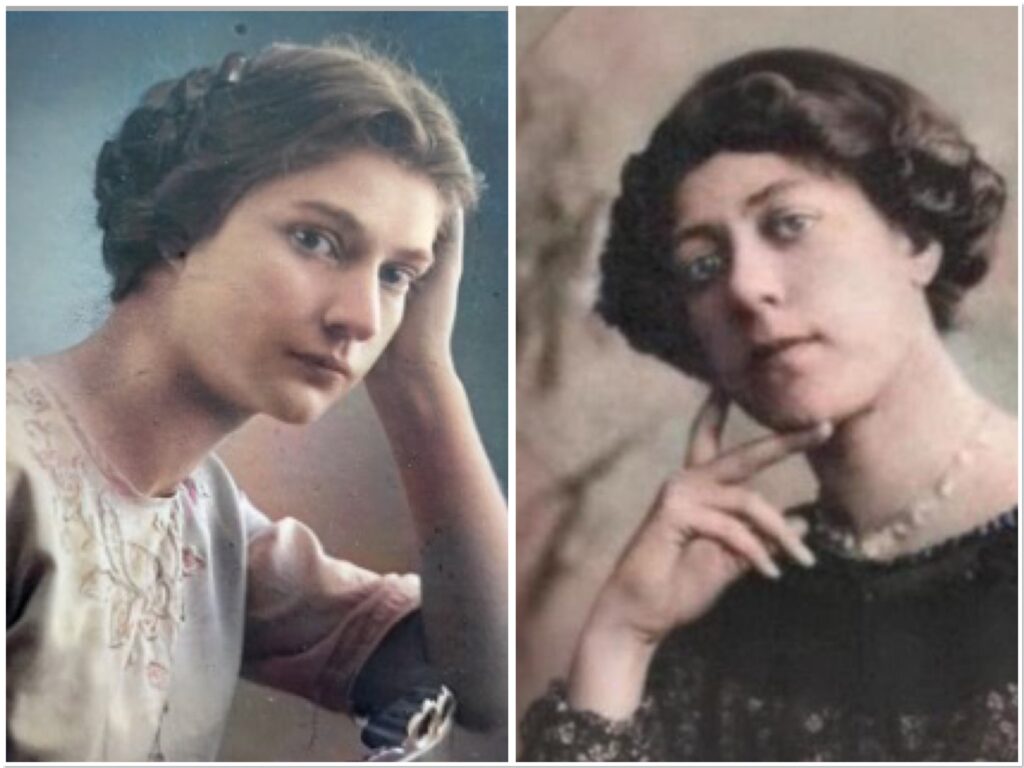
An Imaginary Exchange of Letters between Engla Hägertz and Tyra Kleen
Some exchanges leave no physical traces, yet seem to unfold naturally over time.
Between a photographer shaping stillness and an artist drawing inner journeys, one may imagine letters traveling quietly between Nordic studio light and distant horizons filled with movement.
Their exchange is less about biography and more about attention — how we see, how we remember, how images carry presence.
Spring 1914 — A Room at the Beginning
Engla writes
Dear Tyra,
I hope you will forgive a letter from someone you have never met. But sometimes one writes not because of acquaintance, but because of recognition.
My sister and I have just taken over a photographic studio in Oskarström. The house is carved in wood, and the windows gather the sky in a soft, diffused way. When the morning light enters, it moves slowly across the floor, as if first measuring the room before settling.
There is something deeply moving about stepping into a place that has not yet learned its rhythm. The chairs stand slightly apart, the backdrop is still folded, and the walls seem to listen rather than speak.
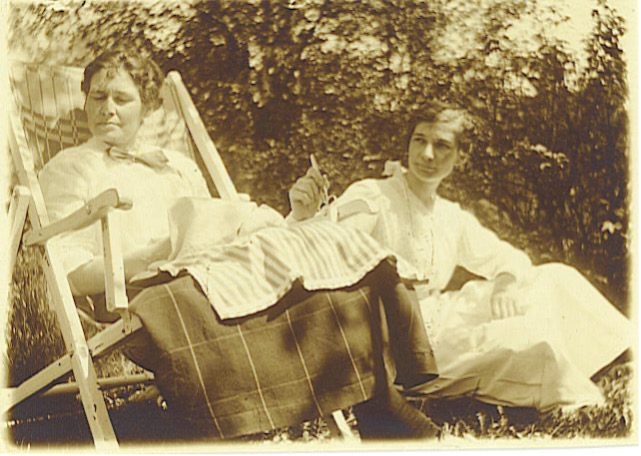
I enclose a small photograph of my sister and me outside the studio. We sit without pose or intention — simply present before something that is beginning. It is not a finished image, but perhaps beginnings rarely are.
Photography is often described as mechanical, yet I increasingly experience it as a form of listening.
Each portrait becomes a meeting between two silences — the sitter’s and my own. Somewhere between them something arises that neither of us planned.
I have read your En Psykesaga and often return to its inward tone. You wrote about paths that appear only as one walks them. This studio feels like such a path — one that must slowly unfold through attention rather than certainty.
Do you think the rooms we work in shape what we see? Or do we gradually shape them through the way we notice?
With quiet admiration,
Engla Hägertz
(Oskarström, 1914)
Tyra replies
Dear Engla,
Your letter reached me in my studio in Rome, where the light falls differently than in the north. Here the day moves quickly between the sharp streaks of the skylights, but when I read your words about the quiet morning light in Oskarström, I felt an unexpected recognition. There is something universal about rooms not yet filled with work — they carry an openness that is almost spiritual.
The photograph you enclosed of you and your sister holds this quality. You stand not as subjects but as participants in a moment just taking shape. I especially like how the light falls gently without dominating — it gives the image a tone of waiting.
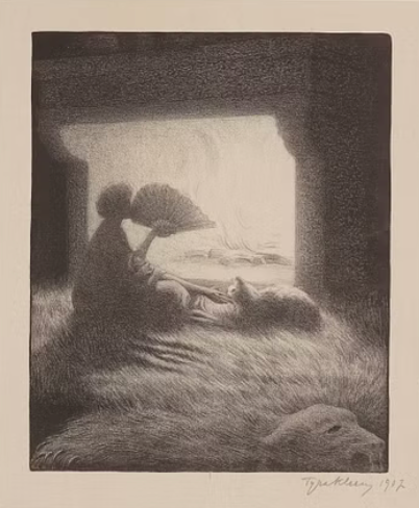
You write that photography is listening. I recognize this in drawing. When I work with line, I try not to describe the world, but rather to follow a movement already present. In working on En Psykesaga, I often felt that the images arose as if they already existed in the room.
I enclose a small drawing: a window with silhouettes. I wanted to capture the moment when something is just about to reveal itself. Perhaps it is in such moments that our works meet — in what is not yet fully visible.
May your studio slowly fill with presence. And may the light continue to arrive gently.
Warmly,
Tyra Kleen
(Rome, 1914)
Autumn 1917 — What Remains
Engla writes
Dear Tyra,
I write to you in a quieter tone than before. My sister Gudrun is no longer here.
The studio remains, but the rhythm has changed in ways I had not expected.
There are moments when I instinctively turn to speak, only to meet silence.
But this silence is not empty — it carries memory.
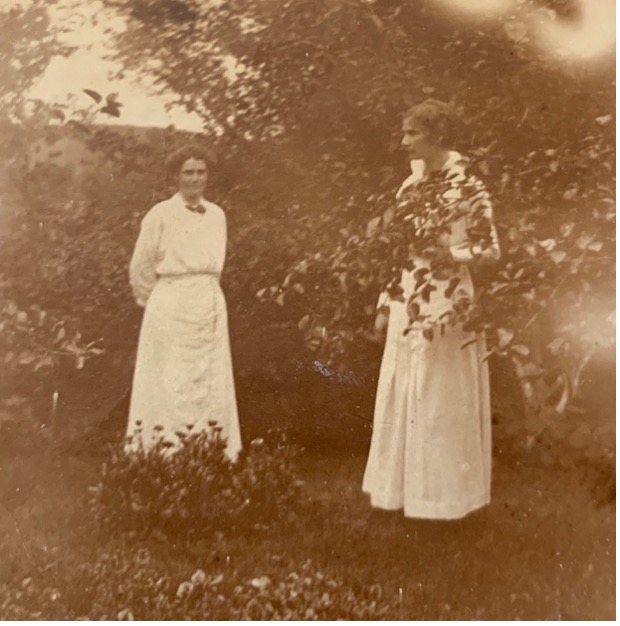
I recently developed an older glass plate taken in the garden behind the studio. I stand half turned, as if about to say something to Gudrun. The light touches Gudrun’s white dress, while the rest dissolves softly. It feels less like a portrait and more like an opening.
I enclose a small contact print of the image. Not for likeness, but for the mood it carries.
It reminds me that presence does not disappear; it changes form.
Photography now feels less like capturing a moment and more like holding something fragile that continues beyond the frame.
You have often worked with symbols and inner journeys. Do you think drawing allows memory to move differently than photography? Perhaps drawing breathes, while photography lingers.
With quiet trust,
Engla Hägertz
(Oskarström, 1917)
Tyra replies from New York
Dear Engla,
Your letter reached me after a long journey across the Atlantic, and I still carry it with me.
I now write from New York, where movement is constant and the sounds almost never cease.
Yet in the midst of this speed, I paused when I read about Gudrun.
I am deeply moved by your loss. When someone who has stood so close is suddenly missing, not only life changes, but also one’s gaze. What was once obvious becomes quiet, and in this silence, things appear that one did not previously see.
The photograph you describe — Gudrun in the garden, half turned — feels like an image that does not conclude but continues. It is as if the movement still remains, and perhaps it is there that memory lives most strongly.
During the crossing of the Atlantic, I often thought about how the sea carries both presence and absence. Waves come and disappear without trace, yet the rhythm remains within the one who watches.
Perhaps grief is similar — not something that disappears, but something that changes how one perceives the light.
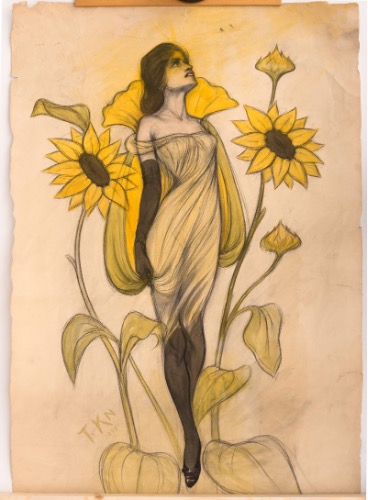
I enclose a small drawing I made during the journey. A branch with two leaves — one clear, the other only suggested — surrounding a sunflower girl. I deliberately left it unfinished, for sometimes the incomplete allows what is missing to continue breathing.
You write that photography now feels like holding something fragile. I believe you have found a deeper part of your work. It is no longer only the presence of the moment, but what remains afterward.
Here in the city, the light is harsher than at home, but when I think of your studio, I see a soft light falling across the floor. I imagine it now carrying both you and Gudrun, as if the room remembers you both.
May stillness continue to follow your work, and may memory become a gentle companion.
Warmly,
Tyra Kleen
(New York, 1917)
1920 — Movement and Stillness
Engla writes
Dear Tyra,
Summer has brought a light that changes from day to day. Sometimes it is clear and open, sometimes softened as if through a thin veil. I have begun leaving the studio more often to seek this shifting light, yet I always return with the feeling that the quiet room still follows me.
Recently I traveled to the coast. The sea lay almost silver, and the wind moved the grass in slow waves. I tried to photograph not the landscape itself, but the feeling that arose between movement and stillness. It was as if time both moved and stood still at once.
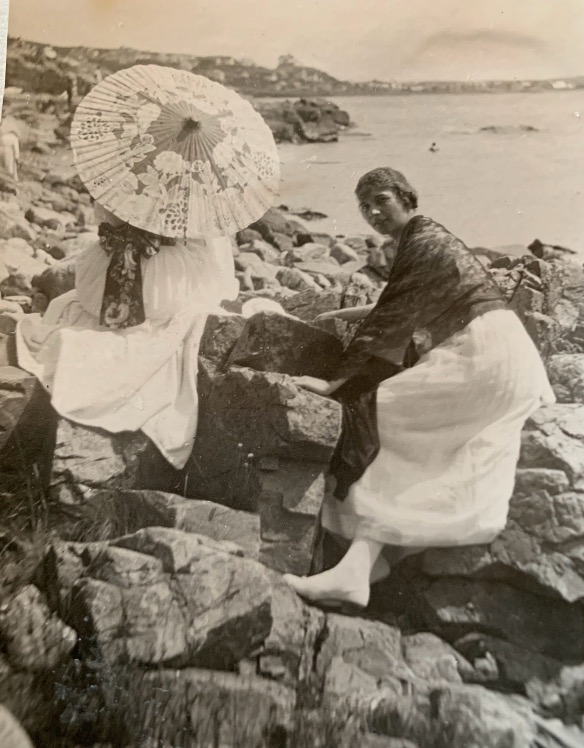
I enclose a photograph from that day. In the foreground the stone becomes a staircase, while the horizon behind remains calm. I also asked a model to carry an oriental parasol, inspired by your stories from your travels. It gave the image another tone, almost like a meeting between places.
When I work, I notice that I increasingly leave space in the image. What is not filled becomes as important as what is seen. Perhaps this is an influence from your drawings, where the line is often surrounded by silence.
I wonder how the movement you encounter where you are affects your way of seeing. Here the landscape moves slowly, almost imperceptibly. Perhaps it is different for you, where gestures and ceremonies carry greater dynamism.
Sometimes I think photography tries to hold a moment, while drawing perhaps follows it further. Yet they seem to meet in attention — the quiet listening before the image itself.
With warm greetings,
Engla
(Oskarström, 1920)
Tyra replies (from Java)
Dear Engla,
Your letter reached me in Batavia here in Java, where the air is heavy with warmth and movement. Everything here seems to carry a rhythm that is both slow and alive, as if time itself breathes differently.
I read your description of the coast with strong recognition, despite the distance between us. You write about grass leaning in the wind while the horizon remains still. Here I see the same meeting between movement and rest, but in the gesture of the human body.
I have spent many hours studying dancers in the temples. Their hands move in precise forms, but between each movement a stillness arises that is almost more important than the gesture itself. It is in this interval that I try to draw.
Your photograph, with the model and the oriental parasol, brought me closer to home than you might imagine. There is something in how you let the light rest around the form that reminds me of how the dancers move through space. The exterior is simple, yet the atmosphere carries something larger.
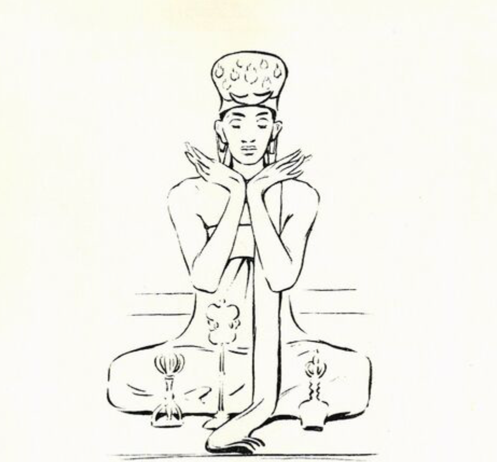
I enclose a small sketch made during a temple dance. The lines are quick, almost fleeting, for I did not want to capture the movement, but follow it. I left the arms incomplete, so the gesture can continue beyond the paper.
Here the light is different from home. It falls directly and creates sharp shadows, yet within the shadow there is a deep stillness. I believe this is what unites our works — not form, but attention.
You hold movement in stillness through photography. I seek stillness in movement through drawing.
Perhaps they are two paths toward the same center.
When evenings come and the sounds soften, I sometimes think of the Nordic horizons.
There is something in their silence that continues to live even here.
With warm greetings from Java,
Tyra
(Batavia, Java, 1920)
1924 — Images That Travel
Engla writes
Dear Tyra,
Autumn has arrived quietly this year. The light falls lower across the fields, and in the studio the afternoons grow longer and softer. It is a time when I like to work with small arrangements — things that require little, yet still hold an entire atmosphere.
During a recent birthday gathering, some flowers remained on the table after the guests had left. They were not particularly arranged, rather left as they happened to be. But when the light fell through the window, something emerged that felt worth preserving. I took a photograph and let it remain simple, without moving anything.
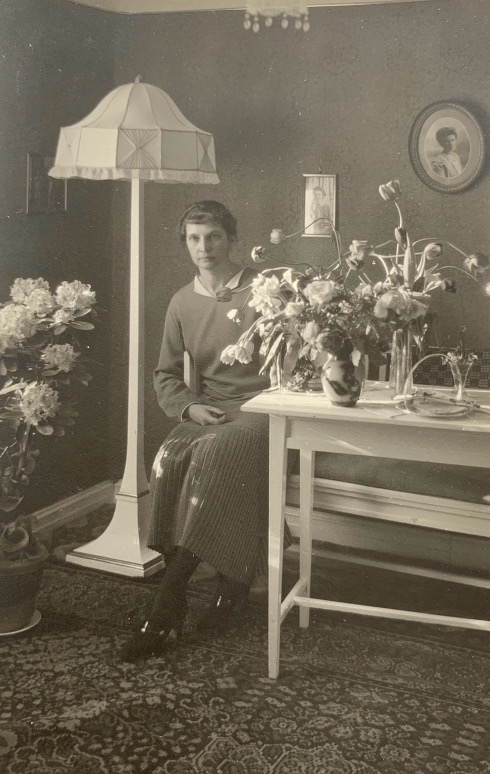
I enclose this image for you. The flowers stand near the window, and the light fades gently toward the edges. There is something in such moments that feels more like an echo than an instant.
Recently I have allowed some of my flower photographs to be printed as postcards. At first it felt unfamiliar to let the images leave their place and travel onward. I wondered whether the stillness would be lost when repeated. But perhaps it is the opposite — that the image gains a new life in each hand that holds it.
I sometimes think of how your drawings, which move between different places and exhibitions, also change in meeting new viewers. It is as if each gaze adds something, without altering the core.
I also notice that I now leave more space in my images. What is not filled speaks almost as clearly as what is seen. Perhaps this is something that comes with time — a wish to let simplicity carry more.
I wonder how your works are experienced where you are. Do people see the movement in your lines, or do they rest in the stillness between them? It is curious how different paths can lead to the same attention.
With quiet greetings from the studio,
Engla
(Oskarström, 1924)
Tyra replies
Dear Engla,
Your letter reached me here on Lidingö, where I remain for a time before continuing my journey southward. Everything is quiet here, yet within me there is already a movement, as if something is loosening and seeking its way toward another light.
I was especially touched by your photograph from the birthday. The flowers seem not arranged, but rather gathered in the light by themselves. There is something gentle in how you allow the edges to fade, as if the image does not wish to end, but continue in the viewer’s thought.
You ask whether images change as they travel. I believe they do, but not by losing their core. Rather, they gather new layers, as if each gaze leaves a trace. Here I see my drawings in reproductions, and sometimes I experience them as softer, almost more memory-like than the originals.
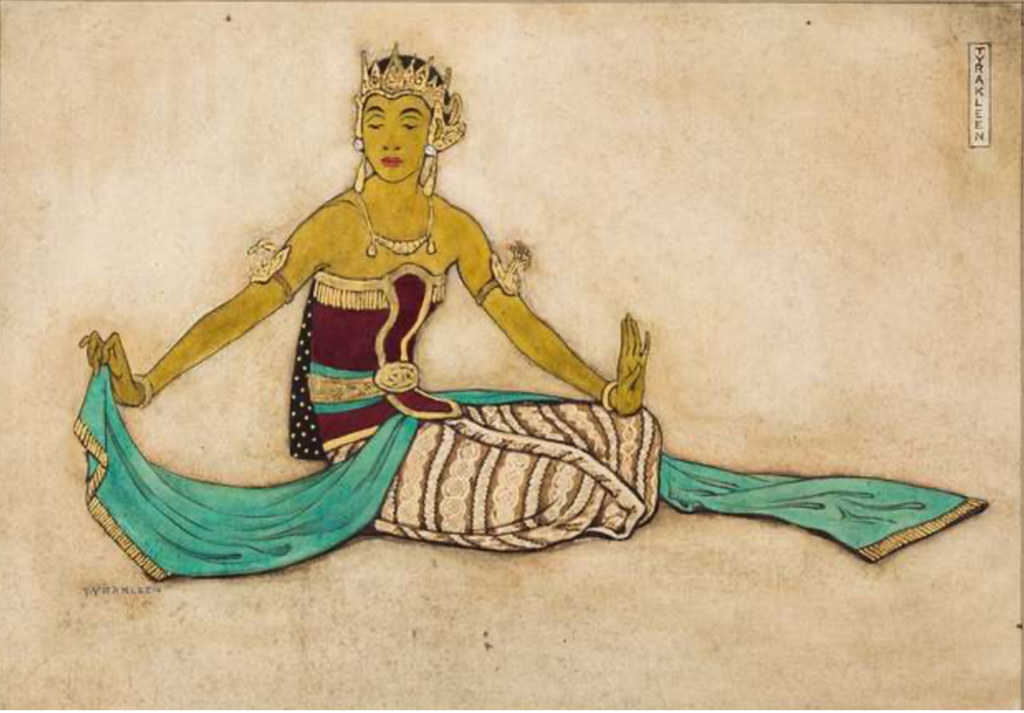
I enclose a reproduction of one of my dancer sketches from Java. When the lines are printed on paper, their weight changes, yet the movement remains. Perhaps this is what allows images to travel — they carry their silence with them.
Your flowers, sent as postcards, allow stillness to spread from hand to hand. My drawings, hung in exhibition rooms, attempt to bring movement into the same quiet space.
It strikes me that our works move in opposite directions, yet meet at the same point. You allow the everyday to open toward something larger, and I try to let the unfamiliar become still enough to feel close.
As I walk along the water here in the evening light, I think of how water reflects the sky without holding it. Soon, other waters will meet me, other skies be reflected. Perhaps our images function in the same way — they reflect, but do not bind.
With warm greetings,
Tyra
(Amsterdam, 1924)
1926 — Light and Distance
Engla writes
Dear Tyra,
I have heard that you have traveled south again, to a landscape I know only through stories and images. I imagine a light different from ours — clearer, more direct, yet perhaps also quieter. It is curious how one can sense a place through the way one imagines its light.
Here in the studio, the days have grown calmer. I often work with small arrangements, almost unnoticed. A chair, a few flowers, a window letting in the afternoon. It is as if the simple motifs hold more the longer one stays with them.
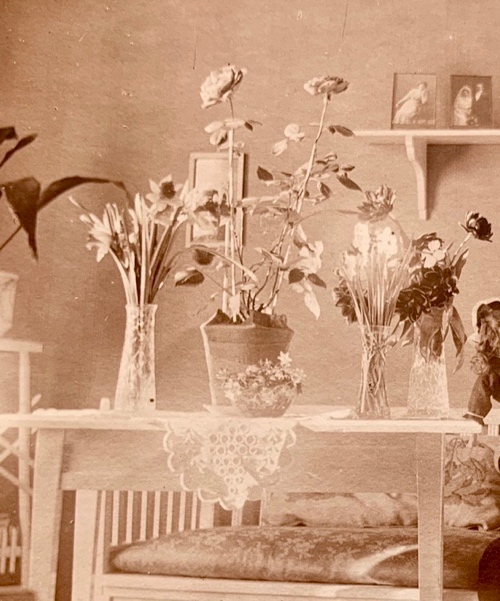
I enclose a photograph from such a moment. The flowers stand on a table near the window, and the light falls diagonally across them. The shadows are soft and almost transparent. It felt as if time rested there for a while.
I have begun thinking about how places carry different forms of stillness. Ours is gentle and muted, but I wonder if the stillness of the desert is different — perhaps larger, more open.
When I look at your earlier drawings from travels, they often seem to leave much space around the form. It is as if the empty space is as important as the line. I recognize something of this in photography — what is not filled, yet still speaks.
Sometimes I think that work changes with the years. One searches less for the unusual and more for what already exists, but needs to be noticed.
I wonder how the light in Egypt affects your gaze. Do you see forms more clearly there, or does the empty space grow larger?
With quiet greetings from the studio,
Engla
(Oskarström, 1926)
Tyra replies (from Luxor, Egypt)
Dear Engla,
Your letter reached me in Luxor, where the light falls differently than anywhere else I have been. It is almost white at midday, and the shadows become sharp as drawn lines across the sand. Here the landscape feels both still and infinite, as if time itself has come to rest.
I read your description of the still life in your studio with great reflection. The flowers and chair in your photograph seem to rest in a light that does not hurry, and it reminded me of the temples I have walked through here. Despite their weight and age, they carry a curious lightness, as if each stone is still listening.
I have spent several mornings by the Nile. The water moves slowly, almost imperceptibly, and yet everything nearby changes. It made me think of your images — how they hold stillness, while allowing time to pass through them.
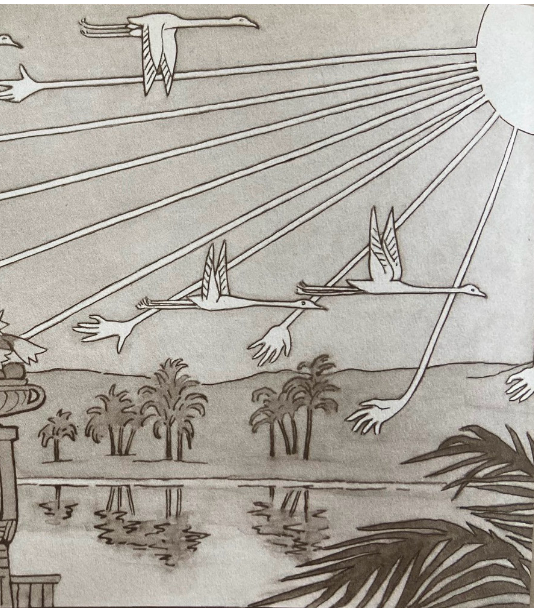
I enclose a drawing made at dawn. A simple horizon line across the desert, and a small bird just lifting. I left large parts of the paper empty, to allow space itself to become part of the image.
Here the colors are few, but the nuances many. The light of the sand changes from hour to hour, and in this restraint there is a stillness that I experience as related to your work. You find it in flowers and rooms; I find it in stone and sky.
When the sun sets behind the mountains, the air becomes cool and quiet. It is then I feel most clearly how travel is not only about moving through space, but about slowly changing one’s gaze. Your photographs seem to do something similar, without leaving their place.
With warm greetings from the banks of the Nile,
Tyra
(Luxor, Egypt, 1926)
Later in Life — Light After Sunset
Engla writes
Dear Tyra,
The days have grown quieter here. The light moves more slowly across the floor — or perhaps it is I who have learned to follow it more carefully. I no longer work as much, yet I often step into the studio anyway, as if to listen.
I have begun placing older photographs on the table, without arranging them. They seem to speak to one another in ways I had not previously noticed. A portrait beside a flower, a hand beside a window, a shadow beside a gaze. It feels less like a collection of images and more like a conversation that has been ongoing for a long time.
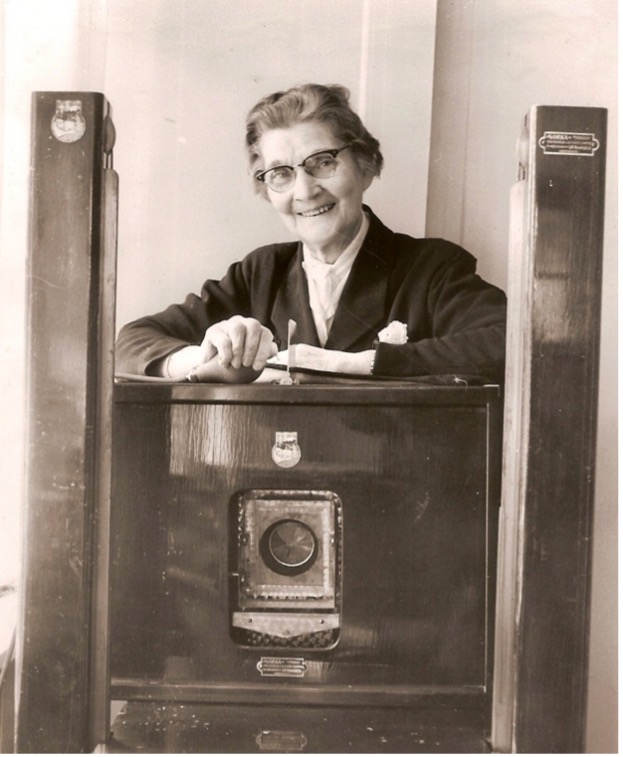
Recently I took a photograph in the studio, but this time I turned the camera toward myself. The large wooden construction stands as a quiet frame, and my hands rest upon it, as if still listening for the next image.
It was not planned as a self-portrait. I simply sat for a moment behind the camera and let the shutter fall.
When I later saw the image, it struck me how curious it is to stand both behind and in front of one’s own work. The camera that for so long had been my way of meeting others suddenly became a mirror of the life that had passed through it.
It felt as if time gathered in the image — not in movement, but in a quiet presence where both the work and the person behind it could rest together.
I enclose this photograph for you. Not as a conclusion, but as a quiet greeting. It holds both what has been and what still is.
When I think of your travels — Paris, Java, Egypt, and now Lidingö — it strikes me that our paths have been different, yet the attention the same. You have sought it in movement and symbol; I in light and everyday life.
I believe work changes with the years. One no longer tries to hold the moment, but rather to let it rest. There is a gentleness in what comes with time.
Perhaps this is what I have learned most: that it is not always the clear that remains, but what almost disappears.
With quiet greetings,
Engla
(Oskarström, 1947)
Later in Life — Tyra writes from Lidingö
Dear Engla,
Your latest letter reached me here on Lidingö, where the days have grown slower and the light changes almost imperceptibly from hour to hour. I work less now, but perhaps I listen more. It feels as though time no longer moves forward, but rather spreads outward.
The photograph you enclosed — your image from the studio — stayed with me for a long time. It carries both presence and distance, as if you stand simultaneously within the room and outside it. I think this is how we experience our own lives toward the end — not as a line, but as layers.
I have gone through older drawings. They seem simpler now than when I made them, yet perhaps simplicity was what I sought without knowing it. The forms have become fewer, and the empty space larger.
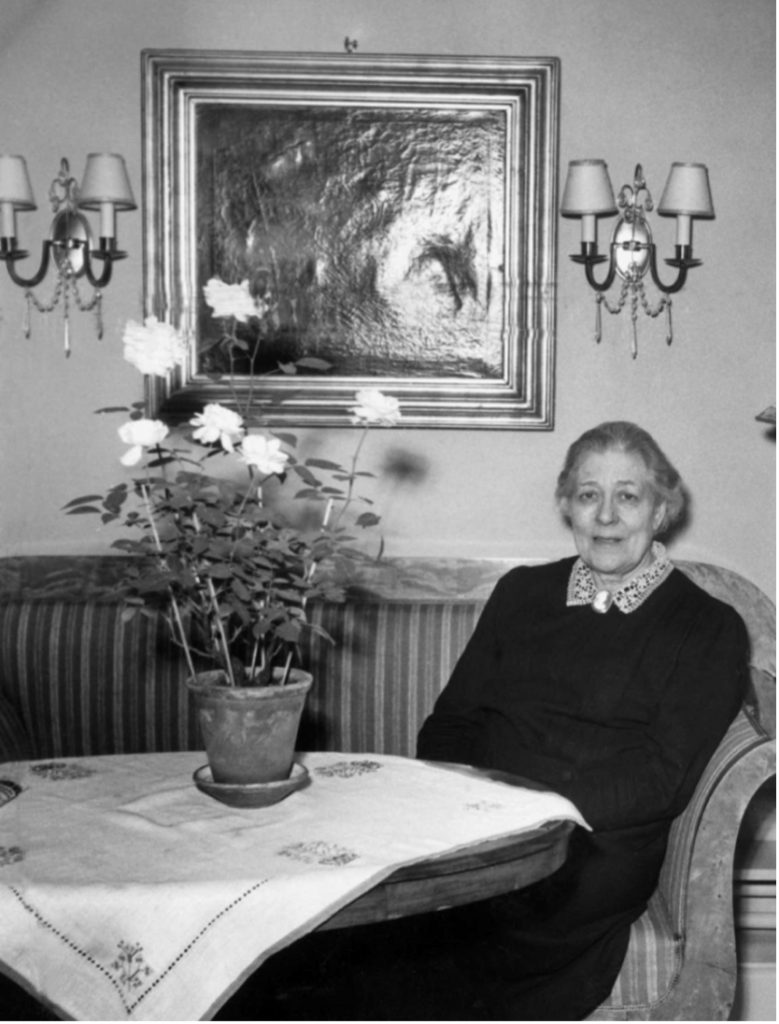
I enclose an image from my home. I sit at the table, and the flowers stand between the room and the light. Behind me hangs a painting whose surface captures reflections that change with the day.
It is not a dramatic motif — only a quiet presence. I wanted to let the everyday carry what otherwise easily disappears: the light across the wall, the silence of the flowers, the time resting in the room. Most of the image remains untouched, without movement. Precisely for that reason, it felt as though stillness itself became part of the composition.
When I look back at our letters, I think they were never truly about places, even though we wrote from many. They were about attention — about holding what almost disappears.
You have done this through the light in your photographs. I have tried through line. And somewhere they meet.
I do not believe the work disappears when we leave it. It continues as a quiet resonance — in someone who pauses, in someone who sees a little more slowly. That is enough.
With warm greetings,
Tyra
(Villa Brevik, Lidingö, 1947)
Prelude
Some letters are never written, yet their echoes remain.
They arise in the quiet spaces between images, in the pause before a line is drawn, in the soft light that settles across a studio floor. What is never sent may still travel — carried not by envelopes, but by attention, memory, and a shared sensitivity to the world.
Between photography and drawing, between Oskarström and Lidingö, a quiet conversation continues. It moves across years and landscapes — from northern studio windows to distant horizons, from the stillness of arranged flowers to the gesture of a hand in motion. Each image becomes a letter of its own, each line and shadow a response.
What binds them is not proximity, but presence. A way of seeing that lingers. A willingness to notice what almost disappears. In this silent exchange, light becomes language, and time becomes a gentle messenger.
And so the dialogue endures — not in words alone, but in the spaces between them — where light travels quietly through time.
References
Hägertz Glass Plates at Oskarströms Hembygdsförening
Tyra Kleen at Svenskt Kvinnobiografiskt Lexikon
Välinege Gard About Tyra Kleen
Exhibitions
Tyra Kleen – Always Searching at Hallands Konsmuseum
Related Blogposts
Earlier Blogposts with imaginary Letter Exchanges and artifacts
About Novisali

Novisali, (alias Liselotte Engstam), is besides her roles as professional board member and advisor, a multi-media artist, with a curious, explorative mind and an ambition to learn and extend art experiences to current and new audiences using both traditional and new digital mediums. More information and exhibitions can be found via Novisali.com
This blog post is also shared at the blog of www.liselotteengstam.com.